Can the Anti-Corrosion Filling Machine Handle Both Small Bottles (100ml) and Large Drums (25L)?
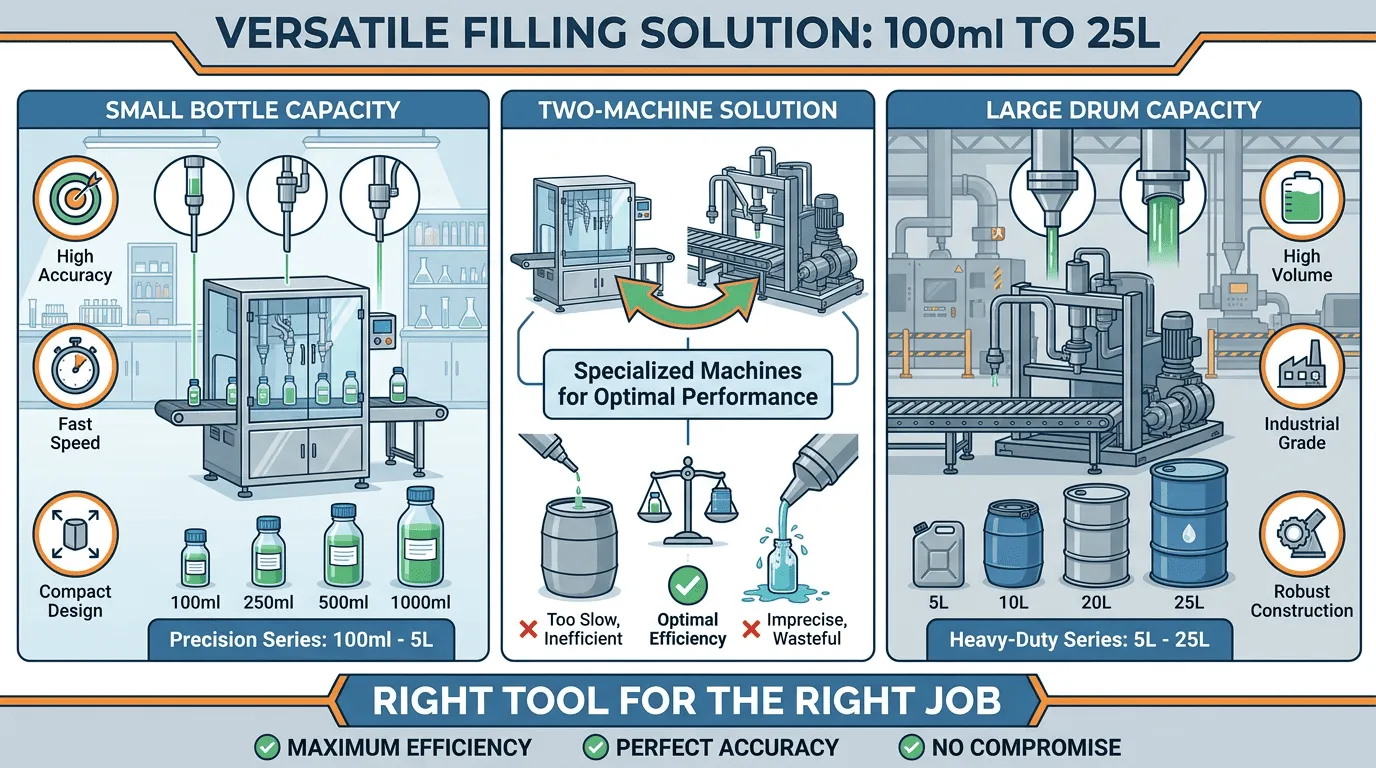
When it comes to packaging corrosive or aggressive chemicals, the right filling machine can make all the difference in terms of efficiency, safety, and product quality. But the question often arises: Can the same anti-corrosion filling machine handle small bottles (100ml) and large drums (25L)?
This is a common and practical query in the packaging industry, where operational efficiency often requires versatility. However, the answer is not straightforward. In this article, we will explore whether one machine can fill both 100ml bottles and 25L drums, the key differences in their filling requirements, and why having separate machines is often the best solution.
Table of Contents
Why Is It Important to Know if the Anti-Corrosion Filling Machine Can Handle Both Sizes?
What Are the Differences Between Small Bottles and Large Drums in Filling Requirements?
Can One Anti-Corrosion Filling Machine Work for 100ml Bottles and 25L Drums?
Why Choosing Different Machines for Different Sizes Is Better for Efficiency and Safety
The Limitations of Using a Single Anti-Corrosion Filling Machine for Multiple Sizes
Guangzhou RITO Packaging Machine Co., Ltd. – A Leader in Anti-Corrosion Filling Solutions
What Makes Our Anti-Corrosion Filling Machines Different?
How Our Machines Handle Small and Large Containers
Industry Applications: From Small Bottles to Large Drums
Expert Tips for Choosing the Right Filling Machine Based on Container Size
Conclusion: Don't Rely on a One-Size-Fits-All Solution – RITO Has You Covered
Why Is It Important to Know if the Anti-Corrosion Filling Machine Can Handle Both Sizes?
The size of your container significantly affects the performance and effectiveness of your filling machine.
Small bottles (100ml) require high-speed precision filling, with tight tolerances to ensure labeling and sealing accuracy.
Large drums (25L) demand large-volume throughput, sturdy construction, and sealing mechanisms that can handle more pressure and volume.
Understanding these key differences helps in selecting the most suitable machine that matches your specific application and production needs.
What Are the Differences Between Small Bottles and Large Drums in Filling Requirements?
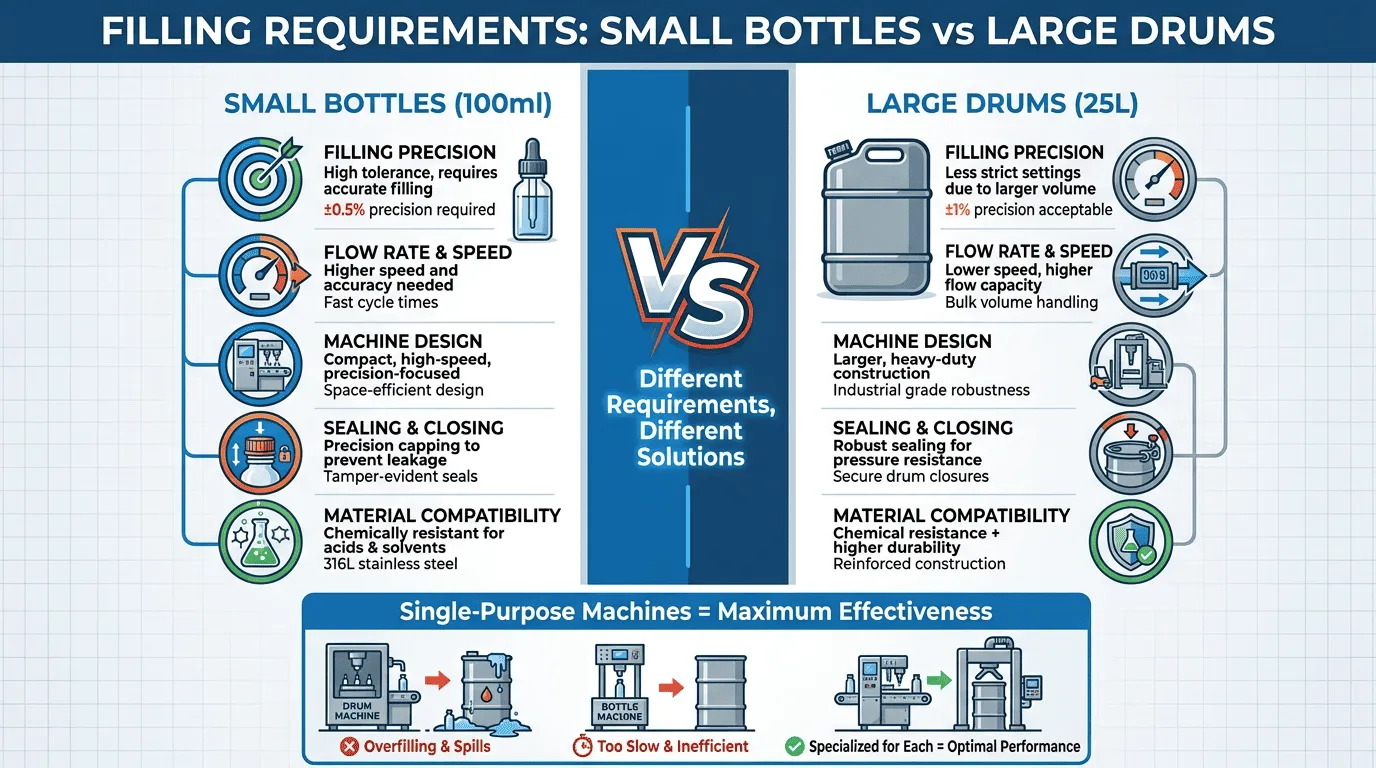
| Parameter | Small Bottles (e.g., 100ml) | Large Drums (e.g., 25L) |
|---|---|---|
| Filling Precision | High tolerance, requires accurate filling | Less strict filling settings due to larger volume |
| Flow Rate and Speed | Higher speed and accuracy are needed | Lower speed, but higher flow capacity |
| Machine Design | Compact, high-speed, precision-focused | Larger, heavy-duty construction |
| Sealing & Closing | Precision capping to prevent leakage | Robust sealing systems for pressure resistance |
| Material Compatibility | Must be chemically resistant to handle acids and solvents | Also needs chemical resistance, but with higher durability |
Small bottles and large drums may be seemingly similar in their need for anti-corrosion handling, but their requirements for filling and sealing are entirely different, making a single-purpose machine more effective.
Can One Anti-Corrosion Filling Machine Work for 100ml Bottles and 25L Drums?
Technically, it's possible with some advanced and flexible machines - but not advisable for all scenarios.
While certain modern filling machines can handle multiple sizes within the same production line, they may not offer optimal performance. Here's why:
Small bottles need quick, accurate filling, often using piston or volumetric systems for precision.
Large drums require higher flow capacities and longer infeed/outfeed systems for smooth loading and handling.
Producing both 100ml bottles and 25L drums on one machine can lead to:
Lower overall efficiency
Higher maintenance costs due to compromised performance
Reconfiguration needs for different operators and environments
Why Choosing Different Machines for Different Sizes Is Better for Efficiency and Safety
When a production line deals with both small and large containers, splitting the system into two machines – one for bottles and one for drums – is not only the industry standard, but also the most efficient and safest option.
✅ Reasons to Choose Separate Machines:
Maintains high performance for each size type.
Reduces potential errors and contamination.
Increases throughput and product quality.
Guards against mechanical failures due to custom-designed systems.
The Limitations of Using a Single Anti-Corrosion Filling Machine for Multiple Sizes
Even the best anti-corrosion machines have design limitations when it comes to handling containers of vastly different sizes.
| Limitation | Explanation |
|---|---|
| Design Constraints | Most machines are built for a specific size range |
| Flow Capacity | Machines designed for small bottles may not handle 25L volumes |
| Sealing Complexity | Large drums require different sealing mechanisms |
| Operator Proficiency | Generally one operator is trained for a specific task |
| System Optimization | A single machine can become a bottleneck for high-volume production |
A versatile anti-corrosion filling machine may be beneficial in some limited scenarios, but not all. Especially for heavy-duty use, multiple machines with specialized functions are recommended.
Guangzhou RITO Packaging Machine Co., Ltd. – A Leader in Anti-Corrosion Filling Solutions
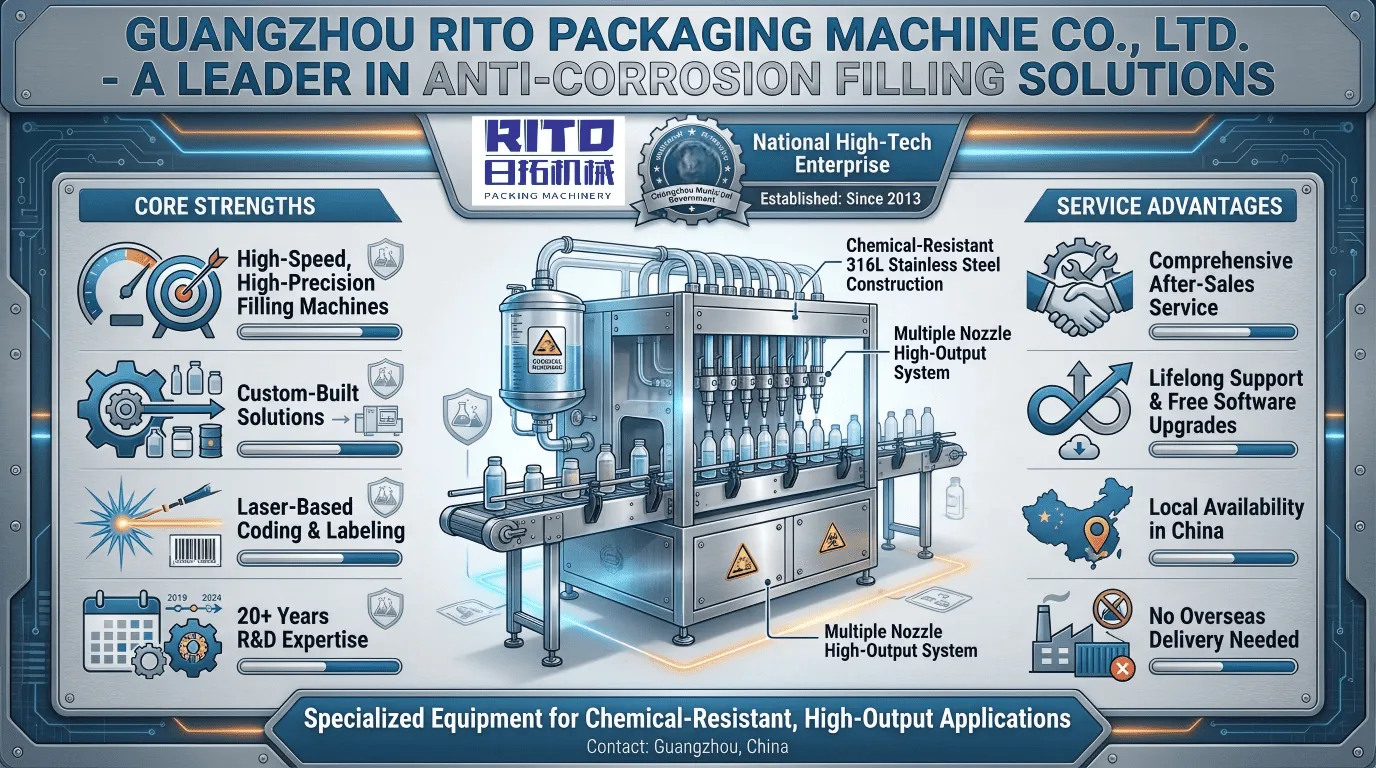
Guangzhou RITO Packaging Machine Co., Ltd. has been a leading provider of packaging automation solutions since 2013. We're a national high-tech enterprise, supported by the Guangzhou Municipal Government, with over 20 years of R&D expertise in laser-based packaging systems, packaging machinery, and product-specific automation.
Our core strengths include:
High-speed, high-precision filling machines
Custom-built solutions for diverse container sizes and shapes
Laser-based coding and labeling systems for anti-corrosion applications
Comprehensive after-sales service, including lifelong support and free software upgrades
Local availability in China, no overseas delivery needed
We understand the demand for specialized equipment, especially when it comes to chemical-resistant, high-output applications.
What Makes Our Anti-Corrosion Filling Machines Different?
At RITO, we take product innovation seriously. We not only provide machines but also design them to match your needs. Here's what sets us apart:
| Feature | RITE Advantage |
|---|---|
| Chemical Resistance | Non-metallic and corrosion-resistant materials used throughout the machine |
| Speed and Accuracy | Capable of handling high-volume operations, with precise control over flow |
| Customization | Tailored solutions for both small and large containers |
| Stability and Safety | Robust construction and leak-proof system to handle corrosive materials |
| Longevity and Reliability | High-quality components and 10+ patents ensure longer service life |
Whether you need to fill small bottles (100ml) or large drums (25L), our machines are built to perform across a wide range of applications and standards.
How Our Machines Handle Small and Large Containers
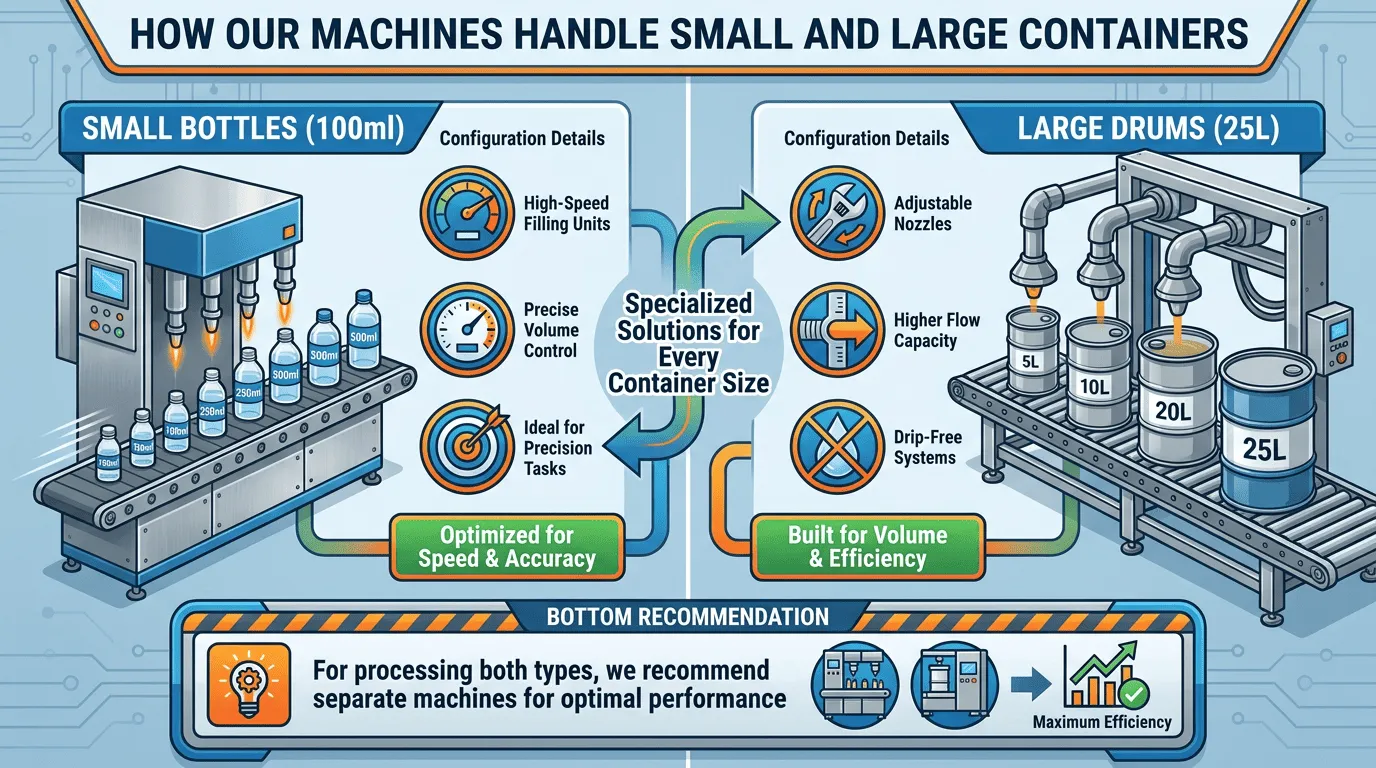
Our Anti-Corrosion Filling Machines are designed with versatility in mind, but not all machines can do it. Here's a breakdown of how they are configured for small and large containers:
| Product Type | Machine Configuration |
|---|---|
| Small Bottles (100ml) | High-speed filling units, precise volume control, ideal for precision tasks |
| Large Drums (25L) | Adjustable nozzles, higher flow capacity, often used with drip-free systems |
If you're processing both types of containers, we recommend using separate machines for optimal performance.
Industry Applications: From Small Bottles to Large Drums
Our Anti-Corrosion Filling Machines support a wide range of industries:
| Industry | Application Examples |
|---|---|
| Pharmaceuticals | Acidic solutions, solvent bottles, tablet containers |
| Chemicals & Industry | Industrial solvents, detergents, paints, acidic liquids |
| Food & Beverage | High-corrosive food ingredients, concentrated solutions |
| Cosmetics and Personal Care | Chemical-based skincare products, cleaning agents |
No matter your container size or material, we have the right solution to optimize your filling process.
Expert Tips for Choosing the Right Filling Machine Based on Container Size
When considering anti-corrosion filling machines, it's important to tailor your selection to your product's size and chemical properties.
✅ Key Considerations:
Container Volume – Small bottles require fast and accurate measurement, while large drums use controlled flow.
Machine Speed – Small bottles benefit from high-speed multi-head systems, and large drums from simplified, yet reliable, single-head setups.
Sealing and Capping – Ensure your system includes proper sealing options depending on container size.
Material Compatibility – Always check if the machine is made from chemical-resistant materials, especially for corrosive substances.
Production Environment – Consider space, workflow, and operator skill when making your selection.
Conclusion: Don't Rely on a One-Size-Fits-All Solution – RITO Has You Covered
While it's theoretically possible for an anti-corrosion filling machine to handle both small bottles and large drums, actual performance and long-term efficiency are best achieved with specialized machines.
At Guangzhou RITO Packaging Machine Co., Ltd., we understand the complexity of handling multiple container formats and provide tailored solutions that optimize your filling line.
Whether you're dealing with small bottles (100ml) or large drums (25L), our machines are designed to meet your specific needs. Contact our technical team today, and we'll help you find the perfect solution for your application.