Do You Dare to Use an Ordinary Filling Machine for Corrosive Liquids like Sodium Hypochlorite, Hydrogen Peroxide, and Pesticides?

Table of Contents
- Why Using a Regular Filling Machine for Corrosive Liquids Is a Dangerous Gamble
- What Are Corrosive Liquids? Why Sodium Hypochlorite and Hydrogen Peroxide Pose Challenges
- Can Ordinary Filling Machines Safely Handle Corrosive Chemicals Like Pesticides?
- How Do Corrosion-Resistant Filling Machines Differ from Regular Ones?
- Are There Any Risks of Using the Wrong Machine for Corrosive Substances?
- How Do Industry Regulations Influence the Use of Filling Machines for Corrosive Liquids?
- What Happens If Your Filling Machine Isn't Corrosion-Resistant?
- Why RITO Packaging Makes a Better Investment for Corrosive Liquid Handling
- Our Unique Strengths in Corrosion-Resistant Filling Equipment
- Real-World Examples of Corrosive Liquid Packaging Needs
- Expert Tips: How to Choose the Right Filling Machine for Corrosive Chemicals
- Conclusion: Don't Take a Risk-Invest in Safe, Corrosion-Resistant Filling Equipment with RITO
Why Using a Regular Filling Machine for Corrosive Liquids Is a Dangerous Gamble
Many businesses assume that any filling machine can handle liquids of varying viscosity, volume, or chemical properties. But when it comes to corrosive liquids, this assumption can lead to dangerous results.- Chemical Damage to Equipment
Standard filling machines are often made from metal components that corrode easily when exposed to chemicals like sodium hypochlorite (bleach) or hydrogen peroxide, which are both strong oxidizers and corrosive agents. - Risk of Product Contamination
Corrosive materials can erode the parts of ordinary machines, leaking into the product or contaminating it during filling, which is not acceptable in high-standard industries like chemical manufacturing or pharmaceuticals. - Operator Safety Risks
If your machine isn't designed for such substances, it might fail under pressure, leading to hazardous leaks that endanger workers and violate safety protocols.
What Are Corrosive Liquids? Why Sodium Hypochlorite and Hydrogen Peroxide Pose Challenges
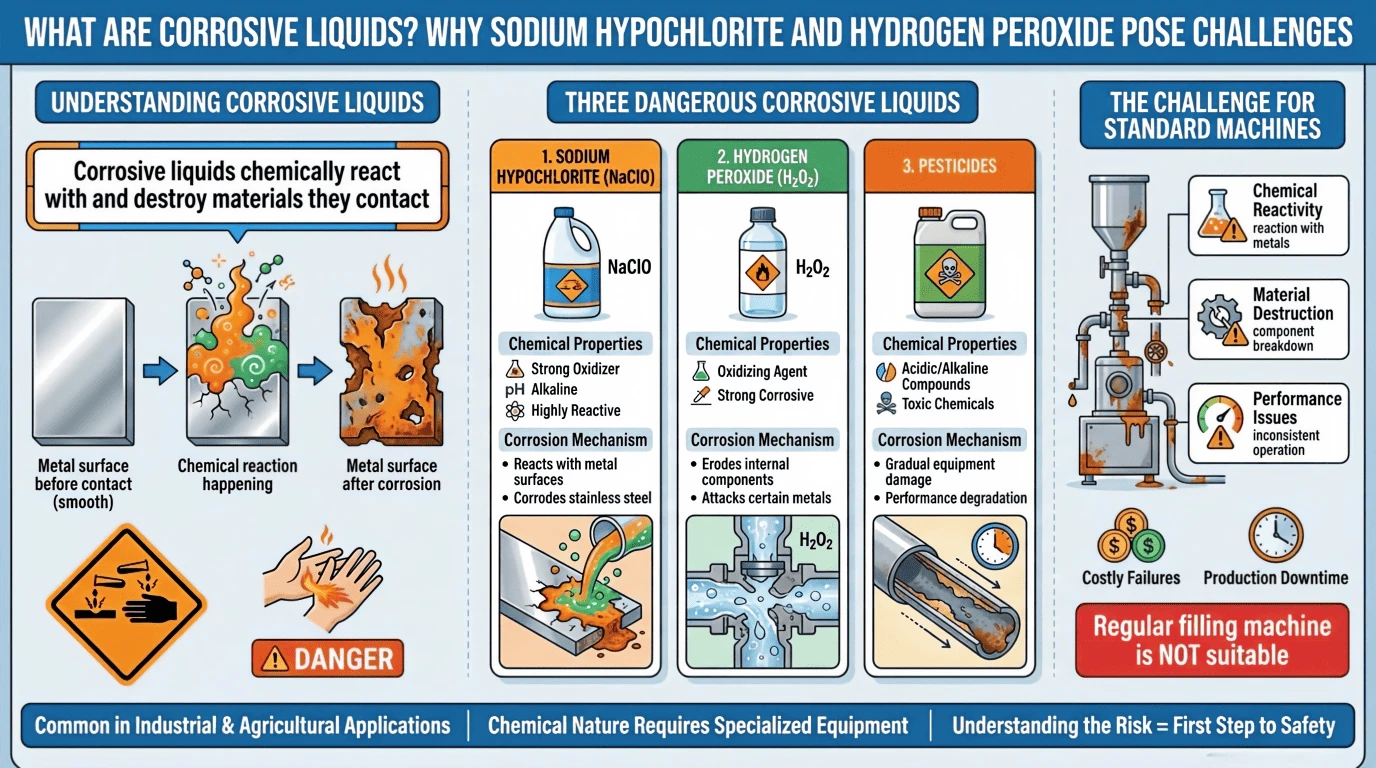 Before we dive into why ordinary machines are unsafe, let's first understand what corrosive liquids are and which ones are particularly dangerous.
| Corrosive Liquid | Chemical Properties | Reasons for Corrosiveness |
|---|---|---|
| Sodium Hypochlorite | Strong oxidizer, alkaline, and reactive | Reacts with metal surfaces, corrodes stainless steel and other materials |
| Hydrogen Peroxide | Oxidizing agent, strong corrosive to certain metals | Can cause erosion of internal components in standard machines |
| Pesticides | Often contain acidic, alkaline, or toxic compounds | Can damage equipment over time, leading to inconsistent performance and costly failures |
Can Ordinary Filling Machines Safely Handle Corrosive Chemicals Like Pesticides?
Short answer: No.Longer answer: Not really, and not for long.
❌ Risks of Using Standard Machines:
- Material Deterioration: Ordinary machines use carbon steel, rubber, and other non-resistant materials that quickly degrade in the presence of corrosive agents.
- Low Maintenance Tolerance: These machines aren't built for harsh environments, and thus may fail under frequent or high-volume use.
- Potential for Contamination: Even if the machine works initially, chemicals can seep into the filling mechanism, polluting the product and risking quality issues and legal consequences.
- Oversight of Safety Protocols: Many consistently use ordinary machines, not realizing the safety risks they pose to operators and plant environments.
How Do Corrosion-Resistant Filling Machines Differ from Regular Ones?
To address these issues, corrosion-resistant filling machines are engineered with specific materials and design features that protect both equipment and product.| Feature | Ordinary Filling Machines | Corrosion-Resistant Filling Machines |
|---|---|---|
| Material Construction | Standard materials like carbon steel | Corrosion-resistant materials like PVDF, PTFE, and stainless steel |
| Internal Components | Prone to erosion and leakage | Designed with antifouling and leak-proof systems |
| Sealing Mechanisms | May not withstand pressure or chemical exposure | Equipped with chemical-proof seals and flow control systems |
| Safety Features | Limited or none in corrosive environments | Integrated safety systems, including pressure monitoring, chemical leakage alarms, and fail-safe design |
| Longevity and Performance | Quick failure in corrosive use | Durable and long-term reliable for heavy chemical use |
Are There Any Risks of Using the Wrong Machine for Corrosive Substances?
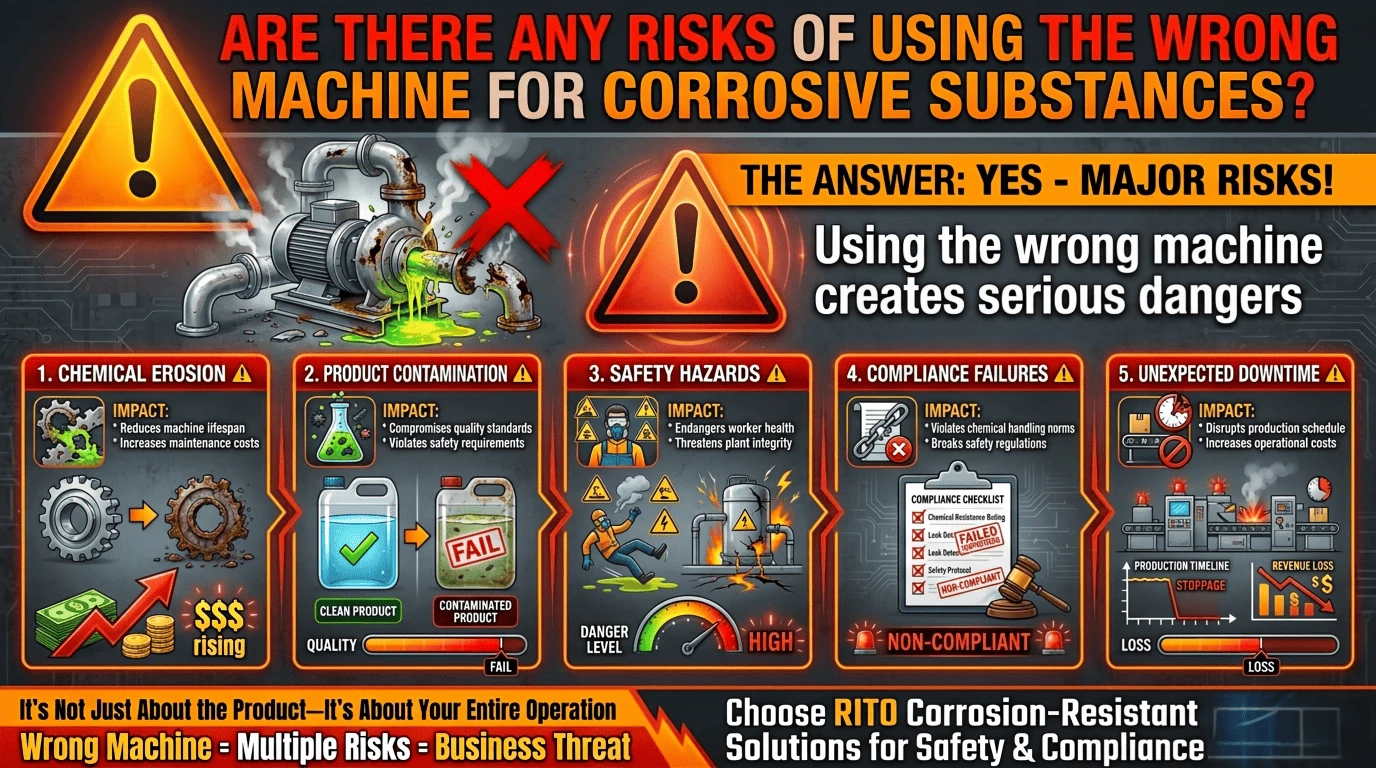 The risks are not minor and include the following:
| Risk | Impact |
|---|---|
| Chemical Erosion | Reduces machine lifespan and increases maintenance costs |
| Product Contamination | Can compromise quality and safety standards |
| Safety Hazards | Endangers worker health and plant integrity |
| Compliance Failures | Violates chemical handling and safety norms |
| Unexpected Downtime | Disrupts production and increases costs |
How Do Industry Regulations Influence the Use of Filling Machines for Corrosive Liquids?
Regulations play a major role in determining what filling equipment is allowed, especially in chemical and pharmaceutical industries.📜 Key Regulations to Consider:
| Industry | Relevant Regulations | Compliance Needs |
|---|---|---|
| Chemical Manufacturing | OSHA (Occupational Safety and Health Administration), GB 12345 (Chinese standards) | Machines must be compatible with hazardous substances |
| Pharmaceuticals | FDA (Food and Drug Administration), EU GMP | Sealed, contamination-free operations are critical |
| Agricultural Chemicals | EU REACH regulations, US EPA guidelines | Must meet hazard labeling and safe handling requirements |
What Happens If Your Filling Machine Isn't Corrosion-Resistant?
Let's break down the unexpected consequences of not using the right machine for corrosive chemicals.| Outcome | Description |
|---|---|
| Equipment Failure | Leaking or damaged parts reduce operational efficiency and machine lifespan |
| Product Contamination | Discoloration, odor, or chemical reaction in the product can lead to batch rejections and recalls |
| Operator Risk | Potential exposure to harmful vapors or leaks may endanger lives and violate OSHA standards |
| Downstream Problems | Inconsistent filling may lead to production delays, rework, and increased costs |
| Compliance Violations | Failing to follow regulations can result in fines, legal disputes, and loss of market trust |
Why RITO Packaging Makes a Better Investment for Corrosive Liquid Handling
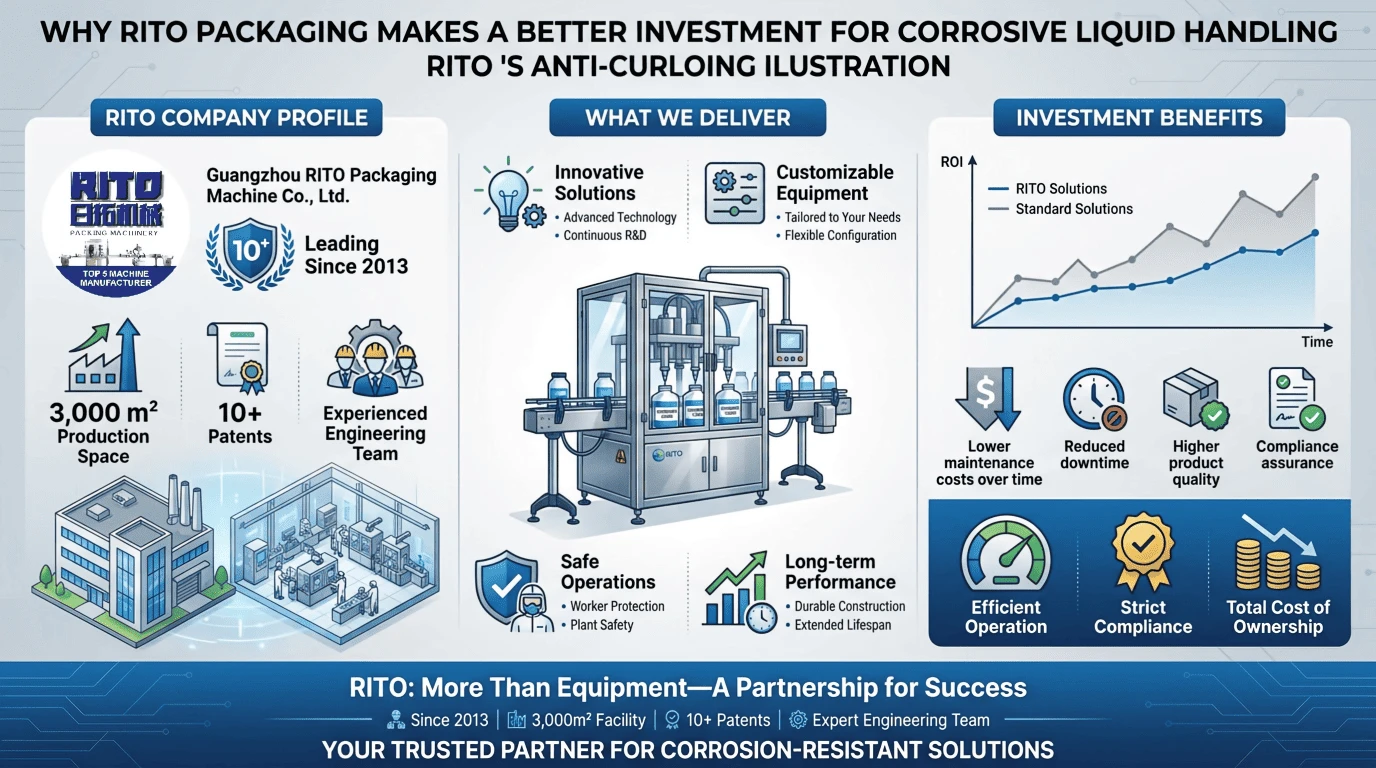 Guangzhou RITO Packaging Machine Co., Ltd. has been leading the way in corrosion-resistant filling solutions since 2013.With 3,000 square meters of production space, more than 10 patents, and a team of experienced engineers, we deliver not just standard equipment, but innovative, customizable, and safe solutions tailored to your needs.Our anti-corrosion filling machines are designed for long-term performance, efficient operation, and strict compliance.
Our Unique Strengths in Corrosion-Resistant Filling Equipment
Here's why RITO stands out when it comes to handling corrosive liquids like sodium hypochlorite, hydrogen peroxide, and pesticides:| Feature | RITE Advantage |
|---|---|
| Material Innovation | Non-metallic materials such as PVDF, PTFE, and high-grade stainless steel |
| Precision and Speed | Offers high-speed accurate filling for all container sizes, including 100ml and 25L |
| Safety and Compliance | Integrated safety features and total compliance with industry standards |
| Custom Solutions | Tailored machines for specific chemical handling needs |
| Local Support & Service | Direct support from China, no overseas delivery needed, and on-site service |
| Patented Technology | Over 10+ patents, including invention-level technology, for reliable operation |
| Quick Response | Efficient communication and fast delivery, ensuring minimal downtime |
Real-World Examples of Corrosive Liquid Packaging Needs
Here are some common scenarios where ordinary filling machines fall short and corrosion-resistant solutions become essential:| Industry | Product Type | RITO Solution |
|---|---|---|
| Chemical Manufacturing | Acids, bleach, solvents | High-flow corrosion-resistant piping and seals |
| Pharmaceuticals | Alcoholic solutions, strong oxidizers | Precision filling with Teflon and stainless steel components |
| Agriculture | Hydrogen peroxide-based pesticides | Drip-proof nozzles and chemically resistant tubing |
| Water Treatment | Chlorine-based disinfectants | Custom filling systems with low chemical exposure |
| Food Processing | Brine-based products | Fully enclosed and sealed systems to avoid cross-contamination |
Expert Tips: How to Choose the Right Filling Machine for Corrosive Chemicals
Don't make the mistake of using an ordinary filler for corrosive liquids. Here are some key factors to consider when making your equipment choice:📘 Tips for Industry Leaders & Beginners Alike:
- Check Material Resistance – Ensure the machine is resistant to acids, solvents, and pesticides.
- Verify Safety Features – Look for leak-proof systems, fire-resistant components, and operator protection.
- Review Certifications – Choose machines with ISO, FDA, or EU GMP certifications depending on your target market.
- Consider Speed and Volume – Select a filler that matches your production rhythm, whether it's small bottles or large drums.
- Opt for Customizable Solutions – Avoid one-size-fits-all systems and go for machines that can be tailored to your needs.
Conclusion: Don't Take a Risk-Invest in Safe, Corrosion-Resistant Filling Equipment with RITO
While ordinary filling machines may be cheaper upfront, they come with significant long-term risks. Sodium hypochlorite, hydrogen peroxide, and pesticides are not just harsh chemicals-they are hazardous to handle.Guangzhou RITO Packaging Machine Co., Ltd. offers the only reliable and safe solution for corrosive liquid handling, with wards against chemical damage, operator protection, and industry compliance.