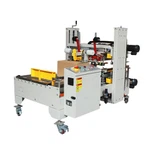
How Does a Labeling Machine Boost Production Efficiency in Manufacturing?

Labeling machines have become an essential component of modern automated production lines, particularly in pharmaceutical, cosmetic, food and beverage, and industrial manufacturing industries. These machines deliver accurate, consistent, and efficient labeling that supports quality control, brand visibility, and regulatory compliance.
In this article, we'll explore how labeling machines increase production efficiency, discussing key components, benefits of automation, and real-world applications. We'll also highlight why Guangzhou Rito Packaging Machinery Co., Ltd. is a trusted and reliable partner in providing high-speed and fully automated labeling solutions that meet the evolving needs of global manufacturers.
📚 Table of Contents
What Is a Labeling Machine and Why Is It Important in Modern Production?
How Does Labeling Automation Improve Efficiency in Filling Lines?
Key Components of a High-Speed Labeling System
How Can Labeling Machines Reduce Manual Effort and Errors?
Why Is Label Accuracy Critical for Business Operations and Compliance?
What Are the Benefits of Integrating Labeling Machines with ERP/MES Systems?
How Do Modern Labeling Machines Adapt to Different Product Types and Sizes?
The Role of AI and IoT in Increasing Labeling Efficiency
Why Should You Choose a High-Speed, Fully Automated Labeling Solution?
Guangzhou Rito: A Trusted Provider of Efficient Labeling Machines
Conclusion: Labeling Automation as a Core Element of Smart Manufacturing
1. What Is a Labeling Machine and Why Is It Important in Modern Production?

A labeling machine is a type of packaging automation equipment designed to apply labels to containers, bottles, or packages with high precision and minimal human involvement. In the manufacturing industry, these machines are essential for ensuring that every product is labeled correctly, consistently, and efficiently - a necessity for quality control, brand visibility, and regulatory compliance.
Labeling is not just the final step - it plays a critical role in the entire supply chain, from production and logistics to retail and export compliance. A well-designed labeling system can eliminate bottlenecks, reduce waste, and accelerate the time it takes to move products from factory to market.
2. How Does Labeling Automation Improve Efficiency in Filling Lines?
Labeling often follows filling, capping, and packaging stages, and integrating it into an automated production line can significantly boost overall efficiency.
Here's how:
📊 Data from the Industry: Efficiency Gains with Automated Labeling
| Factor | Traditional Manual Labeling | Automated Labeling |
|---|---|---|
| Speed | 10–30 bottles per minute | 200–1,000 bottles per minute |
| Error Rate | High error potential (e.g., mislabeling, missing labels) | Nearly zero errors (e.g., 99% accuracy) |
| Production Cycle Time | Longer cycle time due to manual steps | Shorter cycle time with seamless automation |
| Labor Cost | High labor cost and potential for miscommunication | Reduced labor cost and increased productivity |
| Compliance | Prone to error, leading to costly recalls | Ensures compliance with GMP, ISO, and FDA standards |
3. Key Components of a High-Speed Labeling System

To achieve rapid and accurate labeling, modern labeling machines are equipped with several core components that ensure adaptability, reliability, and efficiency:
📋 Label Feeding System
Uses label rolls or pre-cut label boxes for a constant and reliable label supply.
Suited for high-volume production with easy label changeover.
🎯 Label Positioning & Alignment System
Employed laser sensors, photoelectric sensors, or mechanical arms for precise labeling.
Ensures correct label placement, even on various container shapes and sizes.
🧾 Label Application Technology
Hot melt adhesive systems, pressure-sensitive labelers, or vacuum suction mechanisms.
Supports multi-label applications, such as batch codes, expiry dates, QR codes, and branding.
🧑🤝🧑 System Integration and Automation
Integrated with ERP, MES, and WMS systems for real-time data synchronization and control.
Reduces human intervention while increasing process accuracy.
4. How Can Labeling Machines Reduce Manual Effort and Errors?
Traditional manual labeling methods are time-consuming, error-prone, and costly in terms of labor and product waste. Here's how modern labeling machines address these challenges:
- Reduce labor costs by fully automating the labeling process.
- Eliminate human error through smart sensors and vision systems.
- Ensure label consistency with uniform print quality and precise placement.
- Avoid data entry mistakes by automating data transfer from your ERP systems.
- Increase production throughput by performing labeling in parallel with other operations.
Example: For a pharmaceutical vial filling line, a high-speed labeling system can apply batch numbers and expiration dates in under 5 seconds per unit, significantly reducing the bottleneck after the capping stage.
5. Why Is Label Accuracy Critical for Business Operations and Compliance?
In pharmaceuticals, cosmetics, and food and beverage industries, label accuracy is non-negotiable. A well-designed labeling system helps ensure:
- Regulatory Compliance with GMP, ISO, and FDA standards.
- Product Traceability and batch tracking.
- Brand professionalism through high-quality, error-free labeling.
- Reduced risk of product recalls due to real-time inspection and quality assurance.
A single mislabeled product can lead to legal issues, market credibility loss, and high recall costs. That's why labeling automation is not just a convenience - it's an essential investment for modern businesses.
6. What Are the Benefits of Integrating Labeling Machines with ERP/MES Systems?
Modern labeling machines are capable of connecting with your business systems, resulting in seamless integration and greater efficiency.
| Benefit | Description |
|---|---|
| Real-Time Data Synchronization | Labels are automatically generated based on business databases and production data. |
| Cost Savings | Reduces the need for manual data entry, label reprints, and third-party support. |
| Production Flexibility | Supports various label formats, materials, and layouts without slowing down the line. |
| Improved Trackability | Ensures product traceability, quality control, and logistics transparency. |
| Higher User Satisfaction | Reduces user errors and simplifies labeling for operators. |
By integrating labeling automation with data systems, you ensure that your production line is not only faster but also smarter and more compliant.
7. How Do Modern Labeling Machines Adapt to Different Product Types and Sizes?

Labeling machines are modular and flexible, supporting a wide variety of:
- Container shapes (round, square, oval, irregular)
- Bottle sizes (from small vials to large containers)
- Label types (pressure-sensitive, hot melt, magnetic, vacuum-based)
This is ideal for applications that require multiple label applications per product, such as:
- Batch code and expiry date printing
- Logo placement with CTM or logo alignment
- QR code or bar code printing
Multi-language support for global exports
Such flexible and multi-functional design ensures that your labeling machine can meet diverse industry needs.
8. The Role of AI and IoT in Increasing Labeling Efficiency
The next generation of labeling machines is not just about speed and reliability - it's about intelligence and connectivity.
🧠 AI & Machine Learning Integration
Labels are automatically adjusted for optimal placement based on real-time product flow.
Includes defect detection systems with zero tolerance for misplaced or incomplete labels.
🌐 IoT & Cloud Integration
Enables remote monitoring, predictive maintenance, and real-time data tracking.
Offers global compliance tracking and performance monitoring from anywhere.
These technological advancements are enhancing the value of labeling automation, making it a core element of smart factories and Industrial 4.0 initiatives.
9. Why Should You Choose a High-Speed, Fully Automated Labeling Solution?
When choosing a labeling machine to integrate into your production line, a high-speed, fully automated solution provides:
✅ Speed and Scalability
Operates at 200–1000 bottles per minute - ideal for large-scale automation.
Suits high-throughput environments like pharmaceutical and cosmetic production lines.
✅ Precision and Accuracy
Automated positioning reduces label misalignment and customer complaints.
Built-in quality control automatically rejects misprinted or misaligned labels.
✅ Low Maintenance and Cost-Effective
Reduces downtime through self-calibration and automatic error detection.
Investment in automation pays off in years, especially for repeated or high-volume labeling tasks.
✅ Multi-Industry Suitability
Works in pharmaceutical, cosmetic, food, laboratory, chemical, and industrial manufacturing sectors.
Highly adaptable to different product types and flexible system configurations.
10. Guangzhou Rito: A Trusted Provider of Efficient Labeling Machines
Since its establishment in 2013, Guangzhou Rito Packaging Machinery Co., Ltd. has been a leading supplier of high-speed and fully automated labeling equipment, serving pharmaceutical, cosmetic, and industrial manufacturers globally.
Why Choose Rito?
| Feature | Description |
|---|---|
| Global Reach | Operations in over 40 countries and regions including China, the U.S., Germany, Vietnam, and more. |
| R&D Expertise | 10+ invention patents, with a top 11-year R&D team in packaging automation. |
| Top-Tier Technology | Reliable and high-speed labeling systems with GMP, ISO, and FDA compliant designs. |
| Customized Solutions | Tailored to your specific production needs, from pharmaceutical vials to cosmetic packages. |
| One-Stop Service | From equipment design, installation, to after-sales support, we deliver end-to-end solutions. |
| Local Support & Quick Response | Supports Chinese manufacturing with on-site technicians, fast delivery, and 24/7 support. |
| Lifetime Maintenance & Free Software Upgrades | Ensures long-term efficiency and sustainability for your business. |
11. Conclusion: Labeling Automation as a Core Element of Smart Manufacturing
Labeling automation is more than just a growth tool - it's a crucial part of your smart manufacturing strategy. With its capacity to increase efficiency, ensure accuracy, and reduce costs, it plays a vital role in industrial operations.
If you're looking to move from manual labeling to a fully automated system, modern labeling machines provide a strong return on investment (ROI) and support higher process quality in your packaging lines.