How to Prevent Material Dripping and Splashing During the Filling Process?
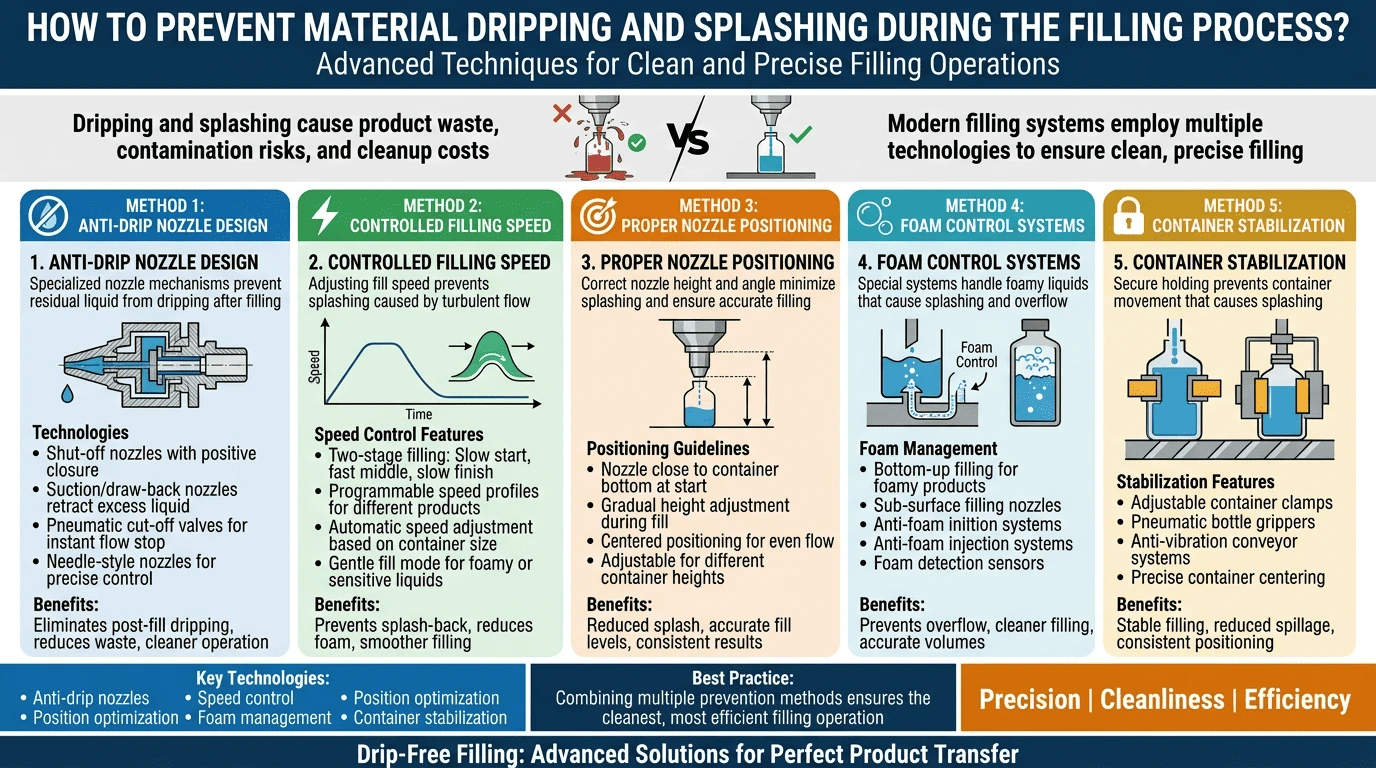
When it comes to liquid filling operations, material dripping and splashing are common issues that can affect product quality, hygiene standards, and production efficiency. Whether you're in the pharmaceutical, food and beverage, chemical, or cosmetics industry, dripping and splashing need to be minimized to maintain safety, reduce waste, and improve overall performance.
In this article, we'll explore effective methods to prevent material dripping and splashing, supplemented with real-world applications, key industries, and how Guangzhou RITO Packaging Machine Co., Ltd. can help you achieve a smoother, more efficient, and contamination-free filling process.
📘 Table of Contents
Understanding the Problem of Material Dripping and Splashing
Why Prevent Dripping and Splashing Matters in Filling Operations
Top 6 Solutions to Prevent Dripping & Splashing in Liquid Filling
The Role of Filling Nozzles in Reducing Liquid Loss
Selecting the Right Nozzle for Your Liquid Type and Bottle Design
Why Guangzhou RITO is the Trusted Choice for Anti-Dripping & Anti-Splashing Solutions
Common Mistakes That Cause Dripping and Splashing
Take the Next Step: Get a Custom Filling Solution from RITO Today
🔍 1. Understanding the Problem of Material Dripping and Splashing
During the filling process, material dripping and splashing are a serious concern. These issues are especially prominent when filling viscous, corrosive, or high-percentage liquid products, such as acetic acid, edible oils, or pharmaceutical solutions.
📌 Why it's a problem:
Waste of raw materials
Product contamination, which can compromise quality and safety
Operator safety risks, especially with high-volume or high-viscosity liquids
Increased cleaning time and cost
Reduced production efficiency
These challenges can be avoided by using high-quality filling systems and dripping prevention strategies tailored to your specific needs.
🔁 2. Why Prevent Dripping and Splashing Matters in Filling Operations
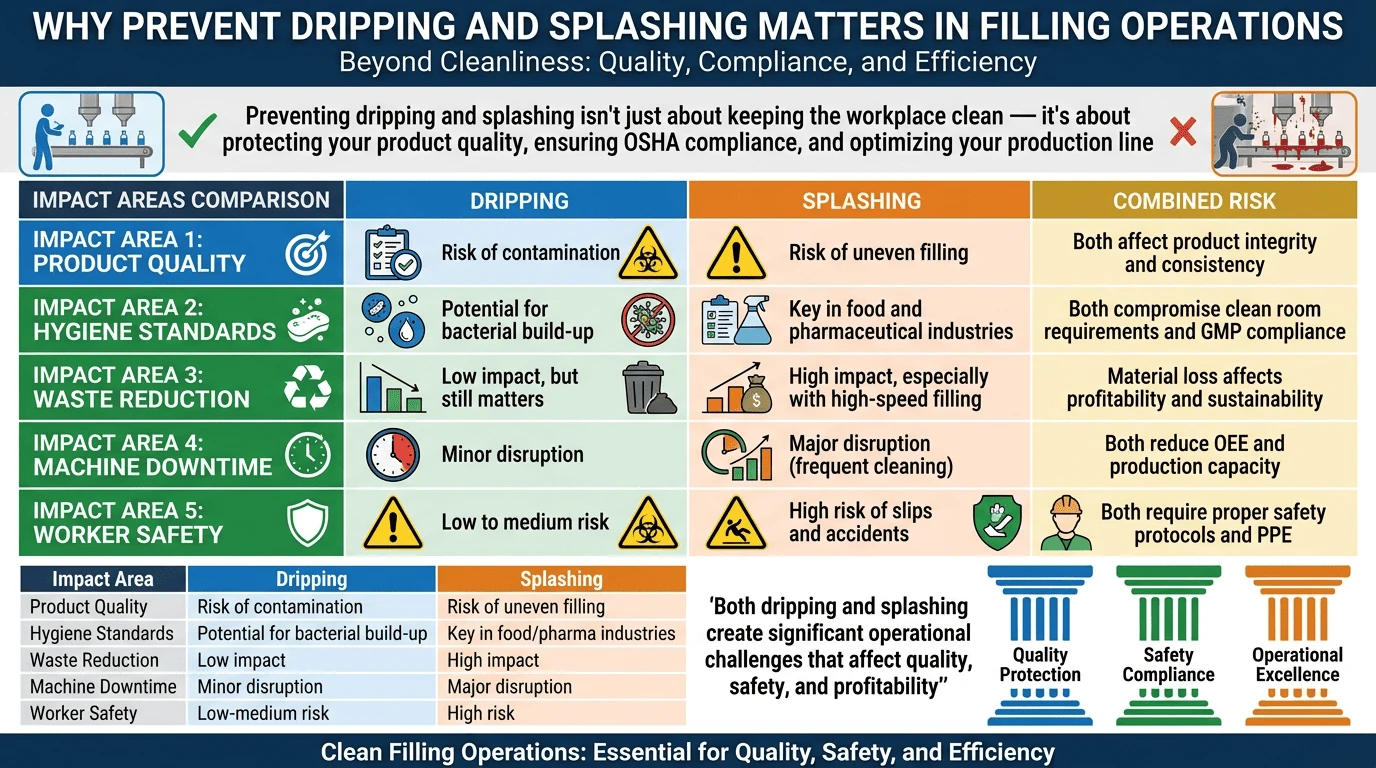
Preventing dripping and splashing isn't just about keeping the workplace clean - it's about protecting your product quality, ensuring OSHA compliance, and optimizing your production line.
| Impact Area | Dripping | Splashing |
|---|---|---|
| Product Quality | Risk of contamination | Risk of uneven filling |
| Hygiene Standards | Potential for bacterial build-up | Key in food and pharmaceutical industries |
| Waste Reduction | Low impact, but still matters | High impact, especially with high-speed filling |
| Machine Downtime | Minor disruption | Major disruption (frequent cleaning) |
| Worker Safety | Low to medium risk | High risk of slips and accidents |
🔧 3. Top 6 Solutions to Prevent Dripping & Splashing in Liquid Filling
To effectively minimize or eliminate material dripping and splashing, you need a well-designed filling system, correct equipment setup, and consistent maintenance routines. Here are six key strategies that can transform your liquid filling process:
✅ 1. Use Anti-Dripping and Anti-Splash Nozzles
Choose nozzles with curved tips, adjustable flow control, and sealing rings.
Stainless steel nozzles (especially 316L) are ideal for corrosive or high-purity liquids.
PTFE-coated internal parts help reduce friction and leakage.
✅ 2. Match the Nozzle to the Bottle Design
Ensure the nozzle shape, size, and material are compatible with your container.
Standard bottles should use standard nozzles, while custom bottles may require tailored nozzle designs.
✅ 3. Control the Filling Speed and Pressure
Avoid overfilling by managing the flow rate and pressure.
High-speed filling increases the risk of splashing, so adjust speed based on liquid type.
Use variable-speed systems for precise and controlled filling.
✅ 4. Install Anti-Splash Guards and Drip Trays
Add splash deflectors, drip trays, or guards around the filling area.
These devices help direct liquid flow away from equipment and operators.
Especially important in pharmaceutical, food, and chemical industries.
✅ 5. Optimize the Filling Head and Tip Design
Curved or conical nozzles reduce turbulence and splashing.
Rotary nozzles with buffer systems help in liquid smoothing and stable flow.
Sealed designs prevent air entrainment, which can cause foaming or splashing.
✅ 6. Perform Regular Cleaning and Maintenance
Dripping and splashing can often be caused by build-up or wear on the nozzles.
Use CIP or SIP cleaning protocols, especially for sanitary applications.
Perform routine inspections to prevent leaks or malfunction.
💡 4. The Role of Filling Nozzles in Reducing Liquid Loss
The filling nozzle is the main point of contact between the liquid and the container, making it crucial for process control and efficiency.
| Feature | Anti-Dripping Filling Nozzles | Standard Filling Nozzles |
|---|---|---|
| Material Used | 316L stainless steel, PTFE-coated internals | Carbon steel or general stainless steel |
| Sealing Performance | High precision, ideal for corrosive or viscous applications | Basic sealing, suitable for neutral liquids |
| Dripping Risk | Very low due to sealing rings and buffer | Moderate due to inconsistent flow patterns |
| Splashing Risk | Minimized with design features | Higher, especially with high-speed filling |
| Hygiene & Safety | Compliant with FDA, GMP, and CE standards | Not always suitable for demanding hygiene needs |
| Compatibility | Designed for precise matching | General-purpose for standard applications |
🔍 5. Selecting the Right Nozzle for Your Liquid Type and Bottle Design
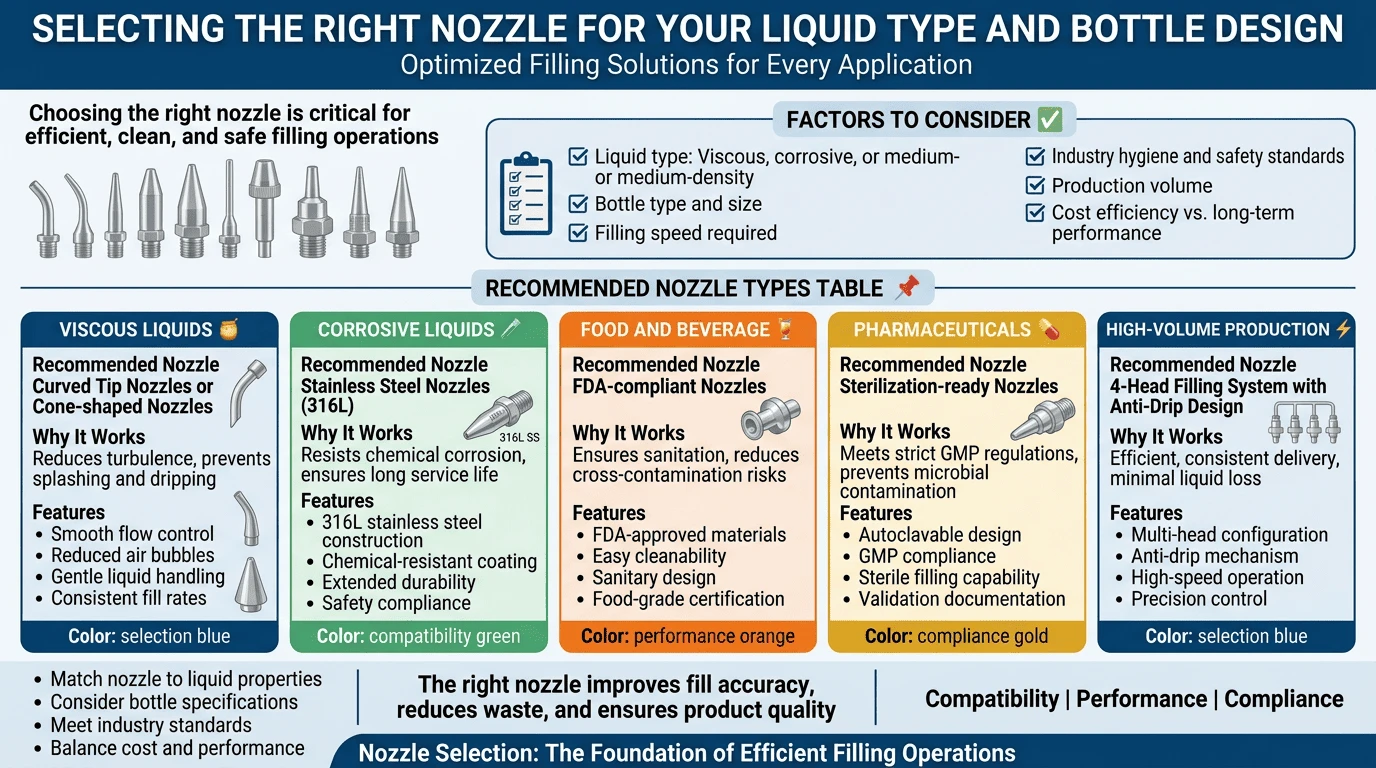
✅ Factors to consider:
Liquid type: Viscous, corrosive, or medium-density
Bottle type and size
Filling speed required
Industry hygiene and safety standards
Production volume
Cost efficiency vs. long-term performance
📌 Recommended Nozzle Types Based on Application
| Application Type | Recommended Nozzle Type | Why It Works |
|---|---|---|
| Viscous Liquids | Curved Tip Nozzles or Cone-shaped Nozzles | Reduces turbulence, prevents splashing and dripping |
| Corrosive Liquids | Stainless Steel Nozzles (316L) | Resists chemical corrosion, ensures long service life |
| Food and Beverage | FDA-compliant Nozzles | Ensures sanitation, reduces cross-contamination risks |
| Pharmaceuticals | Sterilization-ready Nozzles | Meets strict GMP regulations, prevents microbial contamination |
| High-Volume Production | 4-Head Filling System with Anti-Drip Design | Efficient, consistent delivery, minimal liquid loss |
⚙️ 6. Why Guangzhou RITO is the Trusted Choice for Anti-Dripping & Anti-Splash Solutions
As a leading manufacturer of filling, capping, and labeling machines based in Guangzhou, China, Guangzhou RITO Packaging Machine Co., Ltd. has been offering high-performance, contamination-free solutions for over 15 years.
✅ Key Reasons to Choose RITO:
10+ Patents: Including invention and utility patents for anti-drip, anti-splash, and efficient filling setups.
Custom Nozzle Solutions: Tailored for different bottle shapes, liquid types, and production requirements.
Integrated System Design: RITO offers fully automated filling lines, including coupling with capping and labeling systems.
316L Stainless Steel and PTFE Components: Ensure corrosion resistance, clean operation, and longer lifespan.
Local Support & Global Reach: With offices in over 40 countries, we provide on-site service, technical support, and lifetime maintenance.
ISO, FDA, GMP, and CE Certified: Guarantee compliance with international standards for safety, hygiene, and performance.
⚠️ 7. Common Mistakes That Cause Dripping and Splashing
Many companies overlook the importance of nozzle design and maintenance, which can lead to inefficient filling and frequent downtimes. Here are the top mistakes:
| Mistake | Impact |
|---|---|
| Mismatch between nozzle and bottle | Poor sealing, liquid loss, hygiene issues |
| Ignoring cleaning protocols | Contamination and loss of product quality |
| Using low-quality nozzles | Frequent clogging, dripping, and splashing |
| High filling speed for high-viscosity liquids | Causes uncontrolled splashing and waste |
| Poor nozzle alignment | Leads to uneven fill or leakage |
| Inadequate maintenance routine | Increases wear, leading to long-term issues |
📌 8. Take the Next Step: Get a Custom Filling Solution from RITO Today
At Guangzhou RITO Packaging Machine Co., Ltd., we understand that every liquid is unique, and every filling line needs a tailored solution to prevent material dripping and splashing.
📌 What You Can Get from RITO:
Free consultation based on your product type, bottle design, and production volume
Custom nozzle design and machine setup based on your specific requirements
Competitive pricing without compromising quality or performance
Quick response time and local customer support
Lifetime maintenance and software upgrades to maximize ROI
Whether you're working with high-viscosity liquids, corrosive chemicals, or food-grade products, our anti-dripping, anti-splash filling systems are designed to optimize your process and minimize waste.