Filling Strong Acids and Alkalis - Can Your Equipment Really Handle It?
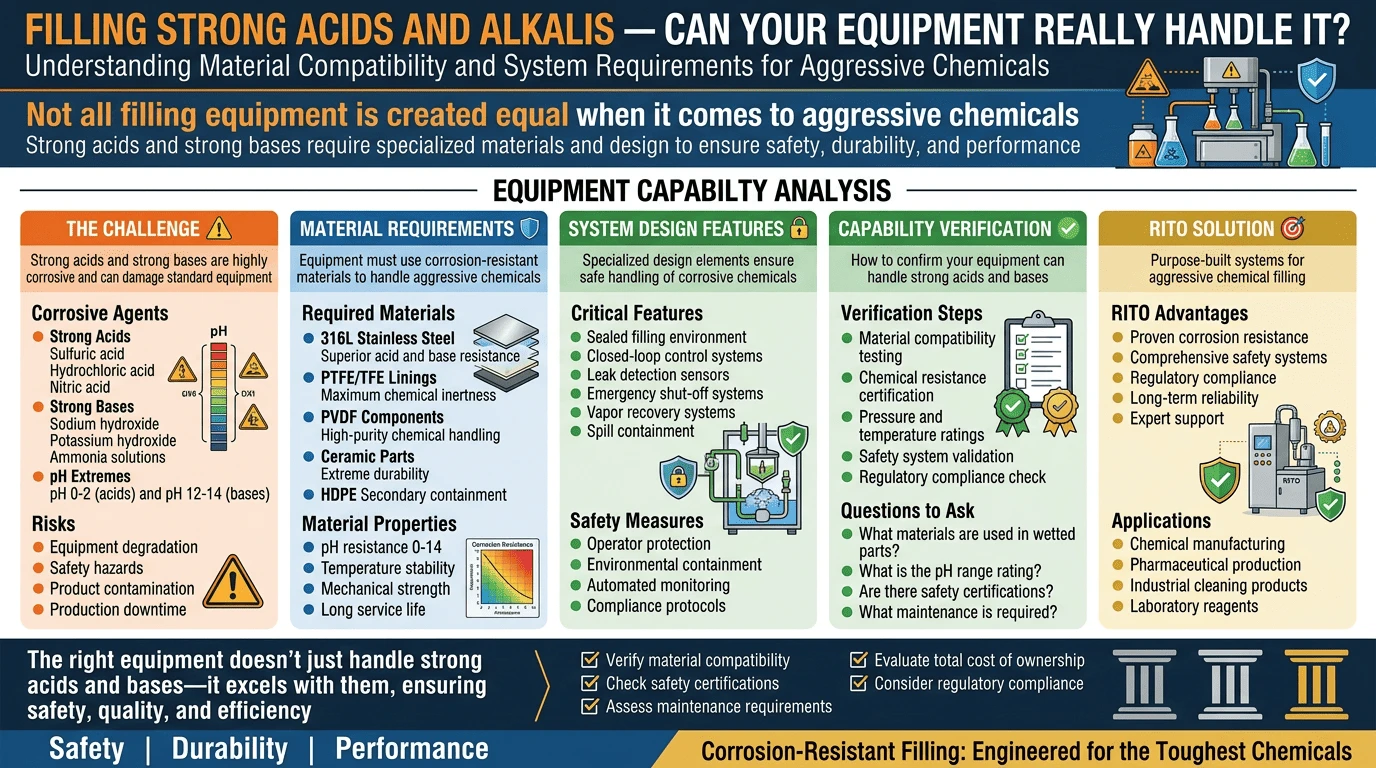
In the chemical industry, pharmaceutical production, and agricultural applications, filling strong acids and alkalis is not just a routine task - it's a mission-critical operation that can seriously affect production efficiency, safety, and equipment durability.
If you're struggling with equipment failure, safety risks, or maintenance costs, you're not alone. Many companies overlook the importance of using specialized corrosion-resistant filling systems in these industries - but the consequences can be harmful.
In this article, we'll explore:
What types of acidic and alkaline substances are commonly filled
Why regular filling machines are not suitable
The benefits of using anti-corrosion filling systems
What makes your filling solution truly professional and safe
Table of Contents
Can Standard Filling Equipment Handle Strong Acids and Alkalis?
What Are the Main Challenges of Filling Corrosive Chemicals?
What Features Make an Anti-Corrosion Filling Machine Effective?
Which Industries Need the Most Reliable Acid/Alkali-Filling Systems?
How Does Corrosion Affect Your Equipment Over Time?
The Key Performance Metrics of Anti-Corrosion Filling Systems
Why RITO's Acid-Alkali Filling Machines Are the Best Choice
What Are the Advantages of RITO's Corrosion-Resistant Filling Technology?
What Makes RITO a Trusted Partner for Acid/Alkali Filling?
How RITO Can Optimize Your Corrosion-Resistant Filling Needs
FAQs: Your Questions About Acid and Alkali Filling Equipment
1. Can Standard Filling Equipment Handle Strong Acids and Alkalis?
Most standard filling equipment is not designed to handle strong corrosive substances like acids and alkalis for long-term use, especially in high-volume, continuous flow settings.
In fact, using non-qualified equipment for these tasks can lead to:
Severe corrosion and material damage
High maintenance and replacement costs
Safety risks for operators
Increased downtime and reduced production efficiency
Let's compare how standard vs. anti-corrosion filling machines differ in handling strong acids and alkalis.
| Feature | Standard Filling Machine | Anti-Corrosion Filling Machine |
|---|---|---|
| Material | Regular stainless steel, general-purpose plastic | 316L stainless steel, PTFE, and HDPE |
| Sealing Systems | Basic, may cause leakage | Dual-sealed, CIP-ready, and IP-rated |
| Cleaning and Maintenance | Manual cleaning, frequent issues | Easy CIP, no disassembly required |
| Safety Compliance | May lack certifications | CE, ISO, GMP, and ATEX certified |
| Durability and Longevity | Limited and prone to failure | Designed for years of robust corrosion resistance |
These differences make anti-corrosion filling machines much more suitable for acid and alkali filling applications.
2. What Are the Main Challenges of Filling Corrosive Chemicals?
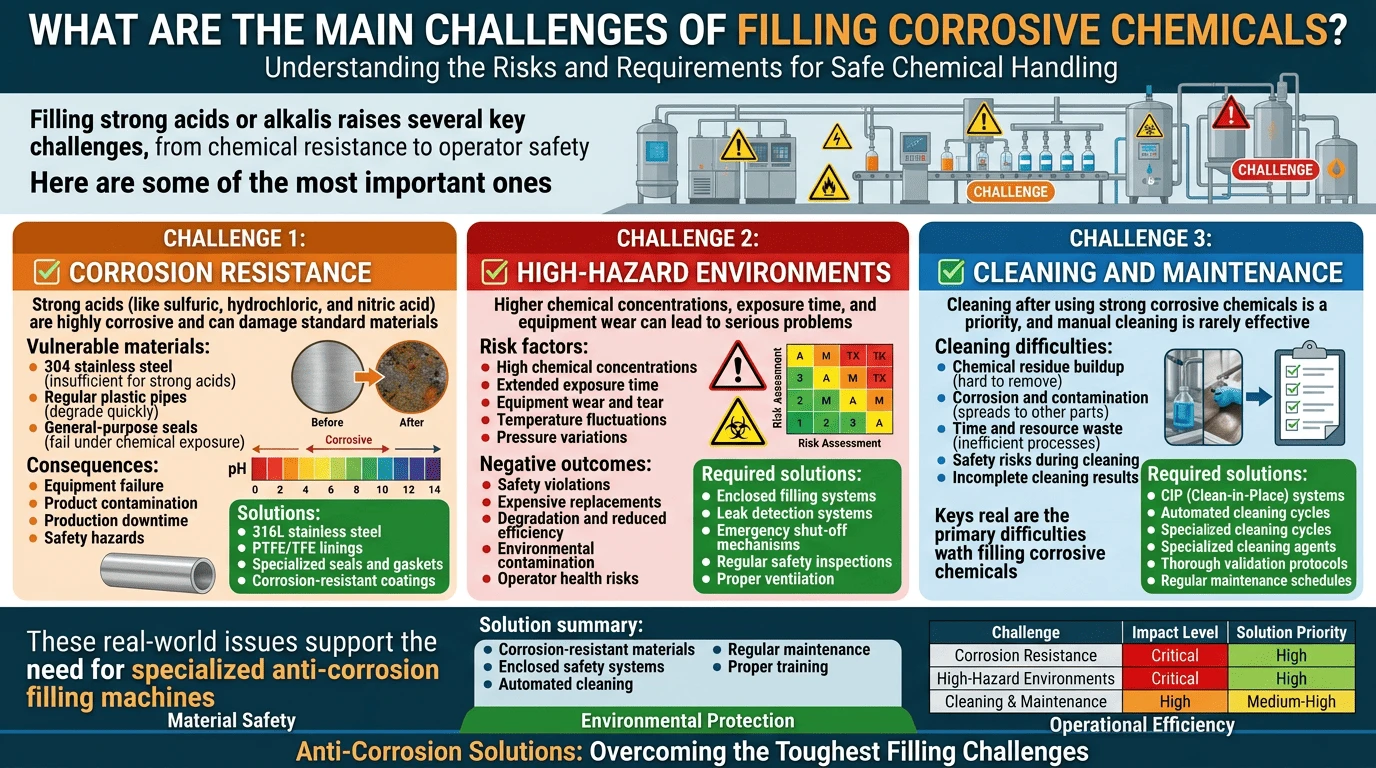
Filling strong acids or alkalis raises several key challenges, from chemical resistance to operator safety. Here are some of the most important ones:
✅ Corrosion Resistance
Strong acids (like sulfuric, hydrochloric, and nitric acid) are highly corrosive and can damage standard materials such as:
304 stainless steel
Regular plastic pipes
General-purpose seals
✅ High-Hazard Environments
Higher chemical concentrations, exposure time, and equipment wear can lead to:
Safety violations
Expensive replacements
Degradation and reduced efficiency
✅ Cleaning and Maintenance
Cleaning after using strong corrosive chemicals is a priority, and manual cleaning is rarely effective due to:
Chemical residue buildup
Corrosion and contamination
Time and resource waste
These real-world issues support the need for specialized anti-corrosion filling machines.
3. What Features Make an Anti-Corrosion Filling Machine Effective?
A reliable anti-corrosion filling machine must meet several key performance criteria to protect your equipment, improve safety, and extend the service life.
| Feature | Description | Why It Matters |
|---|---|---|
| Peter Hahne 316L stainless steel | Offers superior corrosion resistance for strong industrial chemicals | Ensures durability and long-term operation |
| PTFE and HDPE Coated Parts | Adds an extra layer of protection against strong acids and alkalis | Reduces direct chemical contact |
| Dual-Sealed Design | Eliminates leaks and chemical exposure | Enhances operator safety and system integrity |
| CIP (Clean-in-Place) | Reduces manual labor and downtime | Ensures hygienic and safe operations |
| IP Rating (e.g., IP65) | Prevents moisture and chemical seepage | Ensures safety in harsh environments |
| Certifications (CE, ISO, ATEX, and GMP) | Ensure international compliance | Build trust and reputation with customers |
These features ensure your machine can withstand even the most aggressive acidic or alkaline applications.
4. Which Industries Need the Most Reliable Acid/Alkali-Filling Systems?
Strong acids and alkalis are used in a variety of industries, including:
| Industry | Application | Equipment Needs |
|---|---|---|
| Chemical Industry | Industrial chemicals, solvents, and cleaning agents | High corrosion resistance, high capacity |
| Pharmaceuticals | Liquid medicine, disinfectant solutions | GMP compliance, precision, and hygiene |
| Agriculture & Pesticides | Fertilizers, pesticides, and soil treatments | Durable, qualified, and high-volume |
| Water Treatment | Chlorine, pH adjustment compounds | Long-term use, precision, and reliable performance |
| Industrial Coatings and Polishes | Acid-based cleaning agents and solutions | Constant chemical exposure, no contamination |
This diversified application means operational safety and equipment longevity are not optional.
5. How Does Corrosion Affect Your Equipment Over Time?
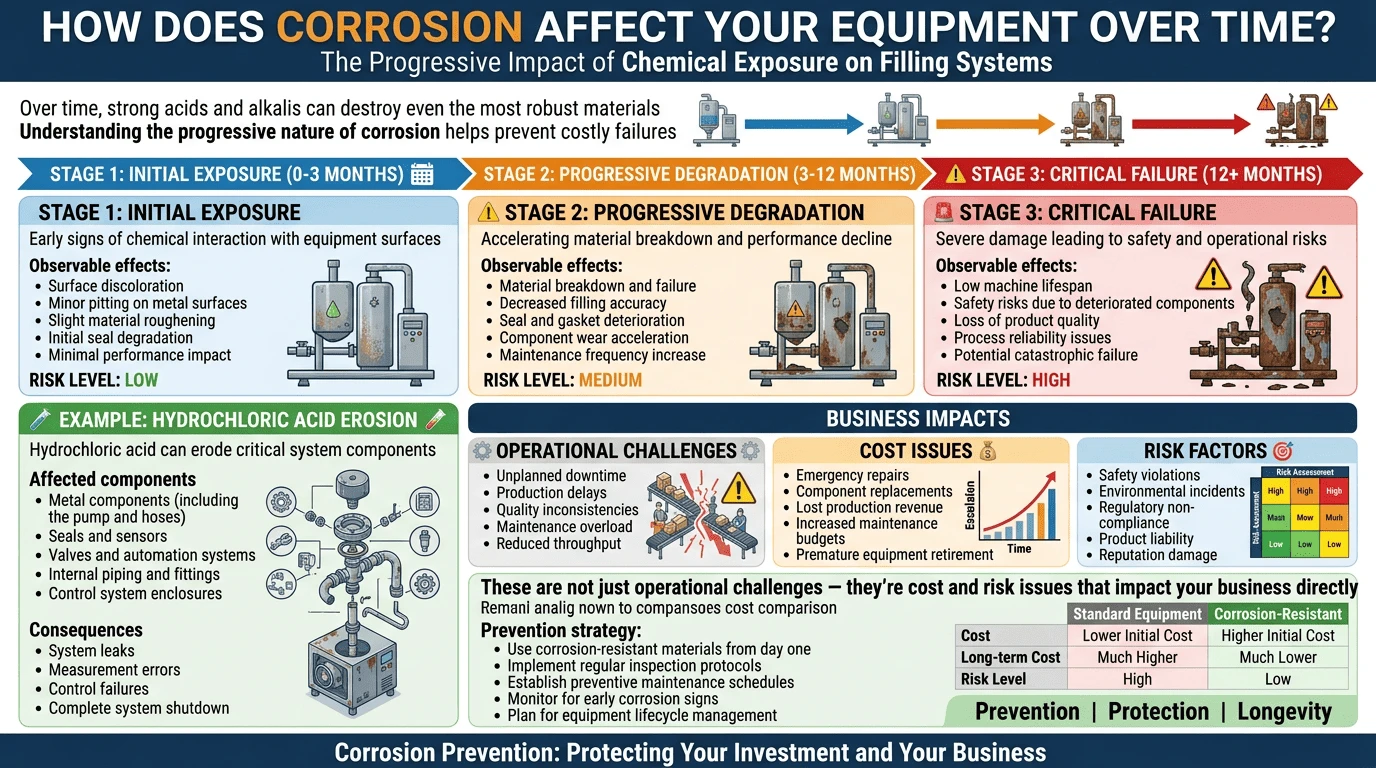
Over time, strong acids and alkalis can destroy even the most robust materials, leading to:
Material breakdown and failure
Decreased filling accuracy
Low machine lifespan
Safety risks due to deteriorated components
Loss of product quality and process reliability
For example, hydrochloric acid can erode:
Metal components, including the pump and hoses
Seals and sensors
Valves and automation systems
These are not just operational challenges - they're cost and risk issues that impact your business directly.
6. The Key Performance Metrics of Anti-Corrosion Filling Systems
Choosing the best acid and alkali filling equipment is not about picking a "cheapest" option - it's about optimal performance metrics that matter for your chemical production.
| Metric | RITO's Performance | Why It Matters |
|---|---|---|
| Corrosion Resistance | 316L stainless steel and PTFE | Guards against chemical erosion |
| Flow Precision | ±0.5% filling accuracy | Ensures product consistency |
| Clean-in-Place (CIP) | No disassembly, easy cleaning | Reduces maintenance effort |
| Sealing Safety | Dual sealing, IP rating | Prevents leaks and safety issues |
| Durability and Lifespan | Designed for long-term, high-volume use | Low total cost of ownership |
| Automation Level | PLC, touchscreen control | Efficient, safe, and user-friendly |
| Certification Level | CE, ISO, GMP, ATEX | Ensures global usability and trust |
These performance metrics are what set RITO apart from the competition.
7. Why RITO's Acid-Alkali Filling Machines Are the Best Choice
When filling strong acids and alkalis, you need a machine that outlasts, outperforms, and outlasts - not just a machine that works for a short period.
🧱 RITO's Core Advantage:
| Advantage | Explanation |
|---|---|
| Corrosion-Resistant Materials | 316L stainless steel, PTFE, and HDPE for maximum durability |
| Deep Industry Understanding | 20 years of experience in chemical, pharmaceutical, and industrial applications |
| CIP-Ready Systems | Building efficiency and safety into the design |
| High Precision and Automation | Advanced PLC control and touchscreen interface |
| Global Standards Compliance | CE, ISO, GMP, and ATEX certified |
| Expert Machinery for Long-Term Use | Designed for constant, fast, and safe filling |
| Lifetime Maintenance Support | Free updates and support for the entire lifecycle |
| Customization and Innovation | Over 10 patents, including 5 invention patents |
These features make RITO the top choice for any corrosive filling application.
8. What Are the Advantages of RITO's Corrosion-Resistant Filling Technology?
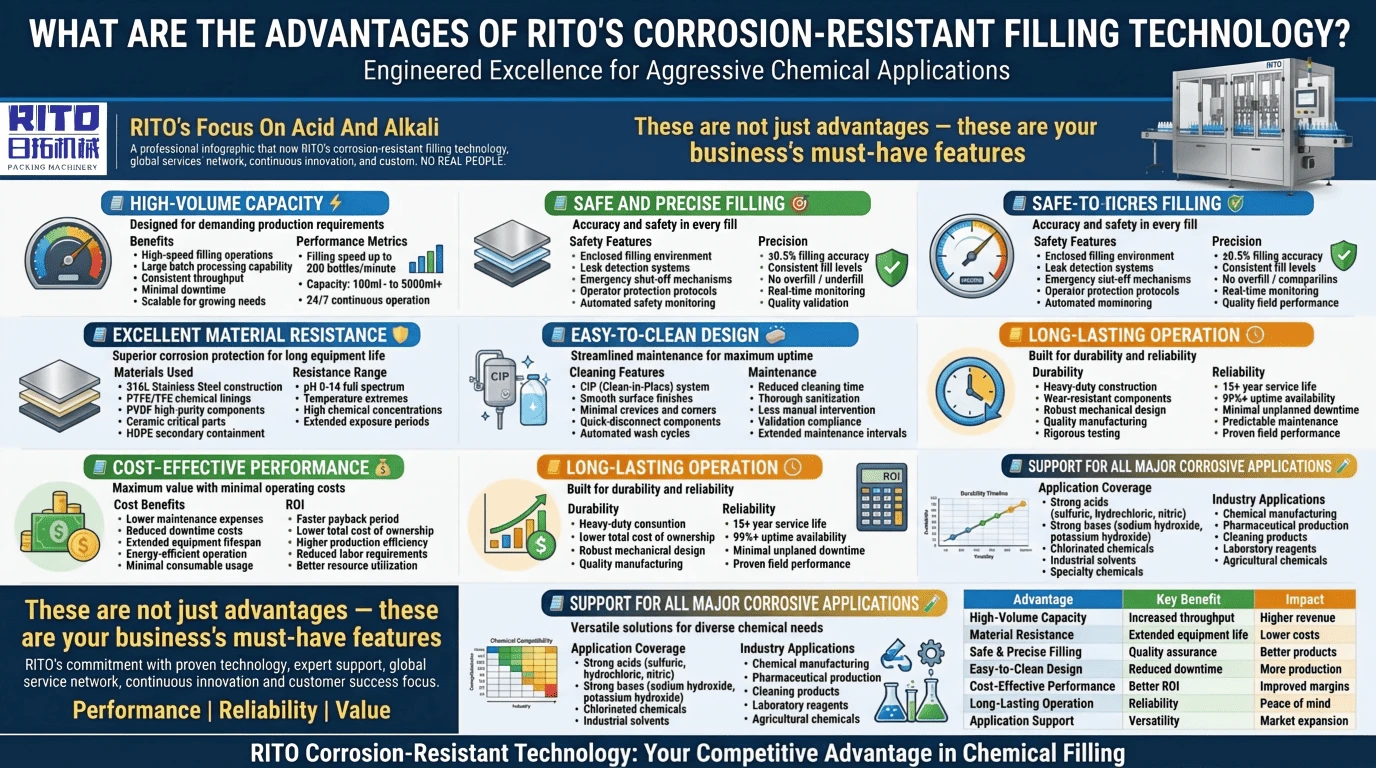
📘 RITO's Focus on Acid and Alkali
High-volume capacity
Excellent material resistance
Safe and precise filling
Easy-to-clean design
Cost-effective performance
Long-lasting operation
Support for all major corrosive applications
These are not just advantages - these are your business's must-have features.
9. What Makes RITO a Trusted Partner for Acid/Alkali Filling?
Choosing RITO is not just about selecting a machine - it's about building a long-term partnership with a century of experience and a reputable brand.
✅ RITO's Track Record:
| Strength | Detail |
|---|---|
| 10+ Patents, 5 Invention Patents | Innovation and technology leadership |
| 3,000㎡ National High-Tech Headquarters | Ready to provide local service and fast delivery |
| 20 Years of R&D and Production Experience | Proven track record and technical excellence |
| Industries Served in Over 40 Countries | Proven global performance and compliance |
| 24/7 Technical Support Team | Seamless support and efficient operation |
| Long-term, fully functional solution | Designed for reliable use and long-life performance |
This track record of excellence makes RITO the trusted partner for your acid/alkali filling needs.
10. How RITO Can Optimize Your Corrosion-Resistant Filling Needs
At RITO, we don't just sell equipment - we build custom systems tailored to your specific industry applications and chemical requirements.
🧠 How RITO Delivers:
Material selection optimized for acid and alkali resistance
Dual-sealed and CIP-ready systems for safe and efficient operation
Advanced control systems for precision and automation
Comprehensive service and support for real-world use
Adaptable and easily customizable for different acid/alkali types
By tailoring the system to your needs, RITO ensures minimum downtime, maximum precision, and long-term reliability.
11. FAQs: Your Questions Answered About Acid & Alkali Filling Equipment
Q1: Can my existing filling machine handle strong acids and alkalis?
A1: No, standard filling machines lack corrosion-resistant materials. 316L stainless steel and PTFE coatings are required for long-term use with strong acids or alkalis.
Q2: What materials are used in RITO's systems for acid/alkali handling?
A2: 316L stainless steel, PTFE, and HDPE ensure strong protection against corrosive liquids.
Q3: Do you offer CIP systems for acid/alkali filling?
A3: Yes, all RITO systems are CIP-ready, ensuring clean, safe, and efficient production.
Q4: What kind of service support do you offer for corrosive filling machines?
A4: We provide lifelong maintenance, free software upgrades, and instant, localized support.
Q5: Can I customize my filling system for special chemical applications?
A5: Yes, RITO offers modular and customizable solutions for all industrial chemical types.