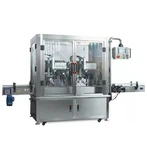
🚨 The Ultimate Guide to Corrosive Liquid Filling Machines in Chemical Packaging – RITO Edition
In the chemical manufacturing industry, handling corrosive liquids requires specialized equipment that ensures safety, accuracy, and durability. Filling corrosive substances such as acids, bases, and solvents demands materials resistant to chemical degradation, systems that minimize exposure, and high-precision control mechanisms.
If you're wondering:
"What is the ultimate guide to corrosive liquid filling machines in chemical packaging?"
Then you're exactly where you need to be. This guide provides an in-depth understanding of operational design, material choices, compliance standards, and application examples-all tailored to chemical industries and this specific search intent.
Let's go through everything you need to choose, implement, and optimize your corrosive liquid filling machine.

📌 1. What Are Corrosive Liquid Filling Machines & Why Are They Important in Chemical Packaging?
Corrosive liquid filling machines are specialized equipment for filling chemicals such as acids, bases, and highly reactive solvents. Unlike traditional "user-external" equipment, these systems use chemical-resistant components to prevent equipment wear, operator exposure, and product misfilling.
Why this equipment is crucial:
Ensures safety in hazardous chemical environments
Maintains accuracy even with corrosive/viscous liquids
Excellent durability with materials like 316L stainless steel, PTFE, PFA, and Teflon
Supports high regulations and hygiene, especially for pharmaceuticals and industrial chemicals
📌 2. Understanding the Design Requirements of Corrosive Liquid Fillers
To ensure optimal performance with corrosive substances, a modular, robust, and safe design is essential.
| Design Aspect | Description | Why It Matters |
|---|---|---|
| Sealed System | Reduces direct chemical exposure to machine components and operators | Safety and control |
| Integrated CIP () | Allows automated cleaning to keep equipment in top condition | Hygiene and efficiency |
| Chemical-Resistant Lining | Uses materials like Ptfe, PFA, polyetheretherketone (PEEK) | Longer lifespan and accuracy |
| Rapid Sip or Clean-In-Place | Dedicated cleaning operating modes for chemicals that require frequent pick-up | Hygienic, safe, and repeatable |
| Safety Protocols | Inbuilt safety interlocks, sensors, and emergency shut-off | Regulatory compliance |
| Variable Nozzle Configurations | Can be configurable to match your product line and input/output requirements | Scalability and customization |
| Plumbing and Pipeline Setup | Designed to minimize chemical contact and reduce wear | Protection and efficiency |
| PLC Integration | Ensures flow accuracy, error detection, and real-time control | Key for automation and diagnostics |
🔧 RITO Insight: These machines are cadence and control-focused, especially in high-volume or safety-requiring applications.
📌 3. How Is Corrosive Liquid Filling Done in the Chemical Industry?
Corrosive liquid filling with chemical-resistant machines follows a structured, precise, and safe process, ensuring no contamination, accurate fills, and compliance.
📘 Step-by-Step Process
Container Detection – Sensors locate the correctly sized container
Nozzle Alignment – Servo-controlled nozzles move into position
Valve Open – The system opens a chemically compatible valve to begin liquid intake
Pump Activation – A peristaltic or semi-automated pump system controls the exact fill volume or pressure
Fill Standards Applied – The machine adheres to weight/pressure level settings for exacting results
CIP Integration – Optional system to clean the pipeline automatically to reduce manual cleaning
Move to Capping or Packaging – Use of clever integration with capping machines or automated end lines
System Reset – Applies a PLC-sequence reset for next cycle
📌 4. Key Design Features You Need to Looking for in Corrosive Liquid Filling Machines
Here's an in-depth guide to the critical elements that define a good corrosive liquid filler.
| Component / Feature | Purpose / Role | Why It Matters |
|---|---|---|
| Sealing Mechanism | Ensures no venting or escape of dangerous substances | Safety and sanitation |
| Chemically-Resistant Tubing & Gaskets | Designed for agents that degrade traditional materials | Long lifespan and accuracy |
| Valve Materials | Use of PTFE, PVDF, and Hastelloy for high corrosion resistance | Optimal chemical compatibility |
| Control System Options | Incorporation of PLC or HMI for advanced diagnostics and precise filling visualization | Real-time monitoring and machine stability |
| CIP Integration | Allows automated cleaning for chemical compliance and hygienic performance | Efficiency and regulatory adaptability |
| Modular Infrastructure | Adaptable to small, medium, or large-scale applications | Custom solutions to multiple chemical processes |
| Pipeline Construction | Made with no liquid contact components to minimize wear and damage | Protection and precision |
🛠️ Insight: Corrosive liquid filling excludes external piping exposure, and ensures only contact with chemically inert and resistant components.
📌 5. The Critical Role of PLC and CIP in Corrosive Liquid Filling
Both PLC (Programmable Logic Controller) and CIP (Clean-in-Place) are vital for optimizing your corrosive liquid filling process.
📊 Table: PLC & CIP in Corrosive Filling Machines
| PLC Feature | Role | Key Benefits for Corrosive Applications |
|---|---|---|
| Sensor Logic Input | Detects container presence and fill accuracy | Enables precise control and step-by-step filling |
| Auto Reset Sequences | Ensures a seamless, error-free process | Reduces downtime and maintains efficiency |
| Error Detection Logic | Identifies overfill/underfill and warning signals | Provides early warnings and system stability |
| CIP – Clean-in-Place | Automates the cleaning of internal components | Reduces maintenance, prevents contamination, and meets hygiene requirements |
| Control Signal Timers | Manages fill timing and pump operation | Precisely timed and controlled to match product and industry standards |
| HMI Interface for Monitoring | Shows filling progress, error logs and machine status | Enables real-time visibility and fast response |
𝐄𝐄𝐄 Insight: For chemical factories, corrosive liquid filling machines with PLC+HMI+CIP integration are the most suitable option for large-scale and high-accuracy applications.
📌 6. Common Applications of Corrosive Liquid Filling Machines
Corrosive liquid filling systems are used across various chemical and industrial fields, each with their own unique requirements and control needs. Here's a table of common applications:
| Application | Corrosive Liquid Type | Purpose | Capacity Range (L/h) | Compatibility |
|---|---|---|---|---|
| Industrial Chemicals | Sulfuric Acid (H₂SO₄), Hydrochloric Acid (HCl) | Dragon industrial production | 100–1,000 L/h | 316L Stainless Steel + CIP |
| Pharmaceuticals | Organic solvents, corrosive agents | Batch and continuous filling | 300–800 L/h | GMP-compliant design + PLC control |
| Cleaning Chemicals | Acidic cleaning solutions (e.g. Hydrochloric) | Hygiene and safety in packaging | 200–500 L/h | Food-grade + Sanitary integration |
| Fertilizer/Water Treatment | Acidic or alkaline solutions | Agrochemical or environmental use | 50–300 L/h | Robust materials + option CIP |
| Battery Electrolyte Filling | Corrosive metals and solvents | Battery production and industrial chemical treatment | 50–120 L/h | Industry-specific regulations + high viscosity support |
🛠️ Insight: For corrosive cleaning solutions, phosphate-based fertilizers, and battery solvents, cost-effective, high-load systems are necessary. But in regulatory environments, modal motor systems and sensors are essential.

📌 7. Why Choose Guangzhou RITO Packaging Machinery?
Guangzhou RITO is a leading manufacturer of industrial liquid filling equipment, with a strong focus on corrosive and chemical-resistant filling systems.
✅ RITO's Edge
| Feature | Description |
|---|---|
| 20 Years of Research and Development | We have a dedicated R&D team with over 10 years of experience in large-scale industrial solutions |
| 3,000+ Square Meters of Factory Space | High-quality, hygienic, and high-performance machines |
| 300+ Years of Industrial Applications | Used or trusted in 40+ countries, including Germany, Canada, Vietnam, Mexico, and Brazil |
| Material Innovation | Offers 316L Stainless Steel, PVDF, PTFE, and more for resistance against strong acids, bases, and solvents |
| Industry-Specific Solutions | Tailored to pharmaceutical, industrial, and agricultural settings |
| Global Support and Packages | From Asia to America, we offer fast, reliable service with expert advice |
| 10+ Patents (Invention and Utility) | Includes advanced designs for closed-loop, sealing-based, and CIP-compliant systems |
| PLC + HMI + Servo Integration | Ensures precise control, diagnostics, and real-time monitoring |
🔧 Insight: At RITO, we engineer corrosive liquid filler systems that are customer-focused and built for long-term efficiency and quality.
📌 8. Key Industry Applications in Chemical Packaging
Here's how corrosive liquid filling machines are used in various domains and business sizes:
📊 Table: Industrial Use and Packing Needs
| Application | Capacity Example | Key Features | Why RITO? |
|---|---|---|---|
| Industrial Solvents | 200–500 L/h | High corrosion resistance, modular design | Fast, customizable production |
| Pharmaceuticals | 100–400 L/h | GMP standards, chemical-resistant materials | Exacting fill accuracy and safety |
| Agricultural Chemicals | 100–200 L/h | Resistant to acids and alkalis, compatible with various viscosity | Durable, high-use machines |
| Battery Electrolytes | 50–100 L/h | Easy to clean, can handle high viscosity and end terms | Balances speed with chemical resistance |
| Cleaning Chemicals | 100–250 L/h | Chemical - where to go? RITO's solutions are stress-resistant, ZIP-encoded, and stable | Easily customized and reliable |
📘 Insight: Each industrial application demands a customized solution, and RITO ensures your filling process is both efficient and safe.
📌 9. How to Choose the Right Corrosive Liquid Filling Machine
Choosing the right drainage, cleaning, and fit for your specific chemical use is a key factor in operational and safety success.
📊 Table: Selection Criteria
| Parameter | Consideration | Why It Matters |
|---|---|---|
| Corrosive Liquid Type | Acids, bases, solvents | Material selection is crucial |
| Container Size | 250ml–500L | Influences capacity choice and speed |
| Whether You Need CIP | No / Yes | Determines efficiency and maintenance |
| PLC Compatibility | Siemens, Mitsubishi, Allen Bradley | Ensures future-proof automation and control |
| Fill Accuracy Requirement | ±0.1%, ±1%, or custom | Announces the focusing point of your filling system |
| Production Volume | High, Mid, or Low | Influences speed and nozzle design |
| Industry Origin | Safe for pharmaceuticals, agrochemicals, or industrial use | Tailored to your business line |
✅ Insight: With RT1000, FT1000, and IT2000, we offer multiple options to match your chemical needs and production scale.
📌 10. Why RITO? Integrating Know-How for Industry Leaders
If you're looking for a solution that does more than just tank, Guangzhou RITO is your perfect partner:
🎯 Why Choose RITO?
| Feature | Why It Matters |
|---|---|
| 20 Years of Expertise | Our R&D team has been crafting industrial solutions for over 20 years |
| 3,000m² Production Facility | Located in Guangzhou, China, with ISO and CIP compliance |
| High-Performance Corrosive Systems | From chemical solvents to pharmaceutical mixtures, we offer efficient, safe, long-lasting machines |
| Smart Integration Capabilities | PLC, HMI, and CIP-ready systems for precision and control |
| In-House Engineers | We have 10+ PLC experts, software engineers, and chemical engineers to design and debug your system |
| Global Specifications and Compliance | GMP, ISO, and HDPE used in our machines to handle all ranges of corrosive packaging |
🔧 Insight: Our corrosive liquid handling systems are built to handle scale, speed, and chemical dropouts with confident precision and media-resistant design.
📌 11. How RITO Is Helping the Chemical Industry with Corrosive Filling Machines
We've partnered with chemical and industrial brands across the globe to provide high-quality, safe liquid filling systems.
📈 Example Use Cases:
| Industry | Chemical Type | Capacity | Key Metrics RITO Provides |
|---|---|---|---|
| chemical washing and cleaner | strong acidic or basic solutions | 100–400 L/h | No cross-contamination |
| industrial chemical application | high reactivity, high viscosity | 50–200 L/h | Durability, safety, scalability |
| pharmaceutical | solvents, detergents | 300–600 L/h | High standards of compliance |
| agrochemical packaging | acid and base-based pesticides | 200–500 L/h | Robust and hybrid material systems with CIP |
| battery and electrolyte filling | corrosive liquids (e.g. H₂SO₄) | 50–100 L/h | Efficient and fast industry-specific systems |
| white liquid treatment | low to medium corrosive solutions | 150–400 L/h | Sanitary and user-friendly adaptations |
➡️ Insight: Our deep integration and systems design ensure smooth operation even in the most challenging chemical conditions.
📌 12. Conclusion: RITO's Guide for Corrosive Liquid Filling Machines
In conclusion, the ultimate guide to corrosive liquid pumping machines shows us how chemical compatibility, material selection, and process control are essential in chemical packaging.
At Guangzhou RITO Packaging Machinery, we provide:
Highly accurate and durable machines that handle the most aggressive chemicals
Sealed, encoded, and composable systems for optimal performance
Design for chemical-safe environments
PLC and HMI integration for peak efficiency and process optimization
CIP integration that ensures longer lifespan, lower downtime, and better compliance
Customer-focused and end-to-end support for your chemical production needs
📞 Call to Action for Your Website
If you're wondering, "What is the ultimate guide to corrosive liquid filling machines in chemical packaging?" or **looking for a compliant and sturdy system, then contact Guangzhou RITO Packaging Machinery today.
We are ready to help you choose the right system, design a custom solution, and ensure safe, accurate, and efficient filling for your chemical needs.
我们特别争取:
✅ 100% chemical-resistant machines
✅ Modular and flexible systems
✅ Global operations and support across 40+ regions
✅ Lifetime support and free software updates
✅ Optional CIP and safety interlocks for seamless integration
📌 13. How Does RITO Stand Out in the Chemical Market?
With 20 years of experience, we focus on customer experience and industrial needs to ensure efficient and safe corrosion-resistant filling systems.
📊 Table: What Makes RITO Unique?
| Feature | Description |
|---|---|
| PLC-Controllable Configurations | Ensures safe and accurate machine operation |
| Material Resistance Innovations | Uses 316L Stainless Steel, PTFE, and other options |
| High-Tech Research & Development | A team of over 10 engineers supporting planning and execution |
| Technical Support & Industry Feedback | Opinions and experience from global chemical users |
| High-Throughput & Customizable Machines | Adaptable from low to high volumes and complex applications |
| CIP-Integrated Systems | Offers automatic washing and sanitization for over 300+ use cases |
| Guaranteed Quality and Timely Responses | Our guaranteed service and support tracks to your industrial expectations |