Can a Corrosion-Resistant Filling Machine Be Integrated with Labeling or Capping Equipment to Form a Production Line?
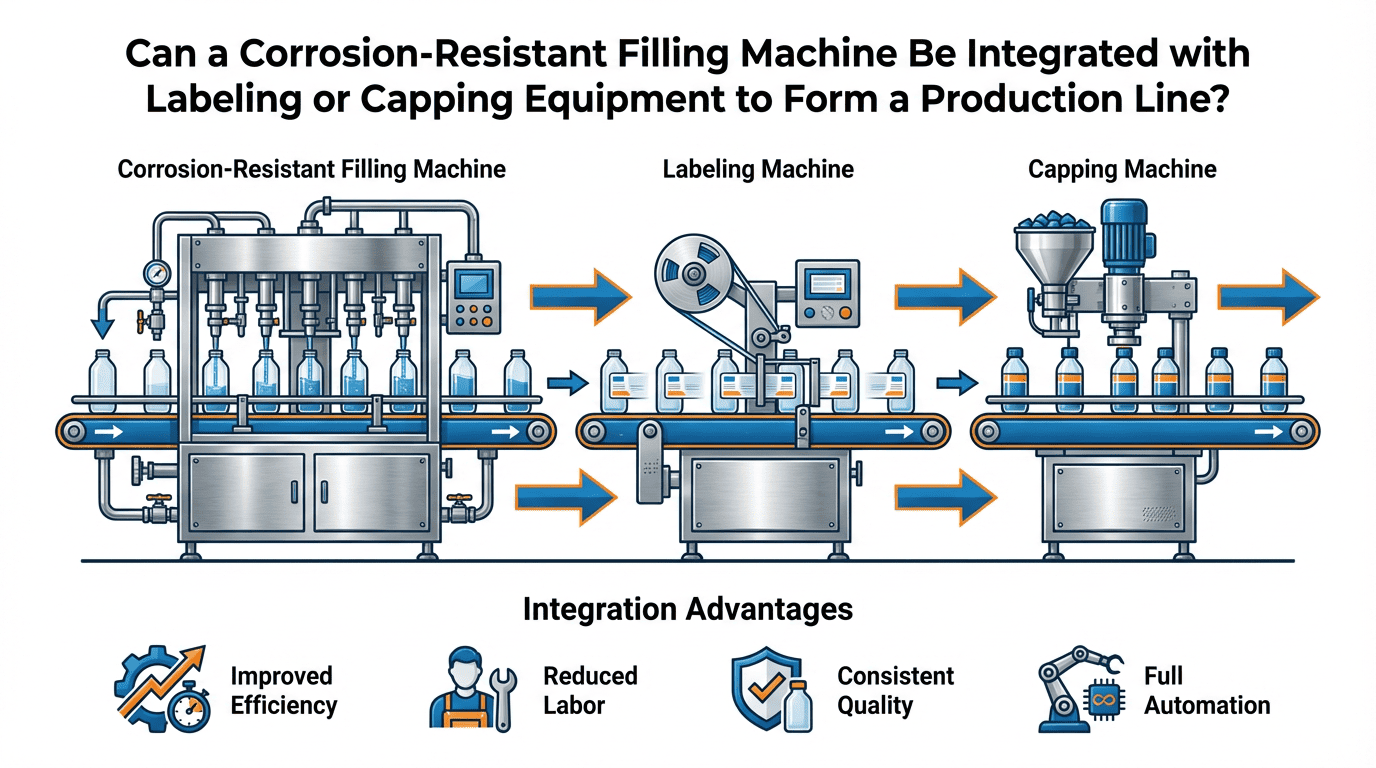
Efficient production is the backbone of any manufacturing operation, especially when dealing with liquids, cosmetics, pharmaceuticals, or beverages. For industries that handle corrosive materials, such as cleaning agents, lubricants, and pharmaceuticals, the need for corrosion-resistant filling machines is not just about functionality-it's about ensuring long-term reliability and product integrity.
Many factories struggle to maintain the speed and accuracy of their packaging operations when using separate machines for filling, capping, and labeling. A fully integrated production line that combines these functions offers a cost-effective and efficient solution, delivering consistent product quality, reduced downtime, and streamlined operations.
In this article, we'll explore how corrosion-resistant filling machines can be integrated with labeling and capping systems, the benefits of doing so, and how Guangzhou RITO Packaging Machine Co., Ltd. specializes in customized, corrosion-resistant packaging integration.
Table of Contents
Why Integrate Corrosion-Resistant Filling Machines with Labeling and Capping Equipment?
What Are the Key Components of a Corrosion-Resistant Packaging Line?
How Does Corrosion Resistance Affect the Integration of Filling and Labeling/Capping Systems?
Which Industries Can Benefit from a Corrosion-Resistant Integrated Production Line?
How to Choose and Integrate a Corrosion-Resistant Filling Machine?
How to Successfully Implement a Corrosion-Resistant Integration Line?
Can Guangzhou RITO Help You Integrate Corrosion-Resistant Equipment?
Guangzhou RITO's Core Competencies in Corrosion-Resistant Packaging Integration
Why Integrate Corrosion-Resistant Filling Machines with Labeling and Capping Equipment?
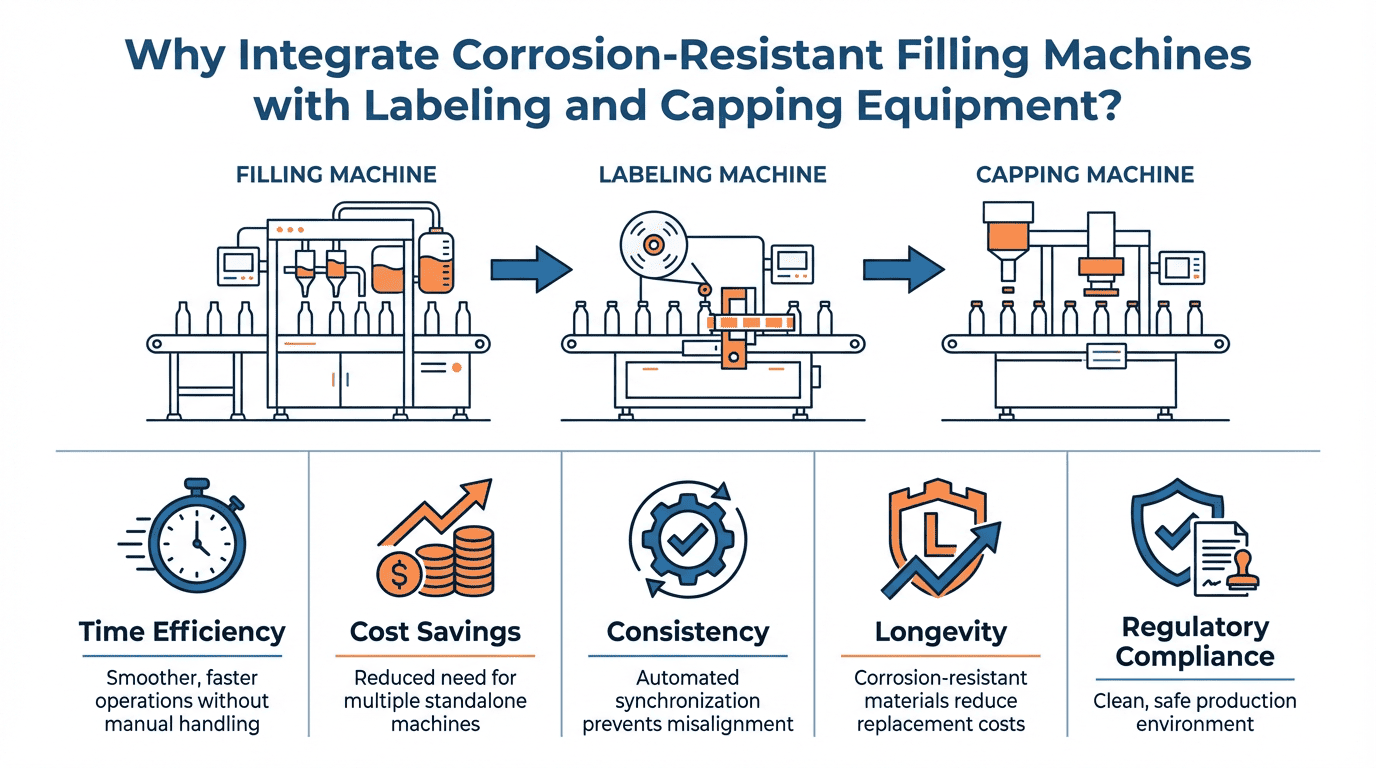
When building a production line, integrated solutions are often more efficient and cost-effective than using standalone machines.
Time Efficiency: Avoid manual handling and movement between different machines, resulting in smoother and faster operations.
Cost Savings: Integrated lines reduce the need for multiple separate machines and operators.
Consistency: Automated systems ensure that filling, capping, and labeling are all synchronized, avoiding errors from misalignment or delays.
Longevity: Corrosion resistance in the filling section means that those parts stay functional over time, reducing replacement frequency and costs.
Regulatory Compliance: Especially in pharmaceutical and food industries, maintaining clean and safe production environments is critical.
These benefits are especially valuable when dealing with corrosive liquids, where corrosion-resistant materials are crucial for machine durability and reliability.
What Are the Key Components of a Corrosion-Resistant Packaging Line?
A complete packaging line requires careful selection and integration of the following machines:
Corrosion-Resistant Filling Machines
These machines are specifically built with stainless steel, PTFE, or other anti-corrosion materials to handle salty, acidic, or chemical-based liquids.
Labeling Machines
These apply labels automatically, ensuring brand consistency, product identification, and compliance with packaging standards.
Must be compatible with the filling and capping equipment to maintain alignment and speed.
Capping Machines
These must be able to handle caps that may be exposed to corrosive substances.
Some partially corrosion-resistant capping systems are sufficient, depending on the liquid type and product sensitivity.
Conveyor Systems & Conveyor Belts
Ensure that products move smoothly from filling to labeling and capping, without causing damage or contamination.
Software & Control Systems
Synchronize the entire line using PLC controls or industrial automation software for seamless integration.
How Does Corrosion Resistance Affect the Integration of Filling and Labeling/Capping Systems?
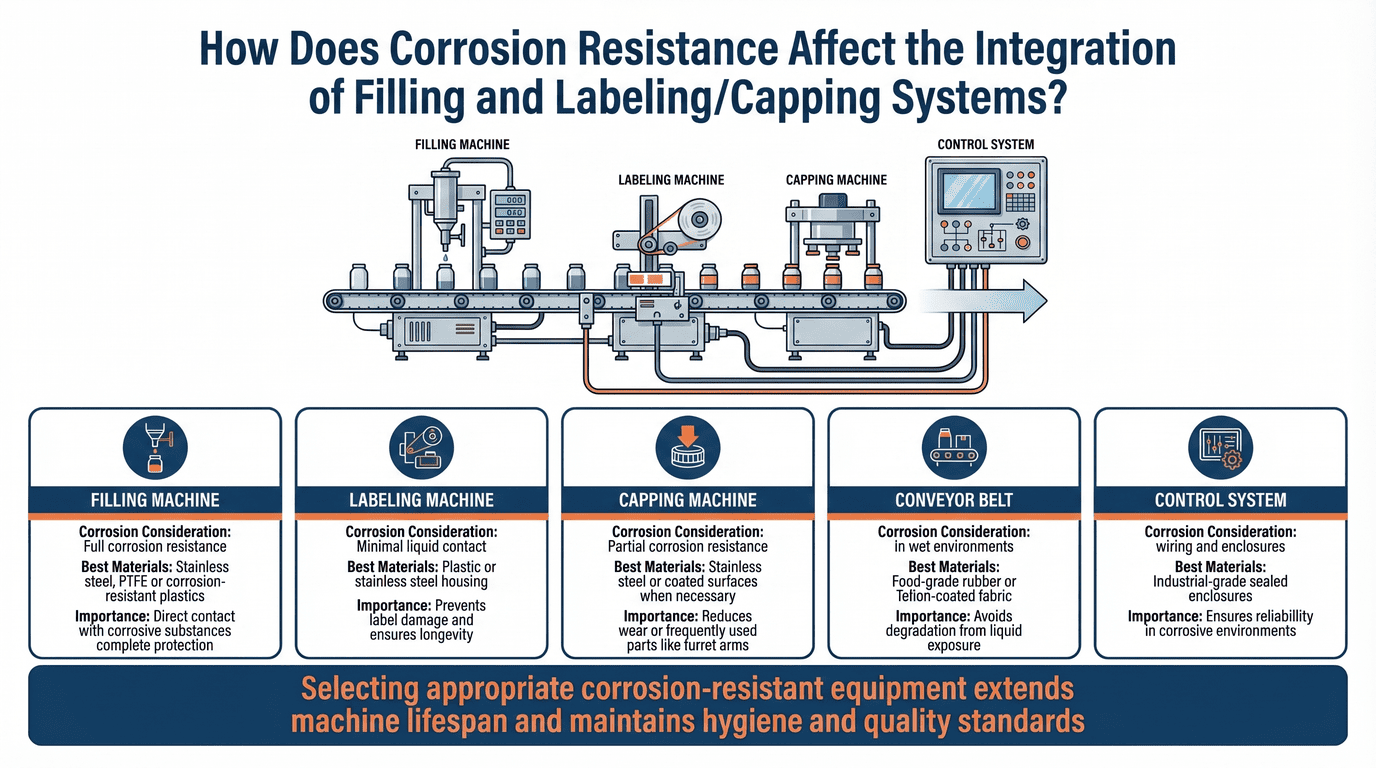
Many operators assume that corrosion resistance is only important for the filling machine, but in a fully integrated system, it's crucial to consider how it affects the whole line:
| Component | Corrosion Consideration | Best Material | Why Important |
|---|---|---|---|
| Filling Machine | Full corrosion resistance | Stainless steel, PTFE, or corrosion-resistant plastic | Direct contact with corrosive agents requires complete protection |
| Labeling Machine | Minimal contact with liquids | Plastic or stainless steel housing | Prevents label damage and ensures longevity |
| Capping Machine | Partial corrosion resistance | Stainless steel or coated surfaces where necessary | Reduces wear on frequently used parts like turret arms |
| Conveyor Belt | Non-corrosive (especially in wet environments) | Food-grade rubber or teflon-coated fabric | Avoids degradation from liquid exposure |
| Control System | Corrosion-resistant wiring and enclosures | Industrial-grade, sealed enclosures | Ensures reliability in corrosive environments |
Choosing equipment with appropriate corrosion resistance not only extends the lifespan of the machinery but also maintains hygiene and quality standards throughout the production chain.
Which Industries Can Benefit from a Corrosion-Resistant Integrated Production Line?
| Industry | Product Type | Why They Need Integration |
|---|---|---|
| Chemicals & Industrial Lubricants | Cleaning agents, solvents, oils | High-risk of corrosion and chemical exposure |
| Pharmaceuticals | Liquid medicaments, injectables | Requires high levels of cleanliness and accuracy |
| Food and Beverage | Juices, sauces, syrups, dairy | Must meet food safety and labeling standards |
| Cosmetics | Creams, lotions, serums | Ensuring aesthetic and hygiene quality |
| Agricultural Chemicals | Pesticides, fertilizers, plant extracts | May involve acidic or alkaline solutions |
| Oils & Lubricants | Hydraulic oils, engine oils | Constant exposure to chemical-based substances |
| Metal Processing Liquids | Coolants, degreasers | High corrosion risk due to chemical content |
These industries all benefit from integrated, corrosion-resistant packaging systems that minimize contamination, improve efficiency, and ensure product quality.
How to Choose and Integrate a Corrosion-Resistant Filling Machine?
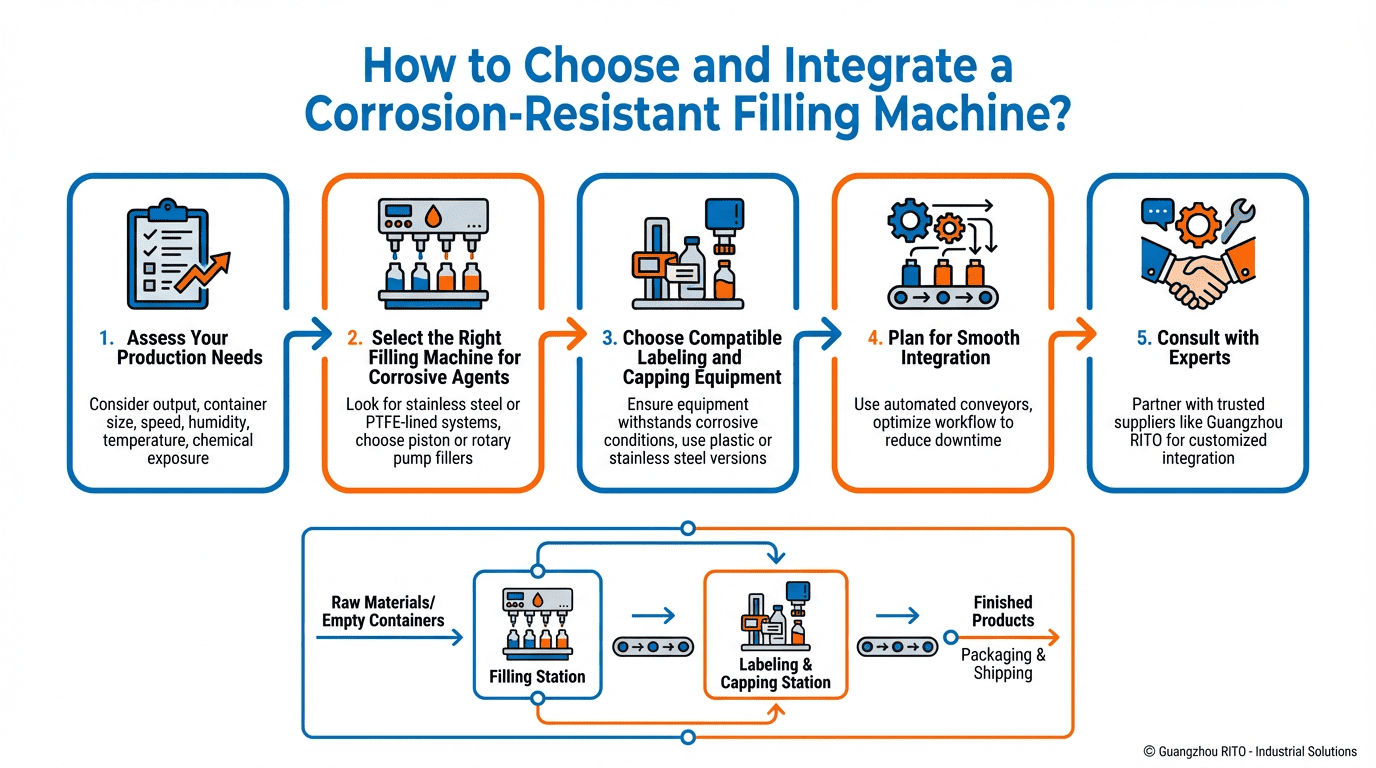
1. Assess Your Production Needs
Consider product volume, container size, packaging speed, and environmental factors (e.g., humidity, temperature, and chemical exposure levels).
2. Select the Right Filling Machine for Corrosive Agents
Look for stainless steel or PTFE-lined filling systems.
Choose piston fillers or rotary pump fillers based on your liquid viscosity and volume requirements.
3. Choose Compatible Labeling and Capping Equipment
Ensure that labeling and capping machines are built to withstand corrosive conditions, if necessary.
Plastic or stainless steel versions are recommended for long-term use.
4. Plan for Smooth Integration
Use automatic conveyors to move products seamlessly from filling to labeling and capping.
Approach workflows to minimize downtime and improve accuracy.
5. Consult with Experts
Work with a trusted supplier like Guangzhou RITO to ensure that your customized integration meets your corrosion-resistant and automation requirements.
How to Successfully Implement a Corrosion-Resistant Integration Line?
Here's a step-by-step guide to building an efficient, corrosion-resistant packaging production line:
Evaluate Your Production Requirements
Understand your output volume, product type, and packaging format.
Select the Right Equipment
Ensure that filling, labeling, and capping equipment are compatible and corrosion-resistant where needed.
Plan the Layout
Position machinery to maximize throughput while minimizing space usage.
Commission and Test the Line
Conduct testing to ensure synchronization and precision, especially in corrosive environments.
Perform Ongoing Maintenance
Regularly inspect and clean equipment, especially areas in contact with corrosive materials.
Train Your Operators
Ensure staff understand how to operate and maintain the integrated line, especially with specialized components.
Can Guangzhou RITO Help You Integrate Corrosion-Resistant Equipment?
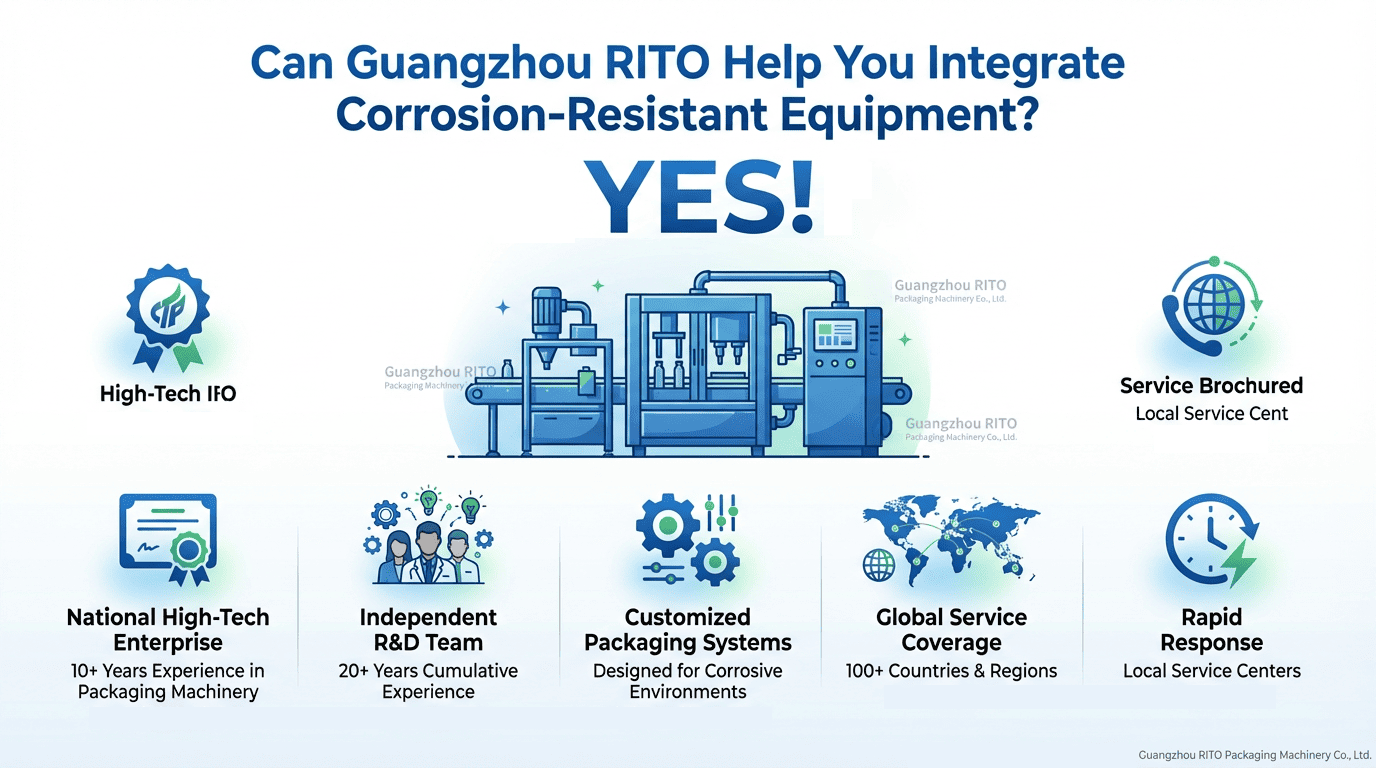
Yes. Guangzhou RITO Packaging Machine Co., Ltd. is a leading manufacturer of corrosion-resistant filling, capping, and labeling systems, offering fully integrated solutions tailored to your industry and product needs.
Why Choose Guangzhou RITO?
We are a National High-Tech Enterprise with over 10 years of experience in the packaging machinery industry.
Our independent R&D team has over 20 years of cumulative experience, ensuring innovative and durable solutions.
We offer customized packaging systems that are designed for extensive use in corrosive environments.
We support 100+ countries and regions with professional service and after-sales support.
Our quick response time and local customer service centers make it easy to manage your packaging line without exporting or dealing with long lead times.
Guangzhou RITO's Core Competencies in Corrosion-Resistant Packaging Integration
| Feature | Description | How RITO Benefits |
|---|---|---|
| Advanced R&D Capabilities | A team of software, mechanical, and electrical engineers working on user-centric solutions. | Ensures innovation and customization for all types of corrosive and non-corrosive applications. |
| High-Quality Materials | Filling machines are made from stainless steel and PTFE-coated components, and labeling and capping equipment is also corrosion-resistant where needed. | Extends lifespan, reduces maintenance, and increases system reliability. |
| Comprehensive Service Support | We provide pre-sales consultation, installation, training, and lifetime maintenance service. | Ensures long-term performance and customer satisfaction. |
| Ready-to-Deploy Solutions | Our customized packaging lines include corrosion-resistant, high-speed, and high-precision parts. | Saves time and cost, allowing for faster production with minimal setup. |
| Global Market Presence | With operations in over 40 countries and regions, we offer localized service and support. | Ensures ease of use and long-term support, even for international clients. |
| Innovation and Product Patents | Over 10 patents, with more than half being invention patents, and a complete range of products. | Certified quality solutions that set new industry benchmarks. |
Frequently Asked Questions (FAQ)
Q1: Can corrosion-resistant filling machines be used with standard capping and labeling equipment?
A: Yes, but it's recommended to choose equipment with corrosion-resistant coatings or materials when handling heavy-duty, chemically aggressive products to ensure equipment longevity and performance.
Q2: What types of products are best suited for integrated, corrosion-resistant packaging systems?
A: These systems are ideal for detergents, solvents, oils, chemicals, and pharmaceuticals-products that require corrosion resistance, hygiene, and high-speed labeling and capping.
Q3: How does Guangzhou RITO ensure the quality of its corrosion-resistant equipment?
A: Our corrosion-resistant filling machines are made with high-grade materials and certified for industry standards. We also provide custom design services to meet your specific needs.
Q4:What are the advantages of using a single integrated system over multiple standalone machines?
A: An integrated system ensures synchronization, accuracy, and efficiency, reducing manual handling and risk of product contamination.