📘 Can an Anti-Corrosion Filling Machine Handle Corrosive Liquids of Different Viscosities, Such as Acids, Alkalis, Solvents, or Adhesives?
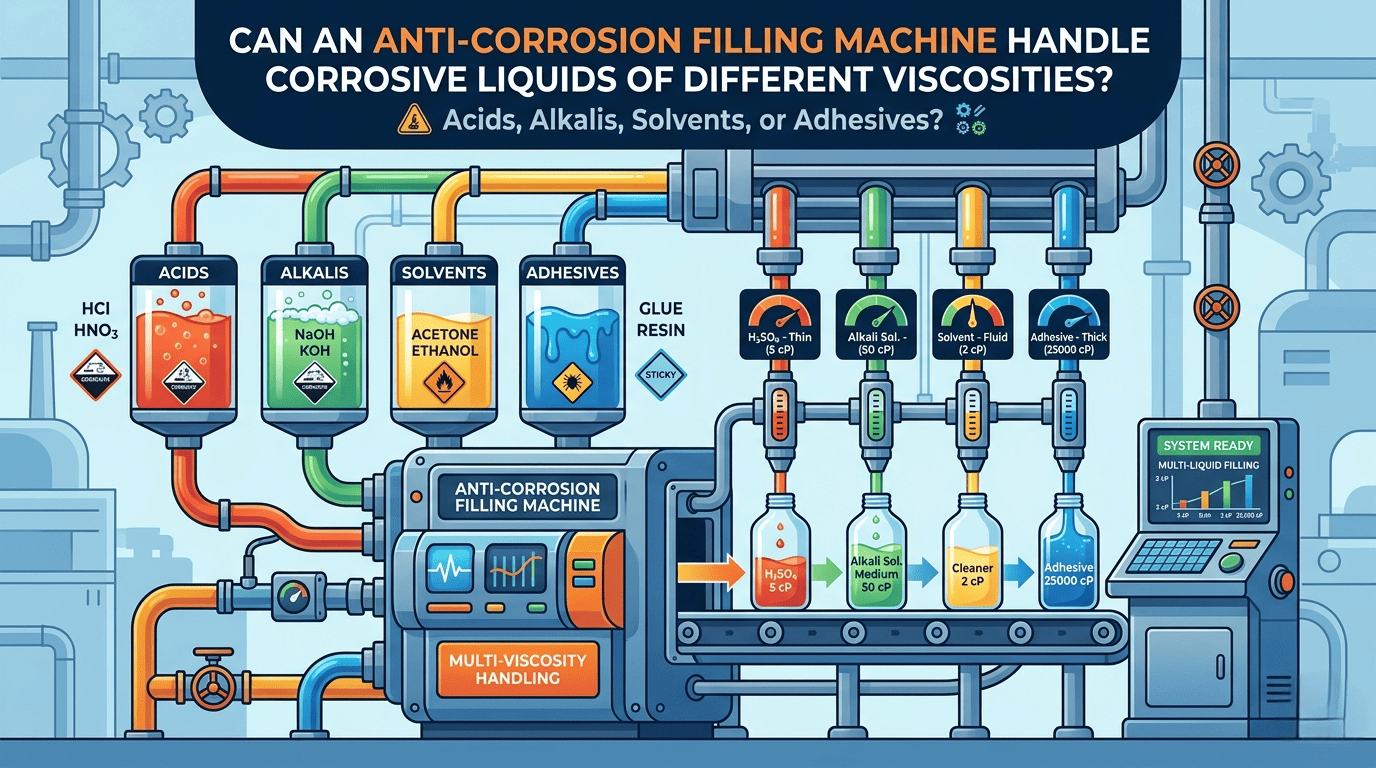
In the world of industrial and chemical manufacturing, the choice of filling equipment is not just about speed and efficiency, but also about safety, durability, and flexibility. Many industries face the challenge of packaging corrosive and viscous liquids, such as acids, alkalis, solvents, or adhesives, and need equipment that can handle these extreme conditions without compromising performance or safety.
This article will answer the question: Can an anti-corrosion filling machine handle corrosive liquids of different viscosities?
We'll explore the technical capabilities, material compositions, and applications of RITO's anti-corrosion filling systems, as well as the benefits of our innovative and adaptable solutions tailored to your unique industrial needs.
📚 Table of Contents
Can an Anti-Corrosion Filling Machine Handle Corrosive Liquids of Different Viscosities?
Why Are Anti-Corrosion Filling Systems Important in Industrial Environments?
What Types of Liquids Can Be Handled by RITO's Filling Machines?
How Can Our Filling Machines Adapt to Viscous and Sticky Substances?
Are There Different Machine Models for Corrosive and Viscous Applications?
What Are the Key Features of RITO's Anti-Corrosion Filling Systems?
Why is Material Selection Critical for Corrosive Liquid Handling?
How Does RITO Ensure Longevity and Safety in Corrosive Conditions?
Can RITO Provide Custom Filling Solutions for Your Requirements?
What Industries Can Benefit from Our Anti-Corrosion Filling Technology?
Frequently Asked Questions (FAQs)
🧠 1. Can an Anti-Corrosion Filling Machine Handle Corrosive Liquids of Different Viscosities?
Yes - modern anti-corrosion filling machines are designed to handle a wide range of liquids, including corrosive, chemical-reactive, and viscous substances like acids, alkalis, solvents, and adhesives.
Unlike standard filling systems, corrosion-resistant filling machines are engineered with specialized materials and advanced technologies to withstand harsh chemical environments and ensure precise filling with minimal risk of leakage or failure.
📌 2. Why Are Anti-Corrosion Filling Systems Important in Industrial Environments?
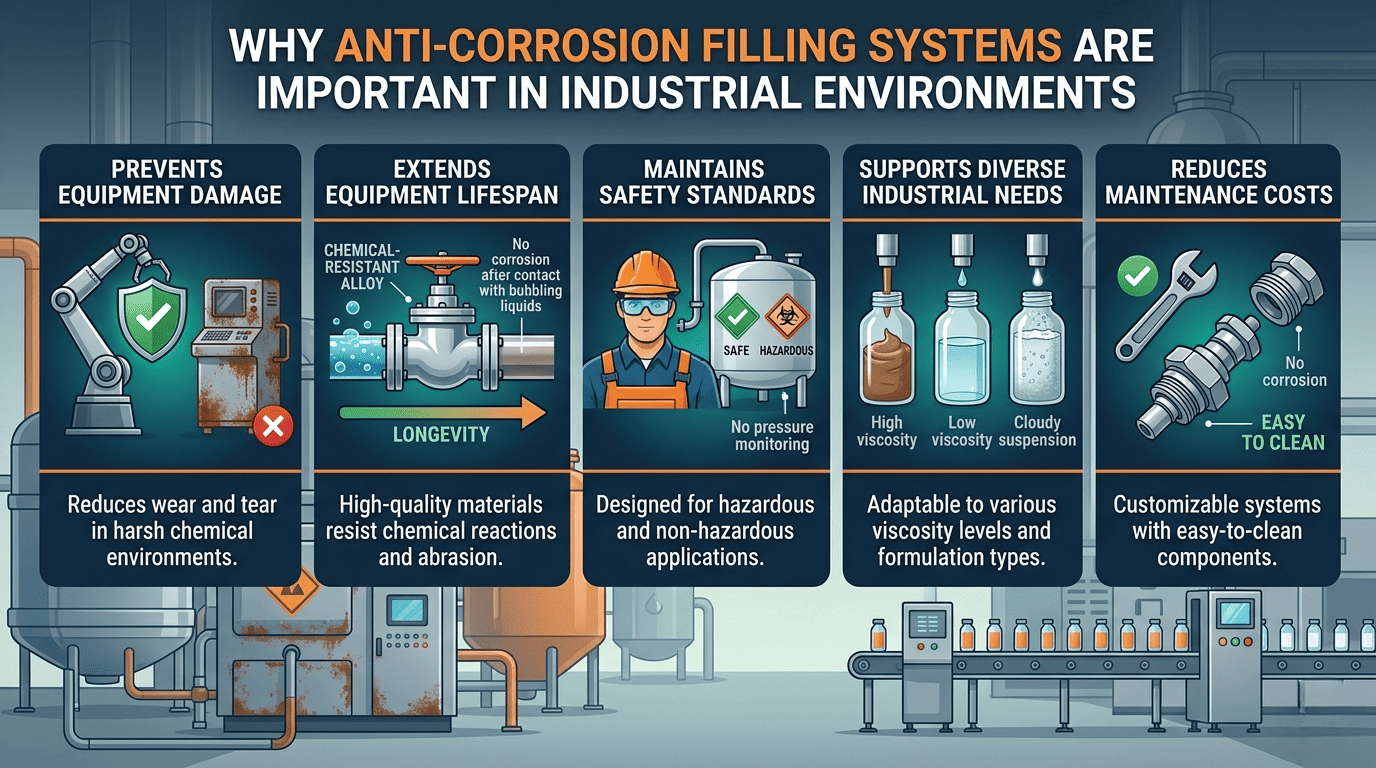
In chemical factories, pharmaceutical packaging lines, or industrial fluid applications, corrosion can cause equipment degradation, production downtime, and safety hazards. This is why chemical-resistant filling systems are vital.
⚠️ Key Reasons to Use Anti-Corrosion Filling Machines:
| Reason | Description |
|---|---|
| Prevents Equipment Damage | Reduces wear and tear in harsh chemical environments |
| Extends Equipment Lifespan | High-quality materials resist chemical reactions and abrasion |
| Maintains Safety Standards | Designed for hazardous and non-hazardous applications |
| Supports Diverse Industrial Needs | Adaptable to various viscosity levels and formulation types |
| Reduces Maintenance Costs | Customizable systems with easy-to-clean components |
🧪 3. What Types of Liquids Can Be Handled by RITO's Filling Machines?
RITEO's anti-corrosion filling machines are versatile and can handle a wide range of liquids, including:
| Liquid Type | Handling Compatibility | Best for |
|---|---|---|
| Acids | ✅ Fully compatible | Industrial chemical production |
| Alkalis | ✅ Fully compatible | High-purity material handling |
| Solvents | ✅ Fully compatible | Paint, adhesive, or cleaning liquid packages |
| Adhesives | ✅ Fully compatible | Precision application in manufacturing and packaging |
| Viscous Products | ✅ Fully compatible | Thick liquids, gels, and dense solutions |
| High-density liquids | ✅ Fully compatible | Brine, industrial oils, and chemical concentrates |
🧰 4. How Can Our Filling Machines Adapt to Viscous and Sticky Substances?
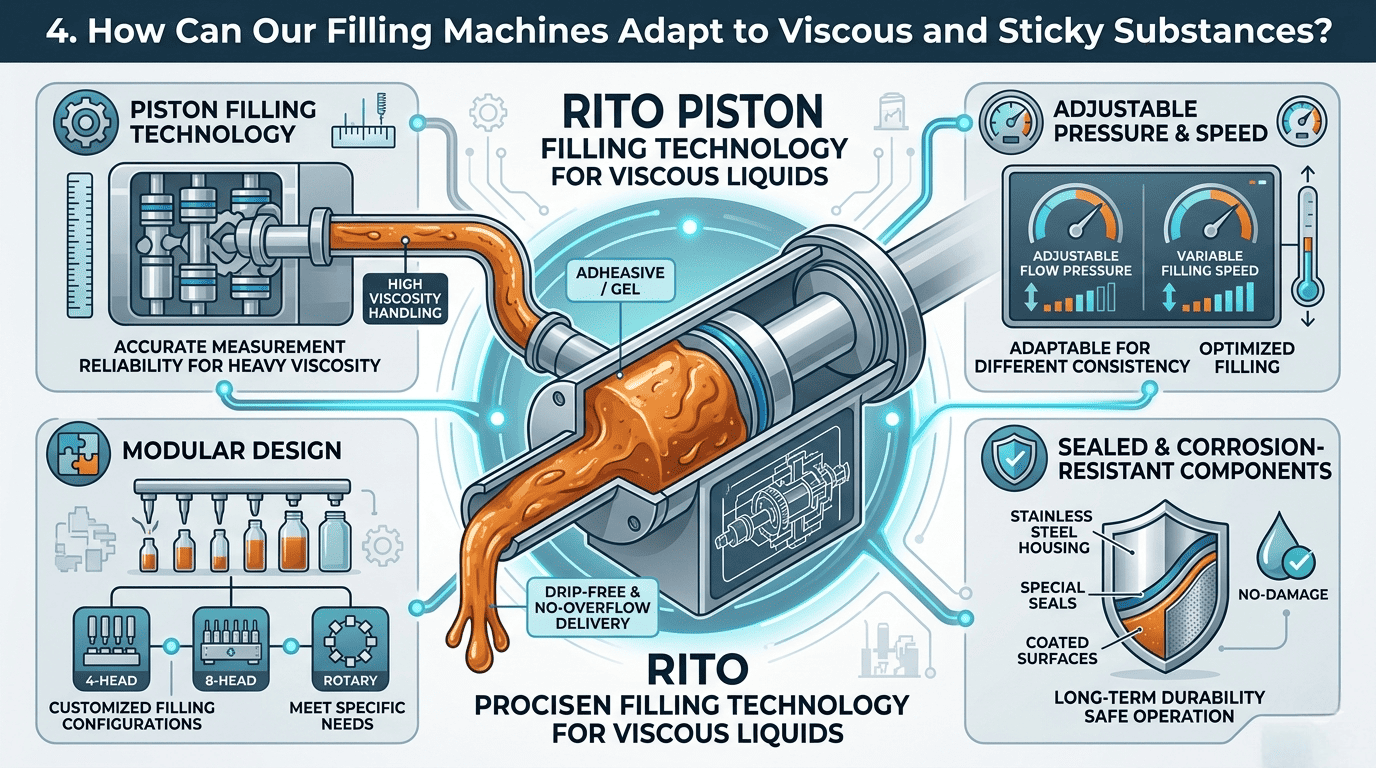
Handling viscous liquids like adhesives, gels, and solvents can be a challenge. However, RITO's piston-based filling systems are designed to accurately measure and deliver even thick and sticky substances without dripping or overflow.
Piston Filling Technology: Ensures precision and reliability for heavy viscosity materials
Adjustable Pressure and Speed: Adaptable for different consistency levels and filling requirements
Modular Design: Allows for customized filling configurations to meet specific needs
Sealed and Corrosion-Resistant Components: Ensures long-term durability and safe operation
📊 5. Are There Different Machine Models for Corrosive and Viscous Applications?
There are different filling machine models, tailored to corrosive chemicals, viscous substances, and various packaging formats.
📊 RITO Series Filling Machines: Matching Industry Requirements
| Machine Series | Best For | Application Areas |
|---|---|---|
| RITO-200 | Viscous liquids | Adhesives, gels, and heavy-duty chemical applications |
| RITO-300 | Corrosive products | Industrial solvents, acids, and cleaning agents |
| RITO-3000 | High-viscosity materials | Thick adhesives, chemical slurry, and medical packed solutions |
| RITO-6000 | Specialized chemical applications | High-purity, high-safety, and high-productivity scenarios |
These models are not only viscosity-compatible, but also resistant to corrosion, making them suitable for all major industrial sectors.
🔧 6. What Are the Key Features of RITO's Anti-Corrosion Filling Systems?
RITEO's anti-corrosion filling systems are built with industry-leading reliability and adaptability. Here are the core features that make our systems ideal for handling corrosive and viscous liquids:
| Feature | Description |
|---|---|
| Corrosion-Resistant Materials | Made from stainless steel (316L), PTFE, and HDPE, known for chemical resistance and durability |
| Piston and Gravity Filling Technology | Can be customized to handle all viscosities and liquid types |
| Sensor-Based Precision Filling | Ensures accurate and consistent filling, suitable for high-standard production lines |
| Easy Maintenance and Cleaning | Support washdown environments and chemical hygiene requirements |
| Multi-Container Compatibility | Works with bottles, steel drums, tanks, and other models |
| Safety and Durability | Equipped with explosion-proof components, operator safety features, and durable design |
| Smart and Programmable Control Systems | With simple setup, real-time monitoring, and automated filling |
🔧 7. Why is Material Selection Critical for Corrosive Liquid Handling?
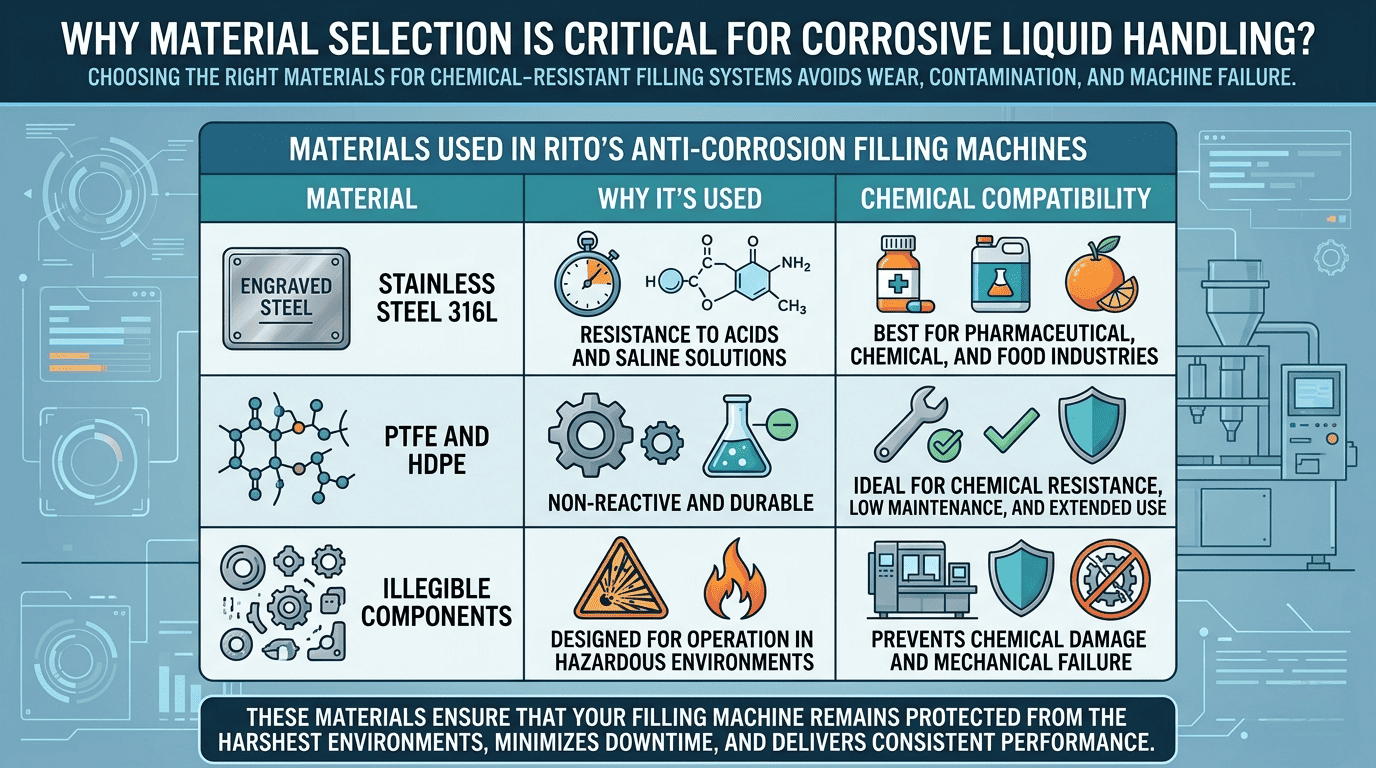
Choosing the right materials for chemical-resistant filling systems is essential to avoid wear, contamination, and machine failure.
💡 Materials Used in RITO's Anti-Corrosion Filling Machines:
| Material | Why It's Used | Chemical Compatibility |
|---|---|---|
| Stainless Steel 316L | Resistance to acids and saline solutions | Best for pharmaceutical, chemical, and food industries |
| PTFE and HDPE | Non-reactive and durable | Ideal for chemical resistance, low maintenance, and extended use |
| Illegible components | Designed for operation in hazardous environments | Prevents chemical damage and mechanical failure |
These materials ensure that your filling machine remains protected from the harshest environments, minimizes downtime, and delivers consistent performance.
🧱 8. How Does RITO Ensure Longevity and Safety in Corrosive Conditions?
Modern anti-corrosion filling machines are not just about performance, but also about durability and safety.
🧠 Sir RITO's Expertise and Advantages:
Over 20 years of R&D experience in the packaging and filling technologies
Over 10+ invention patents covering chemical-resistant innovations
Chemical and environmental compliance with ISO, FDA, CE, SGS standards
Local support across more than 40 countries, including North America, Europe, and Asia
Lifelong maintenance and free software updates for seamless service experience
High-speed and high-capacity devices, suitable for mass production and customization needs
These features and benefits ensure that our filling machines are not only safe, but also long-lasting, efficient, and cost-effective.
✍️ 9. Can RITO Provide Custom Filling Solutions for Your Requirements?
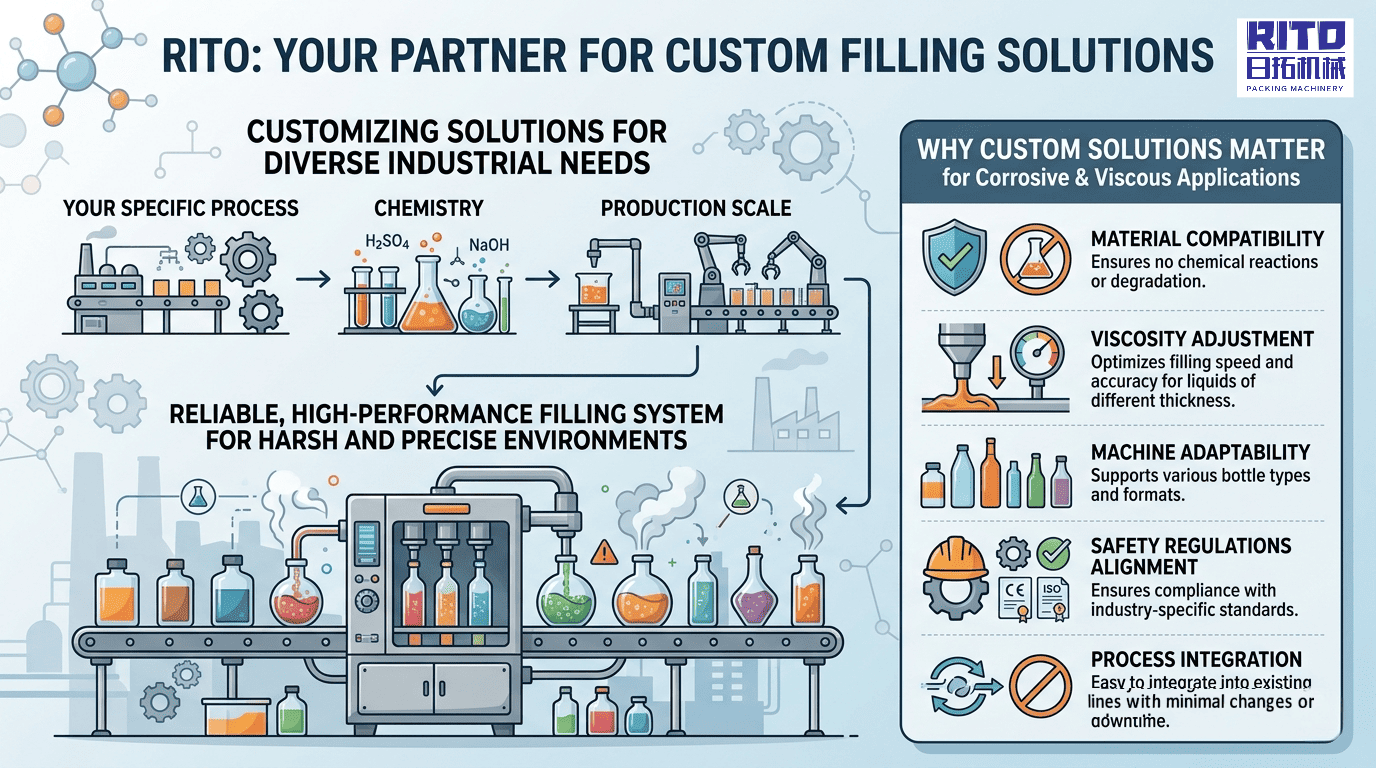
Yes - RITO specializes in customized filling systems for diverse industrial needs and corrosive material handling.
We customize our filling equipment to match your specific process, chemistry, and production scale, ensuring that your system performs reliably in harsh and precise environments.
✅ Why Custom Solutions Matter for Corrosive and Viscous Applications:
| Custom Feature | Why It Matters |
|---|---|
| Material Compatibility | Ensures no chemical reactions or degradation |
| Viscosity Adjustment | Optimizes filling speed and accuracy for liquids of different thickness |
| Machine Adaptability | Supports various bottle types and formats |
| Safety Regulations Alignment | Ensures compliance with industry-specific standards |
| Process Integration | Easy to integrate into existing lines with minimal changes or down time |
🧪 10. What Industries Can Benefit from Our Anti-Corrosion Filling Technology?
Except for standard filling needs, RITO's anti-corrosion systems are used in high-tech and high-accuracy industries, such as:
| Industry | Application | Why RITO? |
|---|---|---|
| Chemical Industry | Filling solvents, acids, and industrial chemicals | High-precision, chemical compatibility |
| Pharmaceutical | Packaging of medicines, solutions, and injectable products | GP safe, traceable, and high-quality |
| Industrial Lubricants & Cleaning Products | Precise and hygienic application | Safe handling of dangerous or volatile chemicals |
| Food & Beverage (Brine & Viscous Drinks) | Safe packaging of high-saline and thick liquids | Equipment built for long-term use in food grade environments |
| Cosmetics | Safe and continuous filling of thick skincare liquids and fragrances | Clean, precise, and seamlessly integrable |
❓ 11. Frequently Asked Questions (FAQs)
✅ Q: Can anti-corrosion filling machines handle all types of chemicals?
A: RITO's systems are designed to handle strong acids, bases, solvents, and adhesives, thanks to chemical-resistant materials and modular design.
✅ Q: What's the best machine for high-viscosity liquids?
A: We recommend RITO-3000 or RITO-6000 for handling thick liquids, gels, and industrial adhesives with high precision and pressure control.
✅ Q: How does RITO ensure safety in hazardous environments?
A: We use explosion-proof components, remote operation systems, and ISO-standard safety pRITOcols to ensure operator safety and equipment integrity.
✅ Q: Are our filling machines able to handle sticky liquids?
A: Yes. Our piston systems and calibrated pressure settings ensure precision and efficiency in adhesive, paint, and other viscous applications.
✅ Q: Can we integrate the machine into existing production lines?
A: Yes. Our design allows easy integration with existing packaging systems and supports automation and scalability in your production process.