What Materials Are Used for the Wetted Parts of Anti-Corrosion Filling Machines? How Corrosion-Resistant Are They?
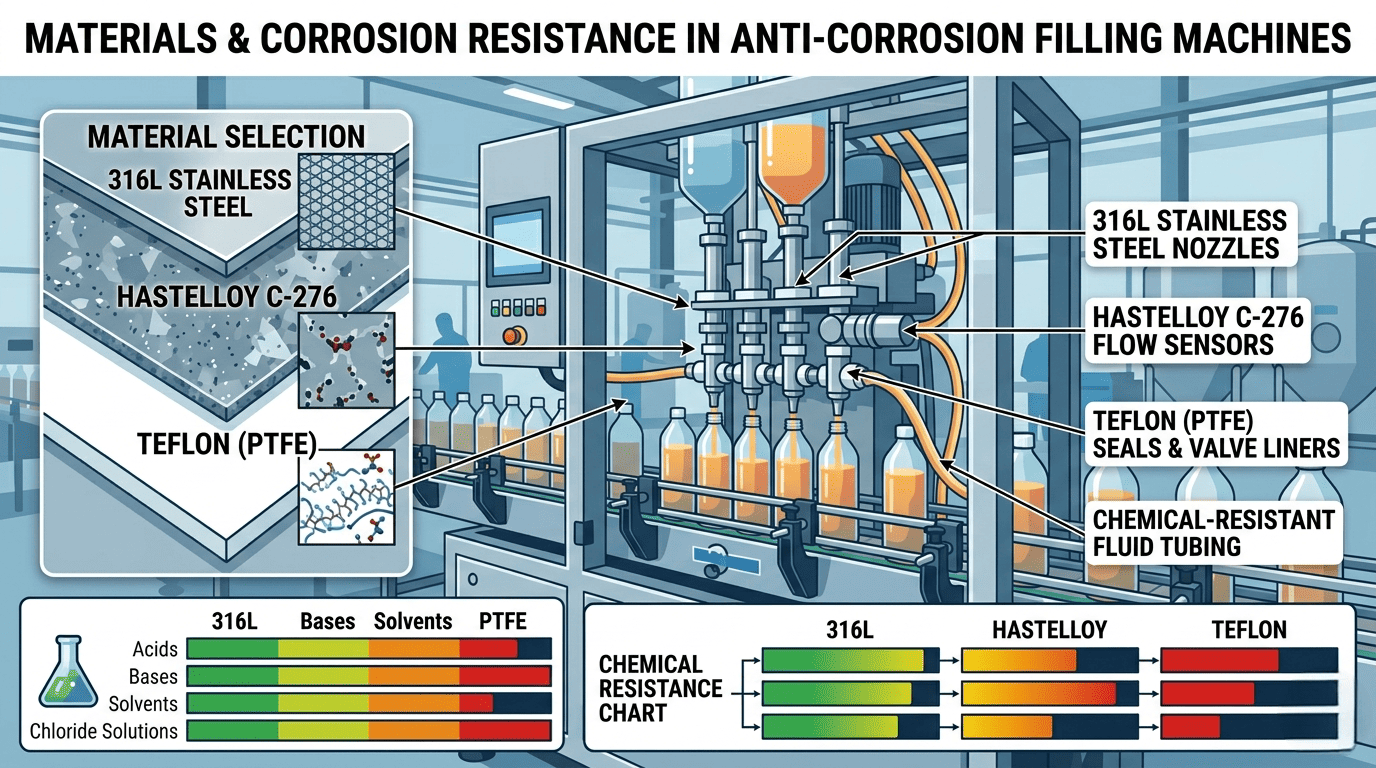
Table of Contents
What Materials Are Used for the Wetted Parts of Anti-Corrosion Filling Machines?
How Does the Material Choice Affect Corrosion Resistance?
What Are the Best Materials for Corrosion Protection in Liquid Filling?
Can Anti-Corrosion Filling Machines Handle All Types of Corrosive Liquids?
How to Select the Right Filling Machine Based on Corrosiveness of Liquid?
What Standards and Certifications Do Anti-Corrosion Filling Machines Meet?
Key Components and Their Corrosion Resistance Design
How to Detect and Prevent Corrosion in the Machine?
Why Do Chemical Companies Prefer Anti-Corrosion Filling Machines?
Why Choose Guangzhou RITO's Anti-Corrosion Filling Machines?
Contact RITO for Custom and Reliable Solutions
1. What Materials Are Used for the Wetted Parts of Anti-Corrosion Filling Machines?
When selecting an anti-corrosion filling machine, it is essential to understand what materials are used for the wetted parts, which are the components that directly contact the product. The choice of materials directly influences the machine's performance, durability, and corrosion resistance.
Understanding Wetted Parts
Wetted parts typically include:
Filling nozzles
Valves
Piping system
Seals
Pump components
Inner parts of the machine that are exposed to liquid
Material Selection Based on Corrosion Level
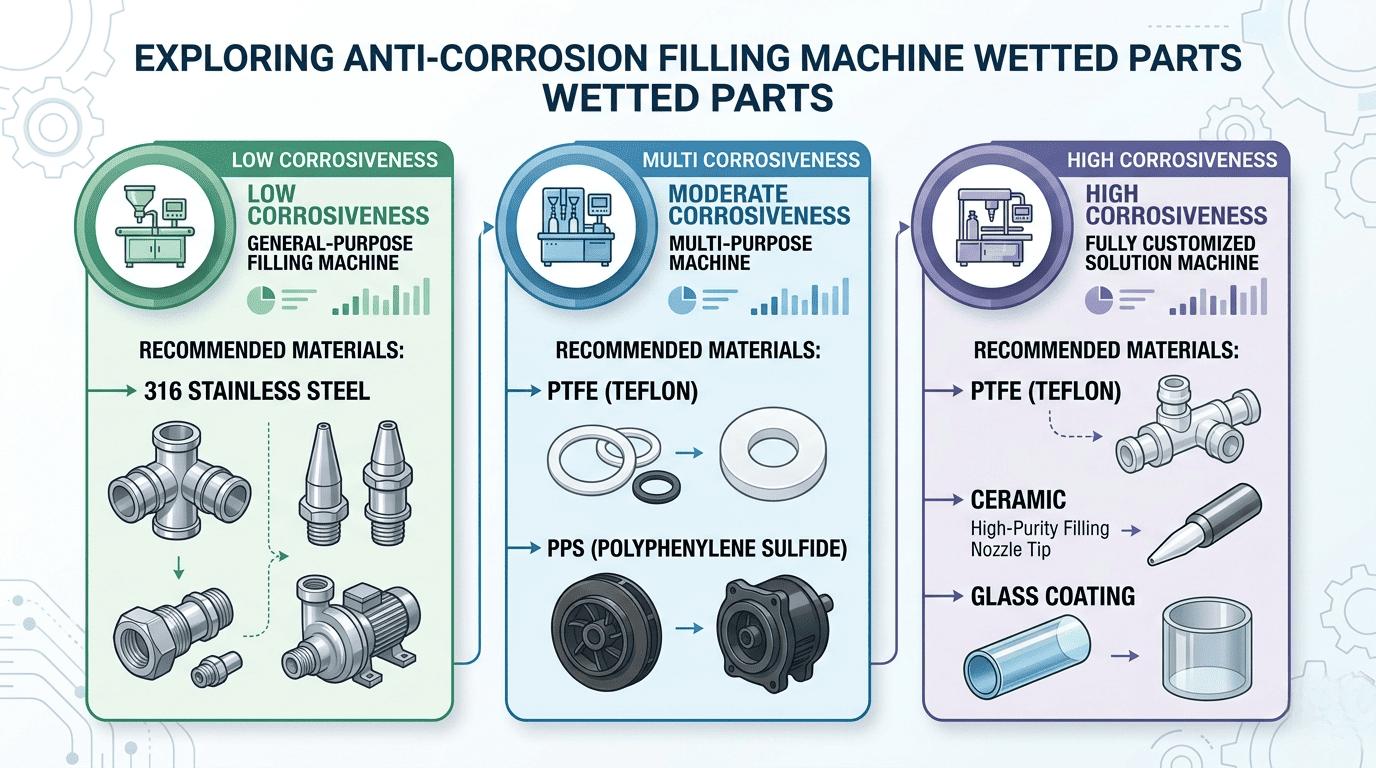
| Liquid Corrosiveness | Recommended Materials for Wetted Parts | Machine Type |
|---|---|---|
| Low Corrosiveness | 316 Stainless Steel | General-purpose filling machines |
| Moderate Corrosiveness | PTFE (Teflon) or PPS (Polyphenylene Sulfide) | Multi-purpose anti-corrosion filling machine |
| High Corrosiveness | PTFE (Teflon), Ceramic, or Glass Coating | Fully customized anti-corrosion filling solutions |
2. How Does the Material Choice Affect Corrosion Resistance?
The corrosion resistance of filling machines depends primarily on the type of material used in the wetted parts. Here's how different materials perform in corrosive environments:
Material Corrosion Resistance Comparison (Wetted Parts)
| Material | Corrosion Resistance | Suitable Liquids | Use Case |
|---|---|---|---|
| 316 Stainless Steel | ★★★★★ | Weak acids, neutral solvents, oily liquids | Common for general use in cosmetics and food |
| PTFE (Teflon) | ★★★★★ | Strong acids, alkalis, solvents | Preferred for highly corrosive applications |
| PP (Polypropylene) | ★★★★☆ | Minor acidic or alkaline solutions | Used as an internal coating or non-contact parts |
| ** Ceramic Coatings** | ★★★★★ | Strong chemicals, reactive liquids | Used to protect sensitive areas such as sealing systems |
| Glass Coating | ★★★★☆ | Non-reactive solvents, extreme corrosion scenarios | Most used in pharmaceutical and specialty chemical sectors |
✅ Note: In machines designed for highly corrosive liquids, wetted parts are often made with PTFE or specially coated materials, while the non-wetted parts can use standard stainless steel to reduce production costs without compromising performance.
3. What Are the Best Materials for Corrosion Protection in Liquid Filling?
When selecting an anti-corrosion filling machine, the best choice depends on the liquid's chemical nature. Here's a breakdown of the best materials for防腐处理 and high corrosion resistance:
PTFE (Teflon) Coating – Most highly recommended for strong acids and solvents due to its chemical inertness, fail-safe resistance, and low maintenance.
Ceramic Linings – Provide superior corrosion resistance, especially in high-pressure, high-acid environments.
Specialist Glass / Plastic Components – Used for applications with harsh or volatile chemistry.
316 Stainless Steel – A trusted base material for non-corrosive to moderately corrosive liquids and non-contact parts.
At Guangzhou RITO, we engineer our machines with corrosion resistance as a core focus, ensuring they perform reliably even in the harshest chemical environments.
4. Can Anti-Corrosion Filling Machines Handle All Types of Corrosive Liquids?
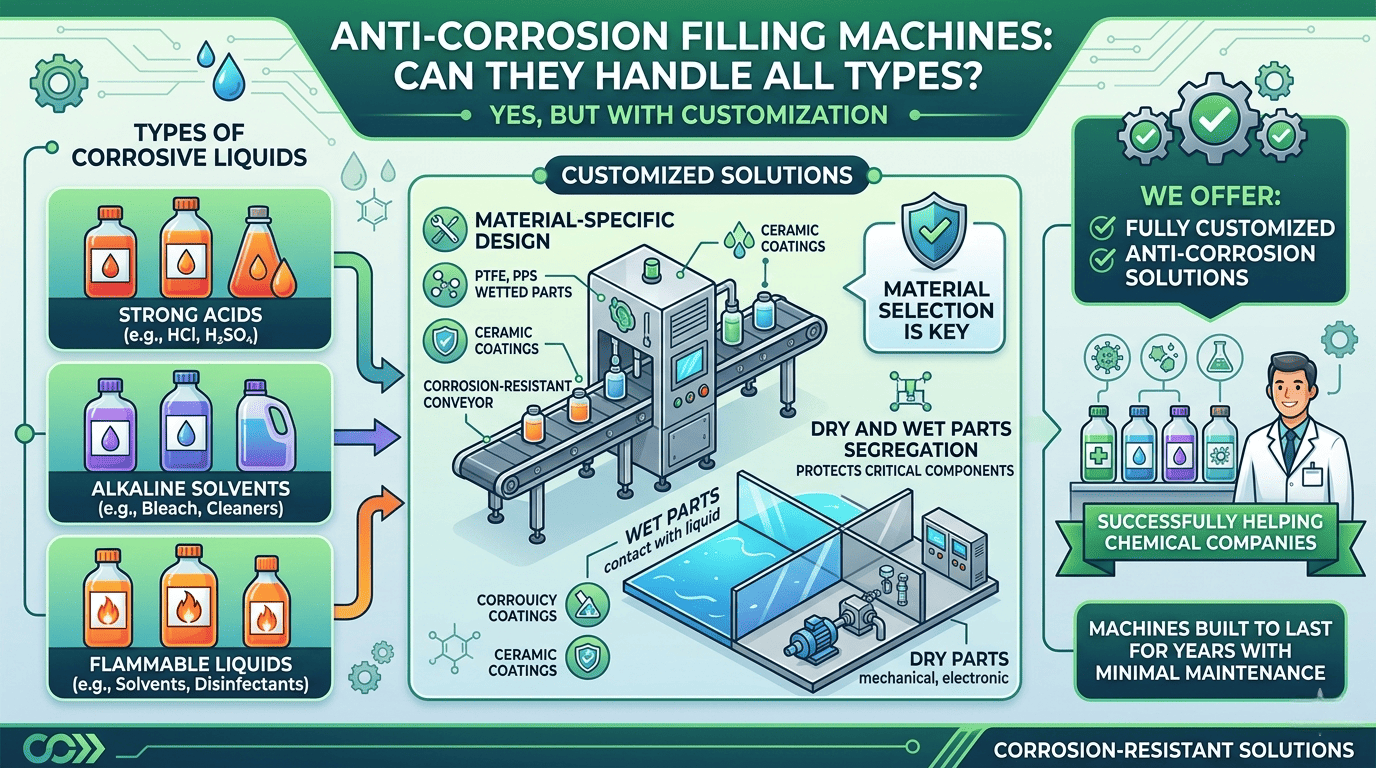
Yes, but with customization. While anti-corrosion filling machines are designed to resist corrosive effects, they are not one-size-fits-all solutions. The corrosion resistance level and compatibility depend on the type of corrosive liquid being processed.
What We Offer:
Fully customized anti-corrosion solutions for strong acids, alkaline solvents, and flaming/flammable liquids.
Material-specific design (e.g., PTFE and PPS wetted parts, ceramic coatings, and corrosion-resistant conveyor systems).
Dry and wet parts segregation to ensure only the necessary parts are exposed to corrosive materials.
We have successfully helped many chemical companies process highly corrosive products such as disinfectants, solvents, and industrial chemicals, with machines built to last for years with minimal maintenance.
5. How to Select the Right Filling Machine Based on Corrosiveness of Liquid?
Here's a step-by-step guide to selecting the best anti-corrosion filling machine based on the corrosiveness level of the liquid:
Step 1: Determine the Corrosiveness Level of Your Liquid
Low Corrosive: Water-based solutions, mild chemicals
Moderate Corrosive: Alkali or weak acids
High Corrosive: Strong acids, solvents, volatile chemicals
Step 2: Choose Materials Based on Corrosiveness
Low: 316 SS or PP materials
Moderate: PTFE or ceramic parts
High: PTFE/PP combination, fully sealed or enclosed systems
Step 3: Choose the Right Machine Type
| Corrosiveness Level | Recommended Machine Type | Key Features |
|---|---|---|
| Low to Moderate | Semi-Automatic | Cost-effective, precise, and modular |
| High | Fully Automatic / Custom | High corrosion resistance, full enclosure, precision torque control |
Customization is key to matching the specific chemical properties with the right material components. Guangzhou RITO ensures your machine is tailored for your liquid to provide maximum performance and service life.
6. What Standards and Certifications Do Anti-Corrosion Filling Machines Meet?
To ensure high-quality performance and compliance with international regulations, we use materials and designs that meet the following global standards:
| Standard | Description |
|---|---|
| ISO 9001 | Quality management system ensuring consistent performance |
| CE Marking | Compliance with EU safety, health, and environmental standards |
| FDA Certification | Ensures safety for food, cosmetics, and pharmaceutical applications |
| GMP Compliance | Ideal for pharmaceutical and food-grade applications |
| Aerospace & Chemical Standard (ASME/ASTM) | Specifically designed for corrosive industrial liquids |
These standards help in ensuring that even high-corrosion liquids are managed safely, efficiently, and reliably.
7. Key Components and Their Corrosion Resistance Design
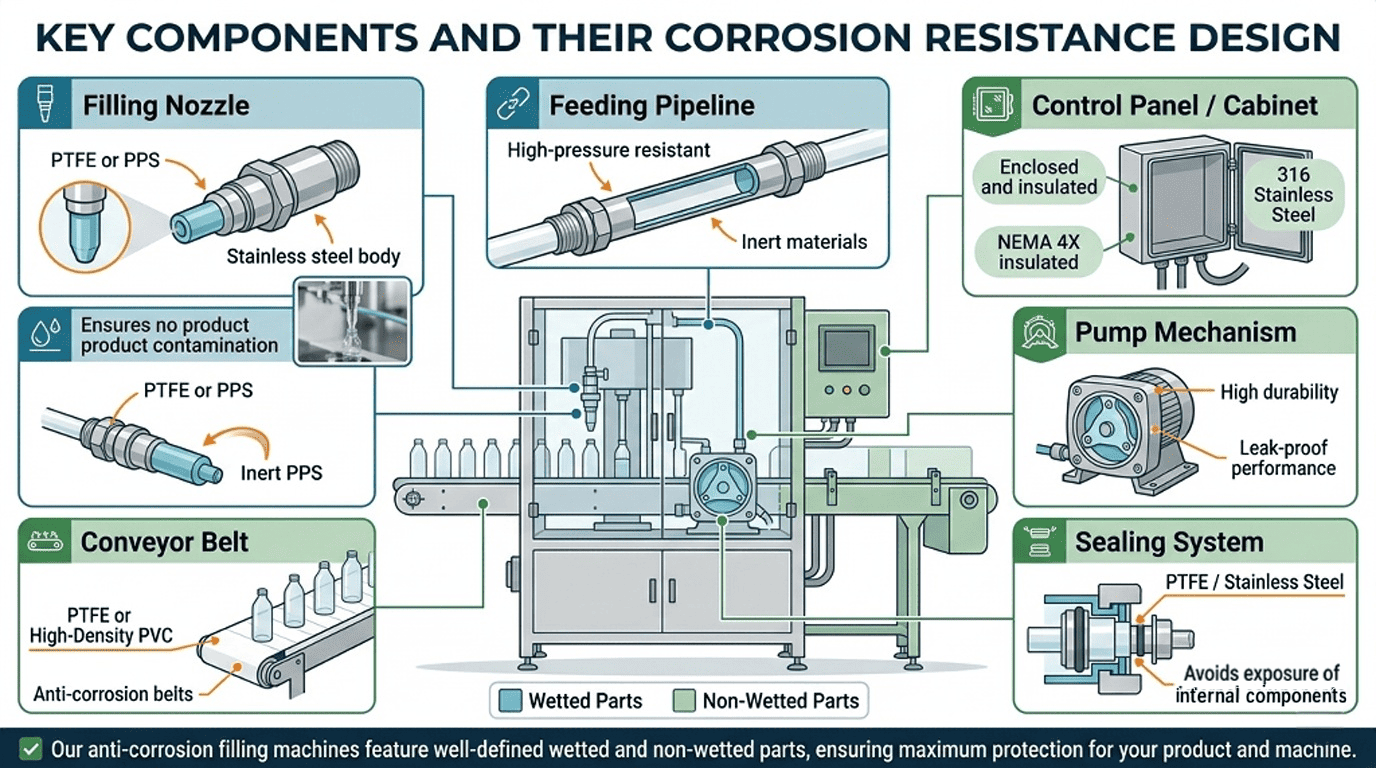
Let's break down the main components of an anti-corrosion filling machine and how they are designed for corrosion resistance:
| Component | Material | Corrosion-Resistant Design | Comments |
|---|---|---|---|
| Filling Nozzle | PTFE or PPS | Stainless steel body, special plastics for nozzles | Ensures no degradation and no product contamination |
| Feeding Pipeline | PTFE | High-pressure resistant, inert materials | Minimizes chemical reaction |
| Control Panel / Cabinet | 316 Stainless Steel | Enclosed and insulated to protect internal components | Ensures operator safety and machine longevity |
| Pump Mechanism | Stainless Steel & PTFE | Designed for high durability and leak-proof performance | Enables efficient filling even in corrosive environments |
| Conveyor Belt | PTFE or High-Density PVC | Anti-corrosion belts to carry filled bottles | Prevents mechanical corrosion during transport |
| Sealing System | PTFE / Stainless Steel | Avoids exposure of internal components to liquid | Ensures high sealing effectiveness without material wear |
✅ Our anti-corrosion filling machines feature well-defined wetted and non-wetted parts, ensuring maximum protection for your product and machine.
8. How to Detect and Prevent Corrosion in the Machine?
Preventing and detecting corrosion in wetted parts is essential for maintaining product quality and equipment reliability. Here are some practical tips:
| How to Detect | How to Prevent |
|---|---|
| Look for discoloration, pitting, or thinning of metal parts | Use PTFE or ceramic coatings on wetted areas |
| Check for leaks or fluid seepage | Implement sealed filling systems to prevent direct contact |
| Regularly inspect seals and nozzles for wear | Replace parts with corrosion-resistant alternatives |
| Monitor machine performance regularly | Schedule preventive maintenance and moisture testing |
Guangzhou RITO provides lifelong maintenance and support, helping your machine to remain in top condition, even when filled with corrosive substances.
9. Why Do Chemical Companies Prefer Anti-Corrosion Filling Machines?
Anti-corrosion filling machines are crucial for the chemical and industrial sectors because:
They prevent direct damage from corrosive materials.
They ensure high-quality and safe product filling.
They support ISO and GMP compliance for pharmaceutical and food industries.
They reduce downtime and increase machine longevity.
They reduce the risk of contamination, ensuring product purity.
In the chemical industry, a corrosion-resistant filling machine is not a luxury - it's a necessity.
10. Why Choose Guangzhou RITO's Anti-Corrosion Filling Machines?
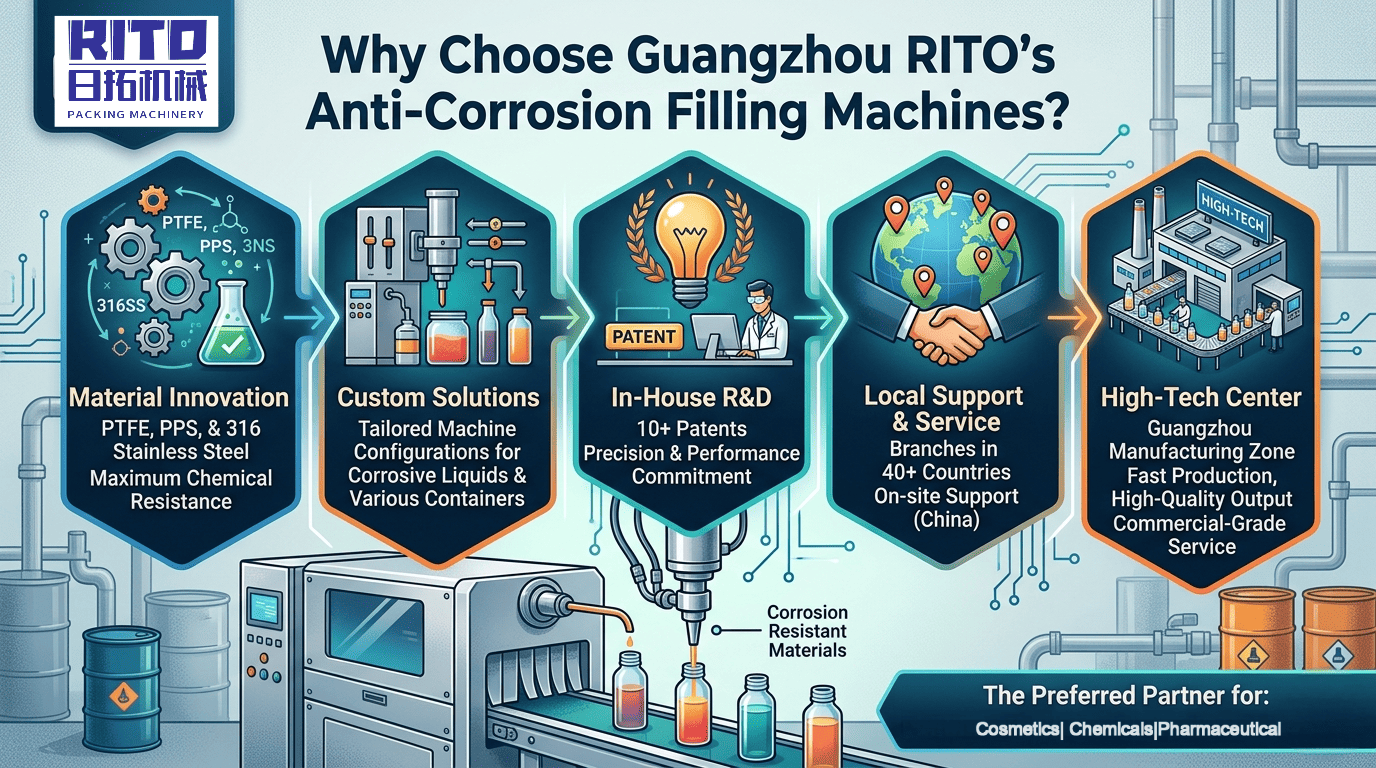
Let's break down why Guangzhou RITO stands out in the field of anti-corrosion filling equipment:
Why RITO?
| Point | Description |
|---|---|
| Material Innovation | We use PTFE, PPS, and 316 stainless steel in wetted areas for maximum chemical resistance. |
| Custom Solutions | We design machine configurations tailored for corrosive liquid types and containers. |
| In-House R&D | Our 10+ patents, including invention-level technology, reflect our long-term commitment to precision and performance. |
| Local Support & Service | We have branches in over 40 countries, plus on-site service support in China. |
| High-Tech Center | Located in Guangzhou's advanced manufacturing zone, we ensure fast production, high-quality output, and commercial-grade service. |
Guangzhou RITO is the preferred partner for corrosion-resistant liquid filling in cosmetics, chemical, and pharmaceutical industries.
11. Contact RITO for Custom and Reliable Solutions
If your application involves corrosive solvents, strong acids, or harsh chemicals, we recommend consulting with our engineering team to determine the best machine design and material grade for your use case.
✅ Free technical consultation for corrosive liquid applications
✅ Customized products to match your container shape and liquid type
✅ Complete solution from filling to capping with strict corrosion resistance treatment
✅ Lifelong maintenance and support
✅ Quick service response in China-no need to go abroad for support
Conclusion
Choosing the right anti-corrosion filling machine is essential for chemical and industrial applications. The materials used for wetted parts, such as PTFE, 316 stainless steel, and ceramic coatings, directly influence the machine's performance and durability.
Guangzhou RITO ensures our filling equipment can be tailored to your needs and meets high international standards, from ISO to GMP. Whether your application is for petroleum products, industrial solvents, or corrosive chemicals, we have a solution that suits you.
Let's together ensure your production never stops-contact us today for a reliable and corrosion-resistant filling solution that slows down deterioration and boosts productivity.
FAQ: Anti-Corrosion Filling Machines
Q: What materials are used in the wetted parts of filling machines?
A: Wetted parts of anti-corrosion filling machines typically use PTFE, PPS, or stainless steel (316) to ensure maximum chemical resistance.
Q: Can a filling machine be used for high corrosion chemical products?
A: Yes, if your filling machine is designed with corrosion-resistant materials and features sealed wetted parts.
Q: How do I know if my filling machine is suitable for corrosive liquids?
A: You should consider the corrosion level of your liquid and choose a machine with the appropriate wetted parts material (like PTFE or ceramic) to match it.