What Anti-Corrosion Materials Are Used for the Wetted Parts of Anti-Corrosion Filling Machines?
When it comes to liquid filling in corrosive environments, the choice of materials for the wetted parts is vital.
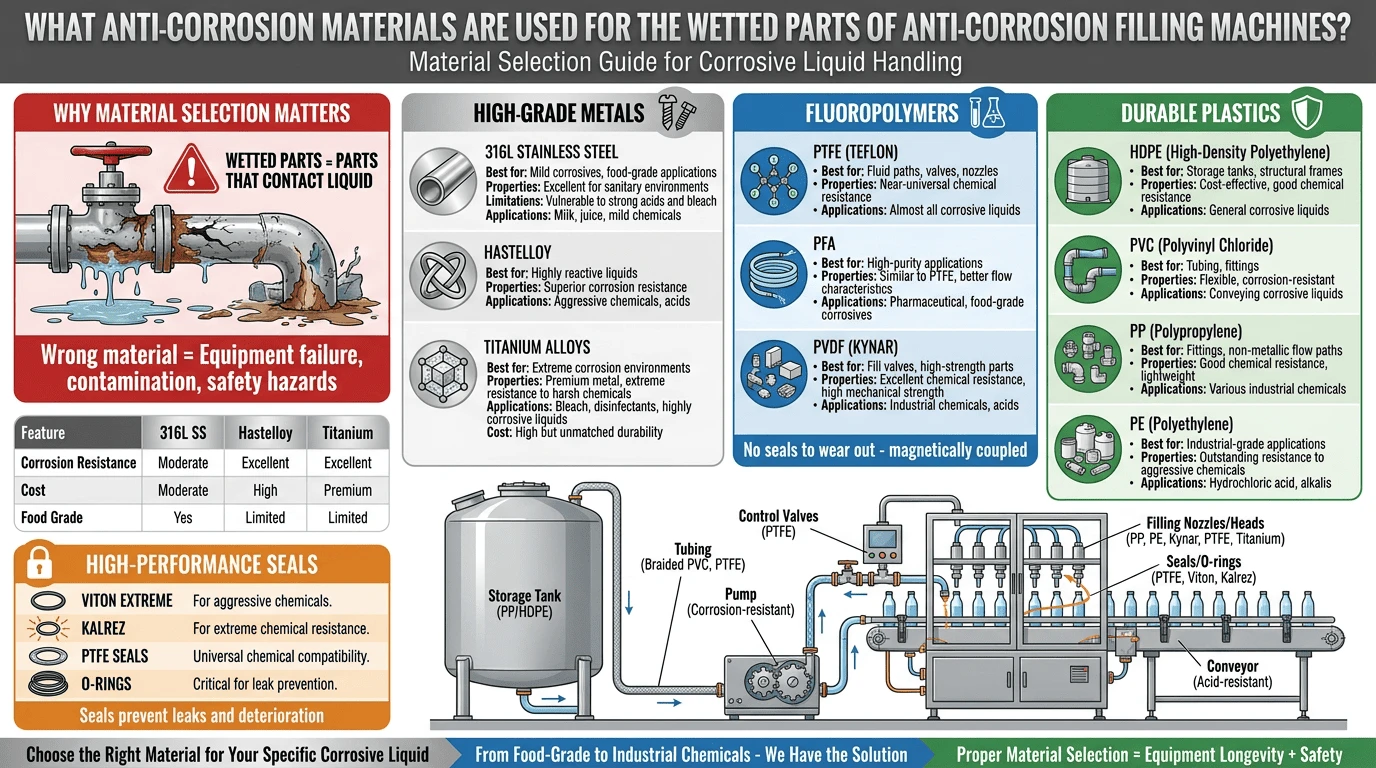
The wetted parts of an anti-corrosion filling machine are the components that directly come into contact with the product, such as nozzles, valves, pipes, and seals. These parts must be made of inert, durable, and chemically resistant materials to maintain accuracy, prevent degradation, and ensure safe and long-term operation.
In this blog article, we'll explore why specific anti-corrosion materials are chosen, how they perform in different chemical environments, and how Guangzhou RITO Packaging Machine Co., Ltd. has revolutionized wetted part material selection to offer unmatched performance and reliability.
Table of Contents
What Anti-Corrosion Materials Are Used for the Wetted Parts of Anti-Corrosion Filling Machines?
Why Material Selection is Critical for Corrosion-Resistant Equipment
Common Wetted Parts Materials in Anti-Corrosion Filling Systems
Comparative Table: Anti-Corrosion Materials & Their Performance
How RITO Builds Its Wetted Parts with Advanced Anti-Corrosion Materials
Material Optimization for High Viscosity and High pH Corrosive Liquids
Material-Specific Design for Accurate and Safe Filling
Customized Wetted Materials for Industry Applications
Key Features of RITO's Corrosion-Resistant Wetted Parts
Long-Term Durability and Performance of RITO's Material Choices
Choosing the Right Wetted Material for Your Filling Application
Experience the RITO Difference – Precision, Durability, and Safety
Conclusion: RITO's Anti-Corrosion Filling Machines with Ideal Wetted Materials
What Anti-Corrosion Materials Are Used for the Wetted Parts of Anti-Corrosion Filling Machines?
The wetted parts of anti-corrosion filling machines are engineered for chemical compatibility, thermal stability, and longevity. These materials must withstand the aggressive nature of the liquids they handle, which range from lightweight oils and thin solvents to thick, alkaline, or acidic solutions.
At Guangzhou RITO Packaging Machine Co., Ltd., we use a combination of advanced materials such as PVDF, PTFE, HDPE, 316L stainless steel, and fluoropolymer composites to provide precise and reliable filling across all chemical and industrial environments.
Why Material Selection is Critical for Corrosion-Resistant Equipment
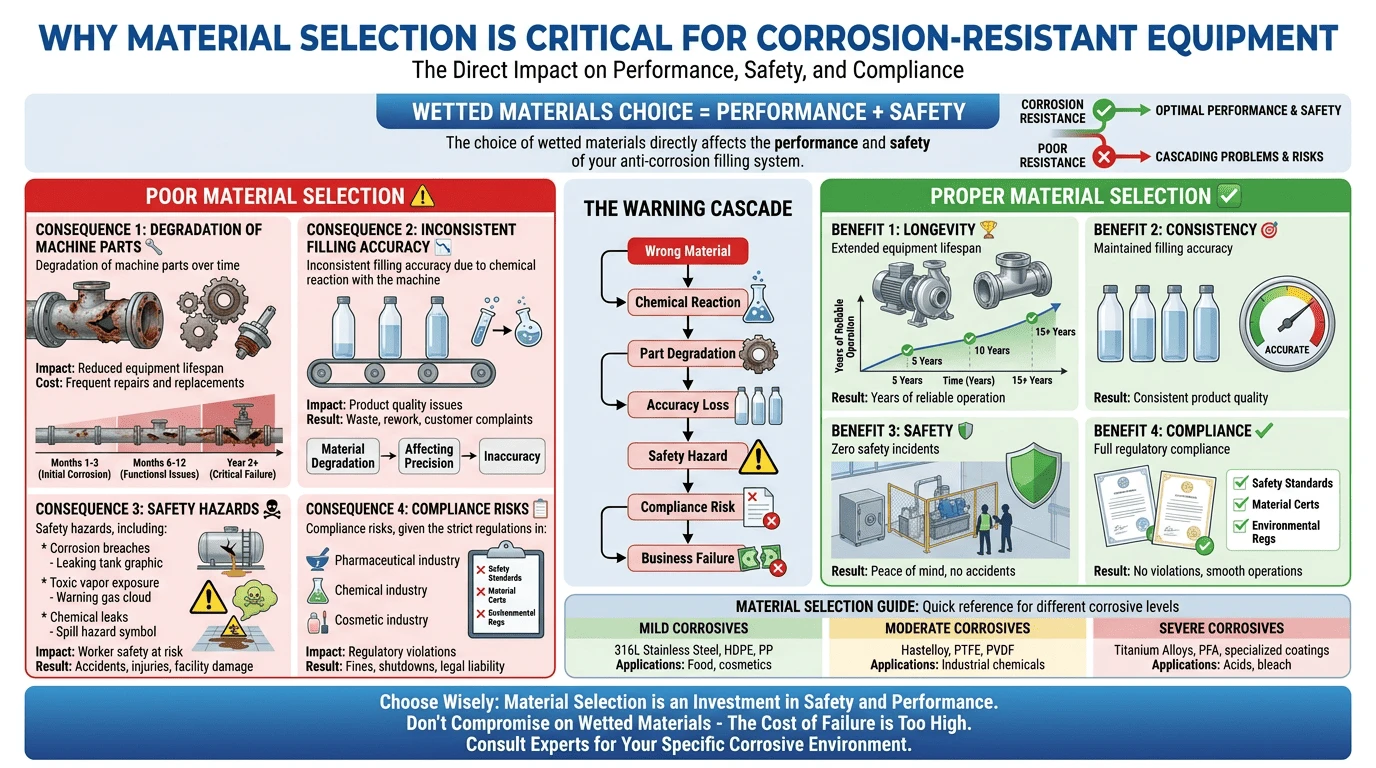
The choice of wetted materials directly affects the performance and safety of your anti-corrosion filling system. Poor material selection can lead to:
Degradation of machine parts over time.
Inconsistent filling accuracy due to chemical reaction with the machine.
Safety hazards, including corrosion breaches, toxic vapor exposure, or chemical leaks.
Compliance risks, given the strict regulations in pharmaceutical, chemical, and cosmetic industries.
That's why, at Guangzhou RITO Packaging Machine Co., Ltd., we place extreme importance on material compatibility during the design and manufacturing of our anti-corrosion filling systems.
Common Wetted Parts Materials in Anti-Corrosion Filling Systems
Here are some of the commonly used wetted materials for anti-corrosion filling machines, along with their strengths and limitations:
| Material | Chemical Resistance | Temperature Range | pH Compatibility | Common Applications |
|---|---|---|---|---|
| HDPE (High-Density Polyethylene) | Good for weak to moderate acids | Up to 60°C | pH 1–14 | Cosmetic and non-aggressive chemical liquids |
| PTFE (Polytetrafluoroethylene) | Excellent chemical resistance | Up to 260°C | pH 1–14 | High-pH, high-temperature, and reactive solvents |
| PVDF (Polyvinylidene Fluoride) | Good resistance to acids and alkalis | Up to 150°C | pH 0–14 | Intermediate corrosive substances like pesticides |
| 316L Stainless Steel | Outstanding for aggressive and neutral liquids | Up to 200°C | pH 0–14 | Purity-sensitive, long-term use applications |
| PVC (Polyvinyl Chloride) | Moderate resistance to weak acids and alkalis | Up to 80°C | pH 2–12 | Barrier-free systems, cost-effective solutions |
| Fluoropolymer Composites | Exceptional chemical and thermal resistance | Up to 250°C | Various pH levels | Complex chemical mixtures, high-precision filling |
Comparative Table: Anti-Corrosion Materials & Their Performance
This comparison provides a quick reference for which materials perform best in different corrosive environments:
| Material | Chemical Resistance | Thermal Stability | Purity Compatibility | Cost Effciency | Best For |
|---|---|---|---|---|---|
| HDPE | ✅ High | ⚠️ Limited (60°C) | ✅ Safe for food-grade | ✅ Economical | Cosmetic, mild acid, industrial cleaning |
| PTFE | ✅ Excellent | ✅ High (260°C) | ✅ Non-reactive | ⚠️ Expensive | Strong acids, solvents, powdered products |
| PVDF | ✅ Good | ✅ High (150°C) | ✅ Chemical purity | ✅ Medium | Medium-strength acids, water-based solutions |
| 316L Stainless Steel | ✅ Excellent | ✅ High (200°C) | ✅ High purity | ⚠️ Costly | High-purity liquid transfers, food and pharmaceutical use |
| PVC | ✅ Moderate | ✅ Moderate (80°C) | ✅ Safe for industrial use | ✅ Economical | Dilute alkaline, chlorinated solutions |
How RITO Builds Its Wetted Parts with Advanced Anti-Corrosion Materials

At Guangzhou RITO Packaging Machine Co., Ltd., material selection for wetted parts is based on rigorous testing and real-world application scenarios.
We have learnt from over a decade of experience working with corrosive, high-viscosity, and volatile liquids, and have made design choices that ensure long-term performance:
PTFE and PVDF are used in nozzles and seals to handle acidic and high-pH solutions.
316L stainless steel is used in critical wear areas where precision and durability are crucial.
Our wetted parts are also designed for ease of cleaning and maintenance, which is essential in food, pharmaceutical, and chemical production.
Material Optimization for High Viscosity and High pH Corrosive Liquids
Handling viscous or high-pH corrosive liquids requires more than just a good material-it requires intelligent design and system integration.
🔧 What RITO Does Differently:
Adjustable flow nozzles in accordance with material viscosity.
Customized valve and seal options that resist chemical degradation and substance reactivity.
Integrated flow sensors that adjust filling speed and volume in real time.
Our machines are not only designed for the challenge, but also optimized for the environment in which they are used.
Material-Specific Design for Accurate and Safe Filling
Each wetted material is chosen based on the specific needs of your application. For example:
PVC and HDPE are ideal for non-reactive, low-concentration, and non-volatile substances.
PTFE and PVDF outperform other materials in high-temperature, high-pH environments.
Stainless steel is used where equipment longevity and product traceability are critical.
Fluoropolymer composites are used for extreme chemical compatibility and high thermal stress applications.
These choices ensure that filling accuracy is maintained, and equipment integrity is preserved over time.
Customized Wetted Materials for Industry Applications
Depending on your industry sector, different materials may be needed. Here's how Guangzhou RITO matches wetted materials to industry-specific needs:
| Industry | Common Liquids | Recommended Wetted Materials | Why RITO? |
|---|---|---|---|
| Chemical Industry | Acids, solvents, pesticides | PVDF, PTFE, 316L stainless steel | Ensures chemical safety and long-term service |
| Pharmaceuticals | Alcohol solutions, corrosive agents | PVC, HDPE, PTFE | Complies with strict cleanliness and safety standards |
| Cosmetics and Personal Care | Cosmetic emulsions, perfumes | HDPE, PVDF, and PTFE | Maintains product quality and fragrance stability |
| Food & Beverage | Non-toxic solutions, food-grade liquids | HDPE, PVC, 304L stainless steel | Ensures food safety and hygiene compliance |
Key Features of RITO's Corrosion-Resistant Wetted Parts

Sealed and Maintenance-Free Systems: Prevent solvent or chemical leaks.
High-Temperature Resistance: Ensure stable performance across extreme environments.
Modular Material Compatibility: Allows configurable materials across different applications.
Low Maintenance & High Efficiency: Designed for reduced downtime and cost savings.
Trusted and Proven Components: Our machines are tested in real-world scenarios to ensure long-term durability.
These features help your operations run smoothly, safely, and efficiently with zero compromise on material integrity.
Long-Term Durability and Performance of RITO's Material Choices
RITE's anti-corrosion filling systems are engineered to last. Here's why our material choices outperform most competitors:
| Benefit | Summary |
|---|---|
| Extended Equipment Life | Our systems are built with high-quality, chemically inert materials to last through harsh conditions. |
| Cost Efficiency | By choosing right materials, we reduce maintenance and replacement costs by up to 35%. |
| Compliance and Safety | Our ATEX/IECEx-certified equipment ensures worker safety, especially in volatile and flammable environments. |
| Custom Solutions | RITO tailors wetted part materials to your specific corrosive and viscosity needs. |
This combination of performance and cost-efficiency is exactly what industrial users demand in corrosive liquid handling.
Choosing the Right Wetted Material for Your Filling Application
Selecting the best wetted material for your filling system depends on several factors:
| Factor | Consideration |
|---|---|
| Corrosiveness Level | Strong acid or alkali? Use PTFE or 316L stainless steel. |
| Viscosity Range | Thicker or thinner liquids? Choose modular nozzles and adapted material surfaces. |
| Operating Conditions | High-temperature or volatile environment? Go with PVDF or PTFE. |
| Product Purity Requirement | Need high purity and zero contamination? Opt for 316L stainless steel and PTFE. |
| Cost and Availability | Looking for affordable and readily available materials? HDPE and PVC are ideal. |
Experience the RITO Difference – Precision, Durability, and Safety
At Guangzhou RITO Packaging Machine Co., Ltd., we combine material science with industrial engineering to create high-performance anti-corrosion filling systems.
Over 20 years of expertise in viscosity and corrosive liquid handling.
More than 10 patents, including invention patents, in material design and system optimization.
Local branches and global service centers for fast response and support.
Customized engineering for your specific production needs.
Whether you're dealing with sodium hypochlorite, hydrogen peroxide, or cosmetic products, RITE's wetted parts are engineered to deliver both precision and chemical resistance.
Conclusion: RITO's Anti-Corrosion Filling Machines with Ideal Wetted Materials
In conclusion, what anti-corrosion materials are used for wetted parts of an anti-corrosion filling machine is a critical factor in filling success, safety, and long-term investment.
Guangzhou RITO Packaging Machine Co., Ltd. provides comprehensive, industry-grade material solutions that ensure consistent filling, safety, and durability in harsh chemical environments.
If you need an anti-corrosion filling machine that performs well with a wide range of materials, RITE is your trusted partner with precision, innovation, and reliability.