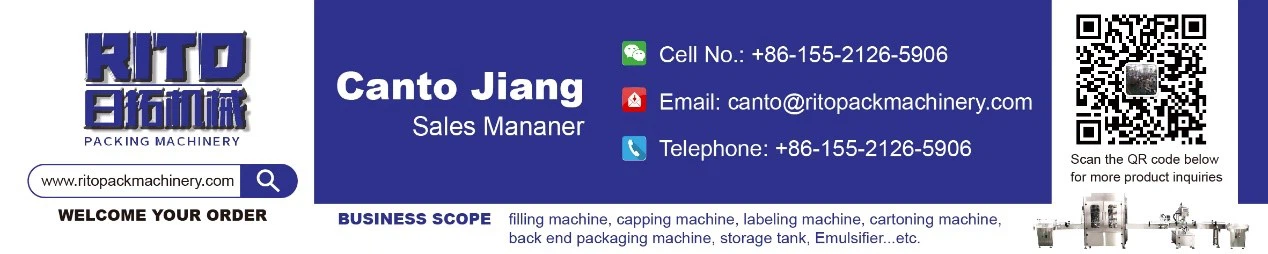
🧪 Are You Looking for a Reliable Filling Machine for Corrosive Chemicals?
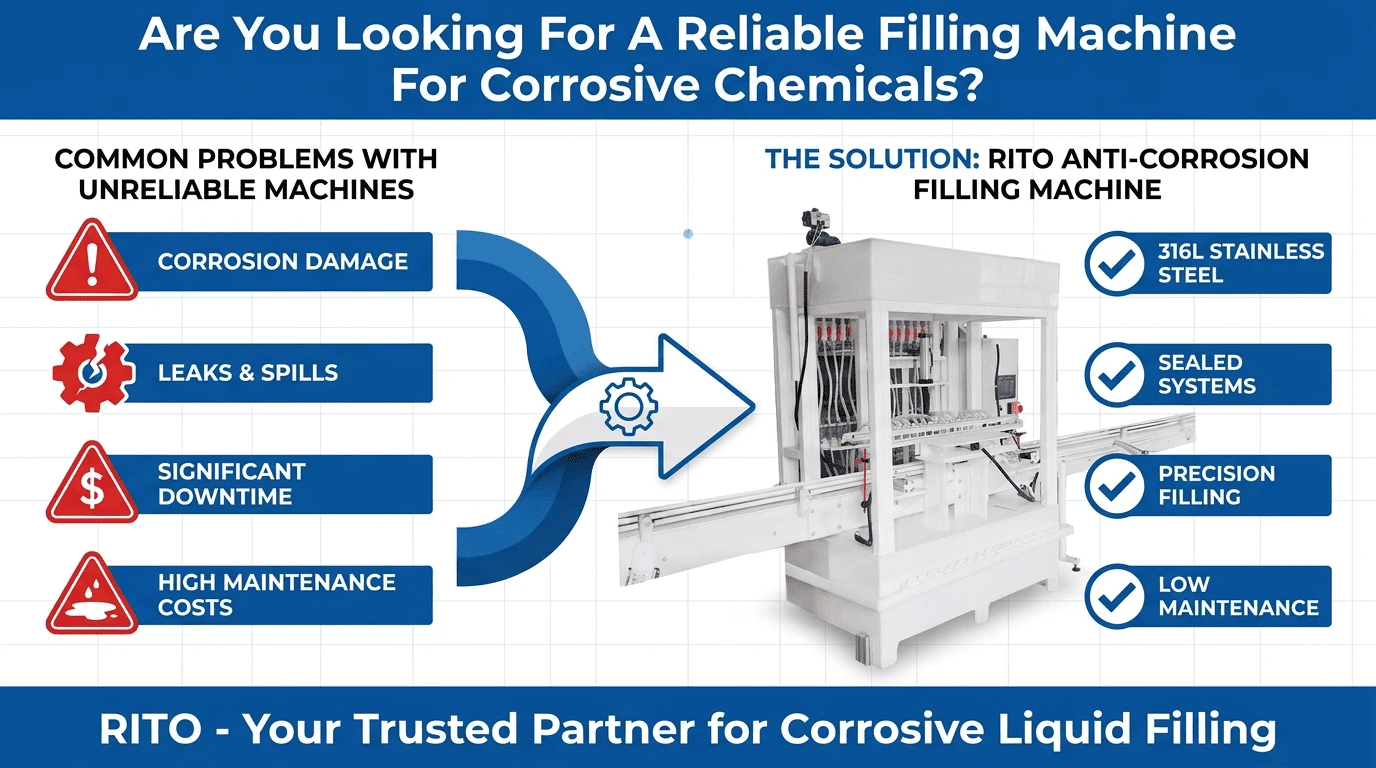
In the fast-paced and high-demand global chemical industry, one of the most critical challenges is ensuring a safe, efficient, and accurate filling process for corrosive and reactive chemicals such as pesticides, solvents, acids, and industrial chemicals.
Many companies face this question daily:
Are You Looking for a Reliable Filling Machine for Corrosive Chemicals?
The answer, however, is not a one-size-fits-all. You need a specialized, high-precision, and corrosion-resistant filling machine that's built to withstand extreme conditions.
In this article, we'll break down what corrosive filling machines are, why they are essential in chemical applications, and how Guangzhou RITO Packaging Machine Co., Ltd. stands out with superior, customized, and fully integrated solutions.
📚 Table of Contents
What Are Corrosive Filling Machines?
Why You Need a Corrosive Filling Machine for Chemical Products?
Types of Corrosive Filling Machines – Manual, Semi-Automatic, and Automatic
Key Factors to Consider When Choosing a Corrosive Filling Machine
The Safety and Compliance Challenges in Corrosive Chemical Filling
What Container Types Are Best for Corrosive Filling Applications?
Why Guangzhou RITO's Corrosive Filling Machines Set the Standard
Key Advantages of RITO's Corrosive Chemical Filling Systems
Industries That Benefit Most from Corrosive Filling Machines
How RITO Ensures Uninterrupted and Efficient Operations
What You Can Expect from RITO's Full-Service Approach
🧠 1. What Are Corrosive Filling Machines?
Corrosive filling machines are specialized industrial equipment designed to handle aggressive chemicals that can damage standard filling systems due to chemical exposure, high viscosity, and temperature sensitivity.
Unlike regular filling machines, corrosive filling systems must include:
Corrosion-resistant materials
Leak-proof and sealed designs
Non-contact filling technology
Automated process controls
Adjustable filling capacity based on chemicals and containers
They are engineered to ensure safe chemical filling, prevent equipment degradation, and maintain product integrity even in harsh and hazardous environments.
✅ 2. Why You Need a Corrosive Filling Machine for Chemical Products?
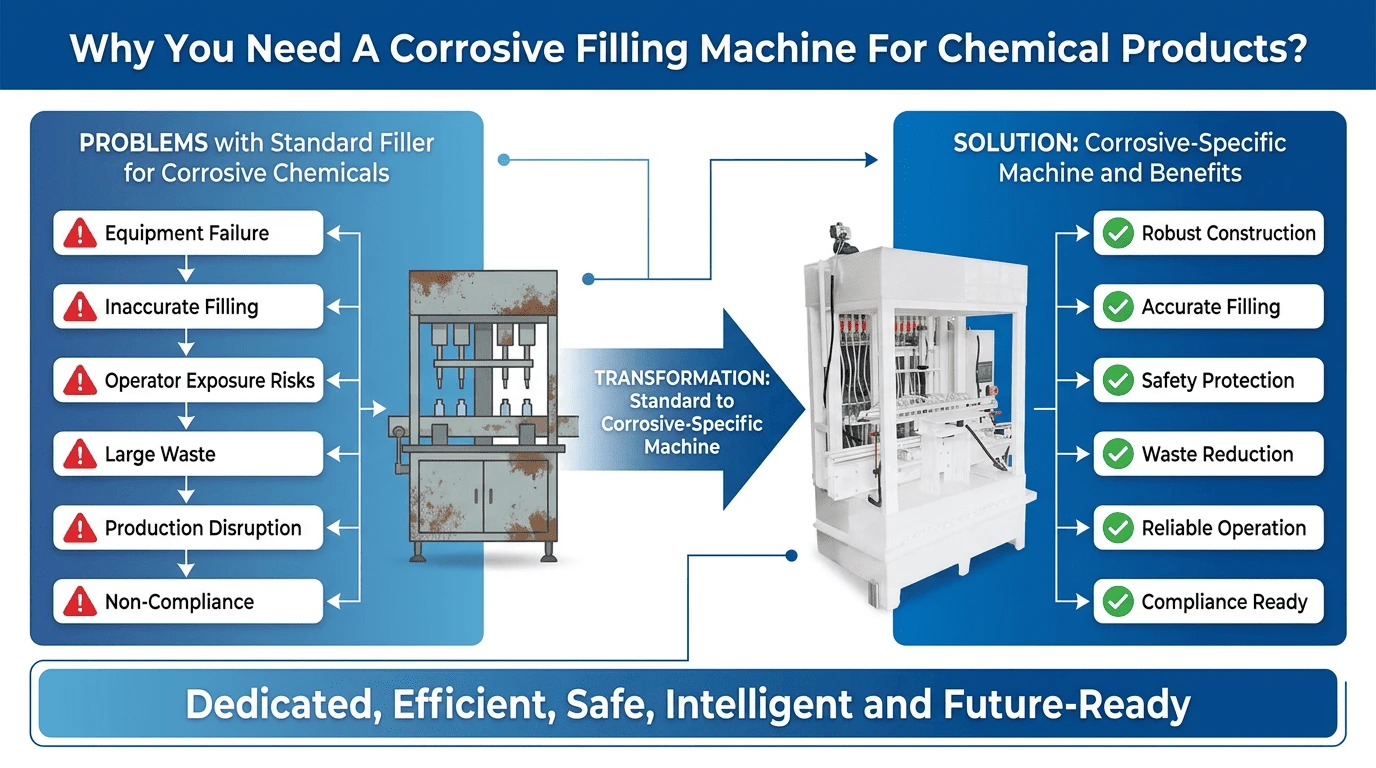
If you're working with chemical liquids, especially corrosive, reactive, or hazardous ones, then a standard filler is not a good fit. It can lead to:
Equipment failure due to corrosion
Inaccurate filling and inconsistent product batches
Operator exposure risks and safety hazards
Large waste and loss from uneven metrics
Disruption in production flow due to frequent machine maintenance
Non-compliance with international safety and environmental standards
It's clear: handling corrosive chemicals requires a dedicated, efficient, and safe filling machine-one that isn't just robust, but intelligent and future-ready.
🔄 3. Types of Corrosive Filling Machines – Manual, Semi-Automatic, and Automatic
Choosing the right type of filling machine depends on your production scale, product type, and safety requirements.
| Machine Type | Best For | Pros | Cons |
|---|---|---|---|
| Manual Corrosive Filling Machines | Low to medium volume batches or temporary needs | Lower upfront cost, simpler operation | Labor-intensive, time-consuming, less accurate |
| Semi-Automatic Corrosive Filling Machines | Medium to high volume but limited automation | Balanced cost-effectiveness, less manual involvement | Still requires human oversight, may not be ideal for high-risk environments |
| Automatic Corrosive Filling Machines | High-volume, high-accuracy, and high-risk applications | Minimal human intervention, high throughput, precise filling | High initial cost, requires technical and maintenance expertise |
For pesticides, industrial solvents, and aggressive chemicals, automatic systems are the best option due to their reduced exposure, higher accuracy, and long-term durability.
🔍 4. Key Factors to Consider When Choosing a Corrosive Filling Machine
Selecting a corrosive filling machine involves more than just buying the right equipment. Here are the key factors to evaluate before making a decision:
| Factor | What to Look For |
|---|---|
| Chemical Type | Ensure compatibility with acids, solvents, or reactive liquids |
| Container Size & Type | Ideally handles small, medium, and large containers (bottles, drums, wide-mouth jars) |
| Viscosity Level | Use piston fillers or high-pressure systems for thick or sticky liquids |
| Automation Level | Choose semi- or fully automatic systems to reduce human intervention |
| Safety & Durability | Look for non-contact filling, leak detection, and fire-resistant components |
| Ease of Cleaning | Opt for easy-to-clean, hygienic, and washdown-compatible designs |
| Cost & ROI | Decide between initial cost and long-term maintenance and operational value |
| Compliance | Ensure the machine is certified with ISO, FDA, and CE standards for international use |
These considerations will help you find the best chemical filling machine for your specific needs.
🛡️ 5. Why Safety and Compliance Are Crucial When Filling Corrosive Chemicals
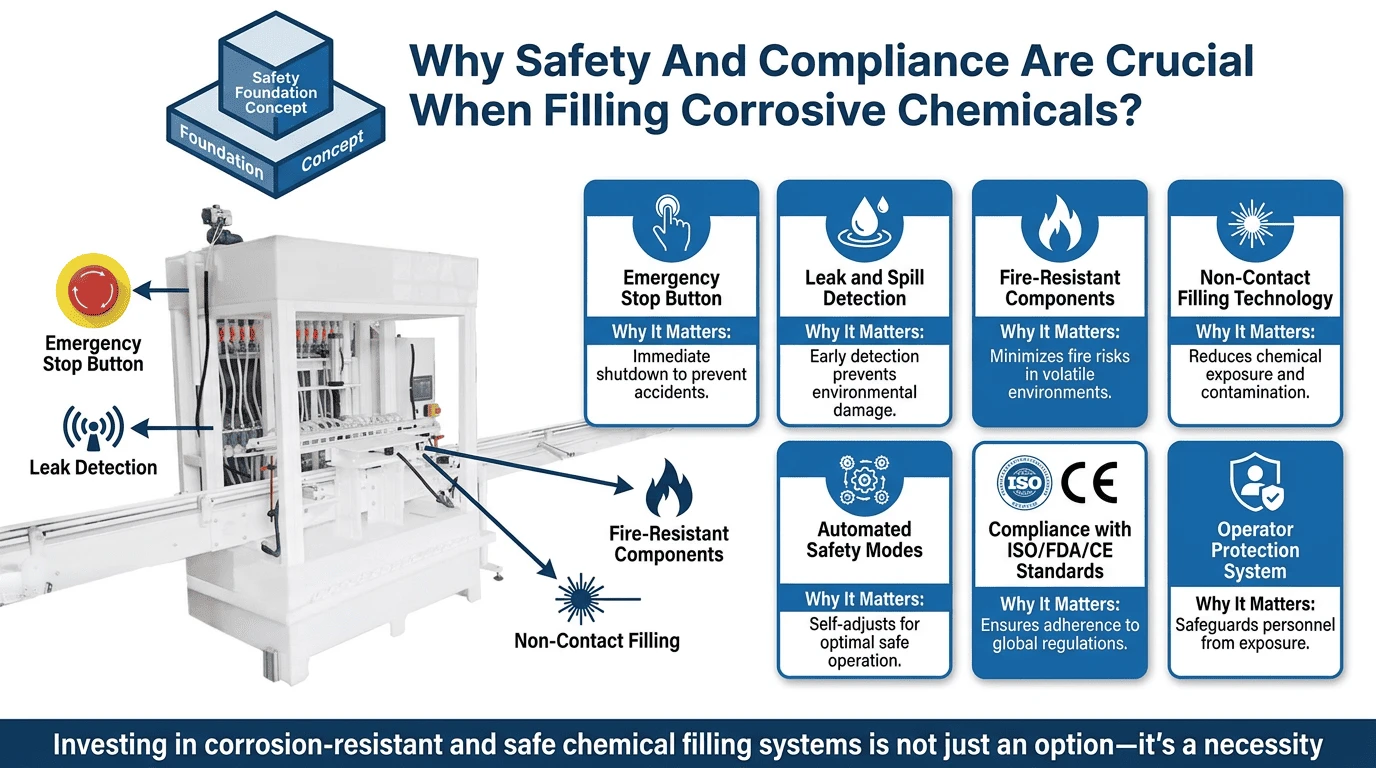
Safety is not an afterthought in corrosive chemical filling. It's the foundation of every operation, especially in hazardous and corrosive environments.
| Safety Feature | Why It Matters |
|---|---|
| Emergency Stop Button | Quick response to dangerous situations |
| Leak and Spill Detection | Prevents chemical contamination and environmental damage |
| Fire-Resistant Components | Ensures machine safety from high-risk or volatile substances |
| Non-Contact Filling Technology | Minimizes operator exposure |
| Automated Safety Modes | Prevents false readings or machine downtime |
| Compliance with ISO, FDA, and CE Standards | Global readiness and reduced legal risks |
| Operator Protection System | Reduces exposure risk in high-hazard applications |
Investing in corrosion-resistant and safe chemical filling systems is not just an option-it's a necessity.
📦 6. What Container Types Are Best for Corrosive Filling Applications?
Your container choice directly impacts the type of filling machine you'll require. Here's how different container types influence your decision:
| Container Type | Best Filling Machine Features |
|---|---|
| Tall Bottles | Vertical filling systems with precise grip and alignment |
| Wide-Mouth Jars | Non-contact valves and adjustable fill heads for easy cleaning |
| Drums or Large Tanks | High-capacity fillers with strong material builds |
| Multiple Sizes and Shapes | Flexible systems with quick changeover capabilities |
A versatile and efficient chemical filling machine must be able to adapt to your specific container needs, which is where RIITO's custom-built machines truly shine.
🧠 7. Why Guangzhou RITO's Corrosive Filling Machines Set the Standard
Guangzhou RITO Packaging Machine Co., Ltd. is a national high-tech enterprise established in 2013, with a 3,000 square meter R&D and production center and a team of over 20 years of experience in the packaging machinery sector.
We specialize in:
High-precision, safe, and reliable corrosive filling systems
Corrosion-resistant construction using 316 stainless steel and PTFE lining
Non-contact technology to minimize operator exposure
Integrated safety systems and certifications for global markets
Adjustable fill volume for a range of chemical types and dosages
Custom solutions that align with your process and product needs
This is why RITO machines are engineered for long-term use and minimalist maintenance in aggressive chemical environments.
🌟 8. Key Advantages of RITO's Corrosive Chemical Filling Systems
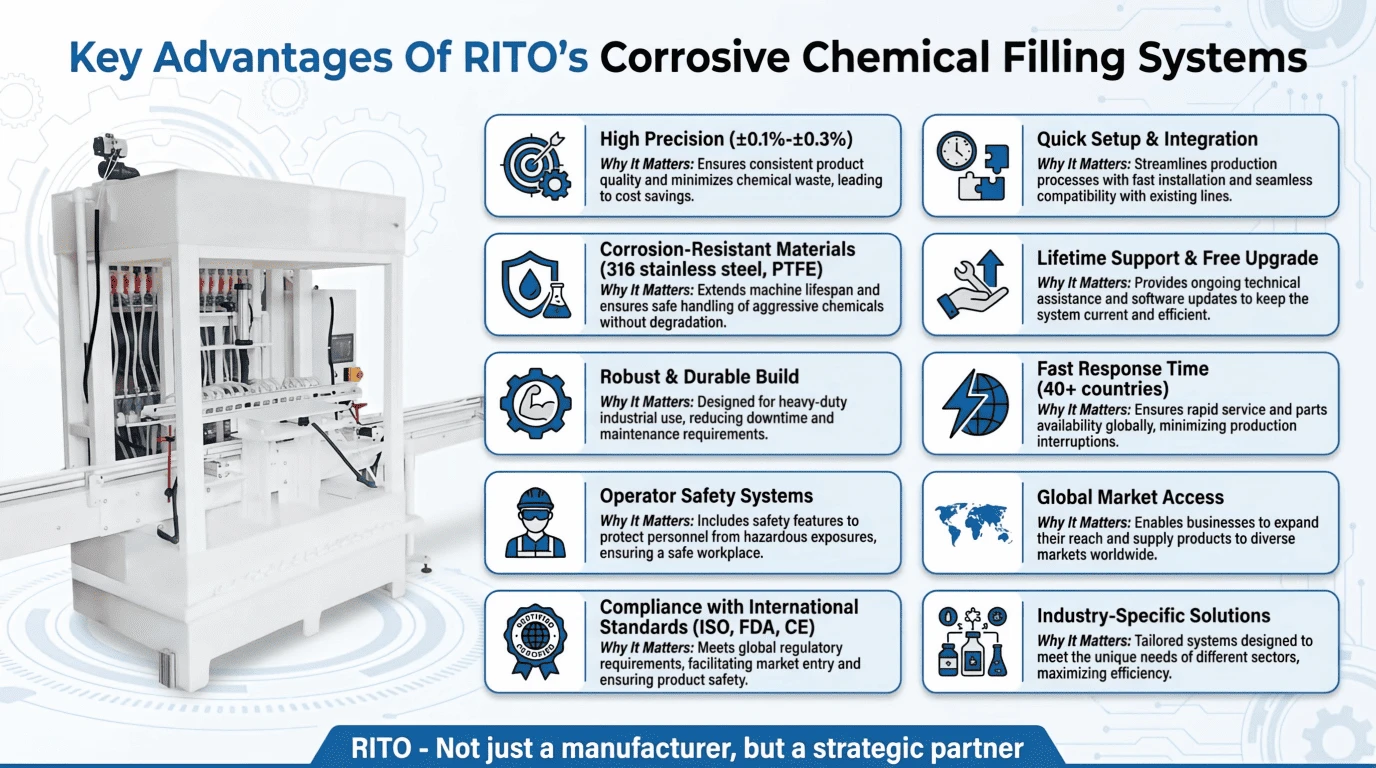
RITO's corrosive filling machines are not just industrial equipment-they're advanced systems designed for precision, safety, and efficiency in the harshest chemical environments.
✅ RITO's Top Advantages:
| Feature | Why It Matters |
|---|---|
| High Precision | ±0.1% - ±0.3% accuracy for consistent batch quality |
| Corrosion-Resistant Materials | 316 stainless steel, PTFE lining, and durable, anti-corrosion components |
| Robust & Durable Build | Capable of continuous, high-load operation in chemical-intensive environments |
| Operator Safety Systems | Non-contact filling, automatic leak detection, and clean working environments |
| Compliance with International Standards | ISO, FDA, and CE-certified for global use and reduced legal exposure |
| Quick Setup & Integration | Designed for easy installation and compatibility with your production line |
| Lifetime Support & Free Upgrade | No hidden costs or surprises, ensuring long-term reliability |
| Fast Response Time | With service centers in over 40 countries, operators and managers get the support they need quickly |
| Global Market Access | Products with international certifications for ESS, IP, and CE standards |
| Industry-Specific Solutions | Customized for chemical manufacturing, food processing, and industrial cleaning |
These advantages make RITO not just a manufacturer, but a strategic partner for chemical and pesticide operations.
🏭 9. Industries That Benefit Most from RITO's Corrosive Filling Machines
Whether you're in chemical manufacturing, industrial cleaning, food processing, or water treatment, corrosive filling machines are essential. Here are some of the industries RIITO serves with its advanced systems:
| Industry | Application | Why RITO? |
|---|---|---|
| Chemical Manufacturing | Filling solvents, acids, and industrial chemicals | High durability, precision, and compliance |
| Industrial Cleaning Products | Handling bleach, disinfectants, and corrosive cleaning agents | Integrated safety and storage for operator protection |
| Food and Beverage | Filling brine-based products and specialty liquids | Easy-to-clean systems for hygiene and long-term use |
| Agricultural Products | Pesticides and herbicides | High-accuracy, safe, and corrosion-resistant solutions |
| Water Treatment | Filling and managing corrosive chemical solutions | Reliable and long-lasting performance under harsh conditions |
These industry-specific applications demonstrate why RITO is a top choice in chemical filling systems.
✅ 10. How RITO Ensures Uninterrupted and Efficient Chemical Filling Operations
At RITO, we don't just deliver machines-we support the entire lifecycle of your project.
🧾 RITO's End-to-End Support Includes:
| Service Type | What We Provide |
|---|---|
| Customized Chemical Filling Systems | Tailored for your specific production needs |
| On-Site and Remote Technical Support | 24/7 response, including technical documentation and support |
| Training and Installation Support | Helps your operators and managers get smooth onboarding and efficient operation |
| After-Sales Support and Maintenance | Lifetime maintenance, free software upgrades, and guaranteed performance |
| Global Compliance and Legal Support | Guidance through certifications, such as ISO and CE, for export readiness |
This full-service approach ensures you get the best value and performance from your chemical filling machine-all while reducing downtime and increasing productivity.
📢 11. What You Can Expect from RITO's Full-Service Approach
When you choose RITO, you're not just buying a machine-you're investing in a complete solution that supports your production process from start to finish.
| What You Get | Description |
|---|---|
| Best Solids and Liquids Filling Machines | Suitable for a wide range of chemical types and container sizes |
| High-Precision and Safe Filling Technology | Accurate filling and safe handling of harmful substances |
| Industry-Specific Solutions | Machines built to meet the unique needs of your line |
| Ownership and Warranty | Guaranteed product integrity and long-term protection |
| Advanced Software & Control Systems | User-friendly digital screens, job memory, and real-time adjustments |
| Product Support and Technical Documentation | All you need to operate and maintain on a daily basis |
| Global Delivery & Service | Quick and local response in over 40 countries |
| Easy Integration with Existing Lines | Designed for minimal production disruption and smooth operation |
You can count on RITO for thoughtfully designed chemical filling machines that optimize performance and safety in any chemical handling environment.