Can a Filling Machine Handle Hydrochloric Acid and Sodium Hypochlorite?
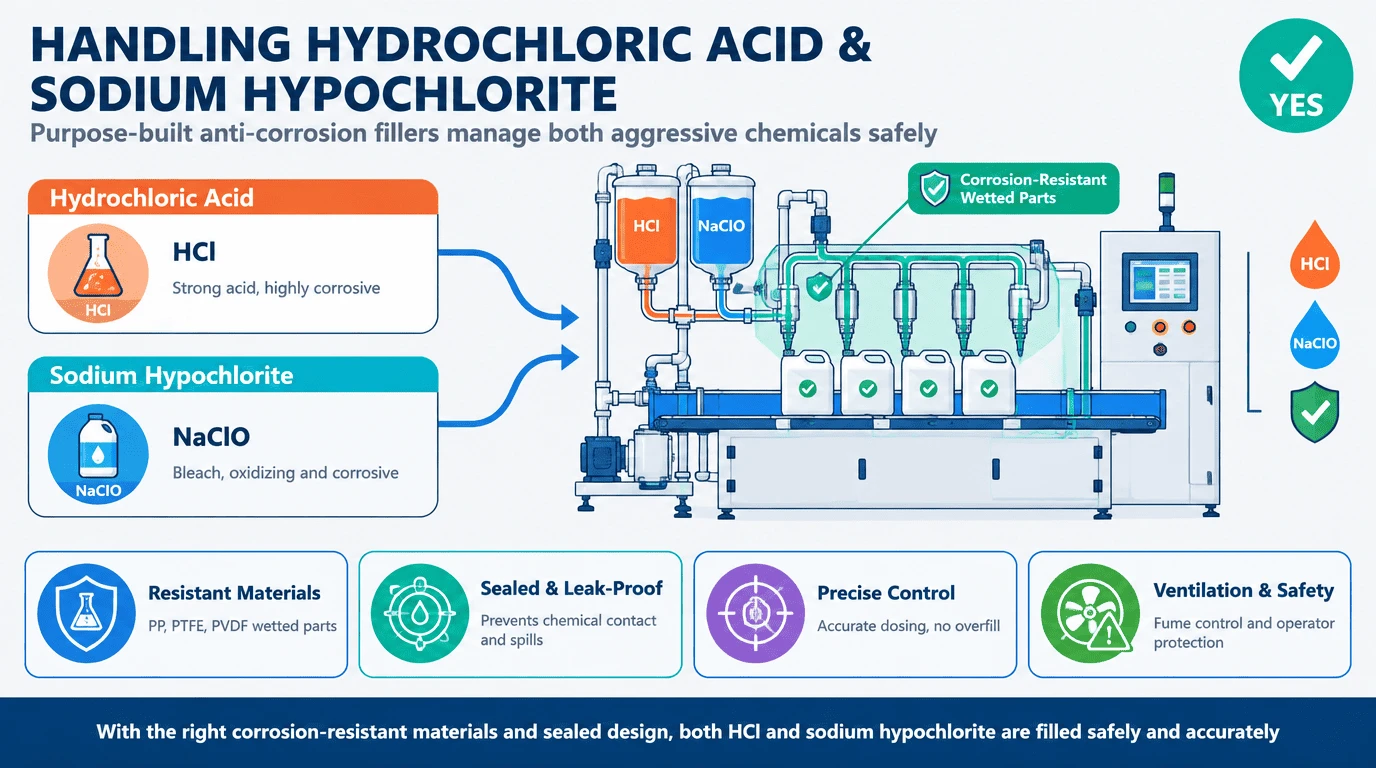
When it comes to packaging corrosive liquids like hydrochloric acid and sodium hypochlorite (bleach), the choice of filling machine is not just about speed or function-it's about safety, durability, and compatibility with harsh chemicals.
Traditional filling machines made from stainless steel are not always the best solution for strong acids and corrosive substances. This is why corrosion-resistant filling machines have become the industry standard.
In this article, we will explore how corrosion-resistant filling machines can handle corrosive liquids like hydrochloric acid and sodium hypochlorite, their construction materials, key features, and the reasons why they are essential in the chemical industry.
📖 Table of Contents
What Is a Corrosion-Resistant Filling Machine?
Why Is Corrosion-Resistant Filling Important for Hydrochloric Acid and Sodium Hypochlorite?
What Materials Are Used in Corrosion-Resistant Filling Machines?
Can a Corrosion-Resistant Filling Machine Handle Acids and Bleaches?
What Are the Key Features That Make a Corrosion-Resistant Filling Machine Effective?
How Do Corrosion-Resistant Filling Machines Differ from Traditional Ones?
Applications of Corrosion-Resistant Filling Machines in the Chemical Industry
What Makes Guangzhou RITO's Corrosion-Resistant Filling Machine Stand Out?
How to Choose a Corrosion-Resistant Filling Machine for Your Needs?
Why RITO Is the Leading Choice for Corrosion-Resistant Filling Solutions
1. What Is a Corrosion-Resistant Filling Machine?
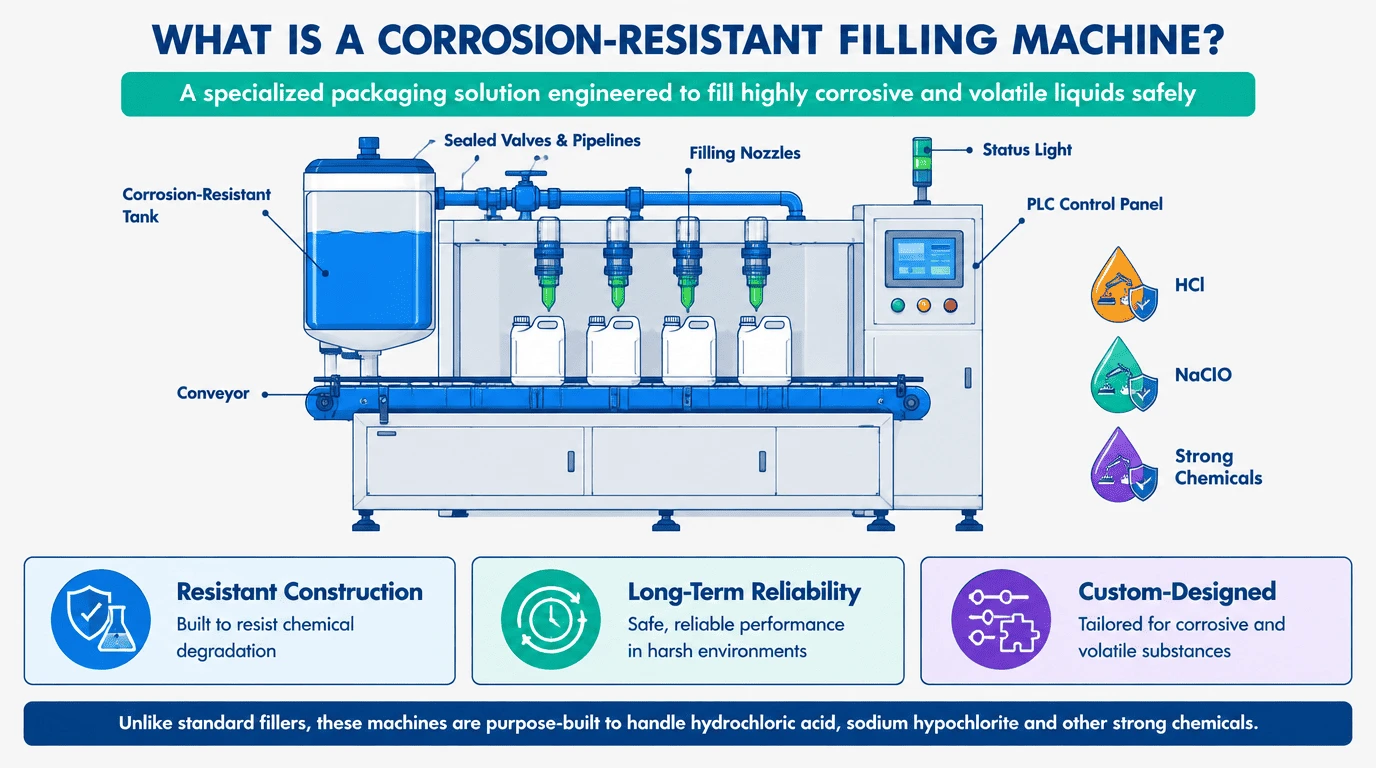
A corrosion-resistant filling machine is a specialized packaging solution designed to handle highly corrosive liquids, such as hydrochloric acid, sodium hypochlorite, and other strong chemicals.
These machines are constructed with materials that resist chemical degradation, ensuring long-term performance, safety, and reliability even in harsh environments. Unlike traditional filling systems, corrosion-resistant ones are custom-designed to meet the specific needs of corrosive and volatile substances.
2. Why Is Corrosion-Resistant Filling Important for Hydrochloric Acid and Sodium Hypochlorite?
Handling strong acids and corrosive disinfectants like hydrochloric acid and sodium hypochlorite can be dangerous if not done with proper equipment. The risks include:
Equipment damage due to chemical reactions with standard components
Product loss from leaks or improper filling
Safety hazards related to handling and storage of corrosive materials
Corrosion-resistant filling machines are engineered to prevent these issues through specialized materials, sealed designs, and optimized manufacturing methods.
3. What Materials Are Used in Corrosion-Resistant Filling Machines?
The key to corrosion resistance lies in the materials used for manufacturing. Here are the most common materials used in corrosion-resistant filling machines:
| Material | Advantages |
|---|---|
| HDPE (High-Density Polyethylene) | Highly resistant to acids, alkalis, and solvents, cost-effective for long-term use |
| PVC (Polyvinyl Chloride) | Offers good chemical resistance and flexibility in design |
| Polypropylene (PP) | Lightweight, durable, and highly compatible with corrosive liquids |
| Teflon Coated Components | Provide an extra layer of corrosion resistance for sensitive areas like nozzles and tubes |
| Stainless Steel (with special coating) | Still used in some cases but requires coating or protection to resist chemical damage |
These materials help to ensure that the filling machine remains functional and safe even when dealing with strong acids and cleaning agents.
4. Can a Corrosion-Resistant Filling Machine Handle Acids and Bleaches?
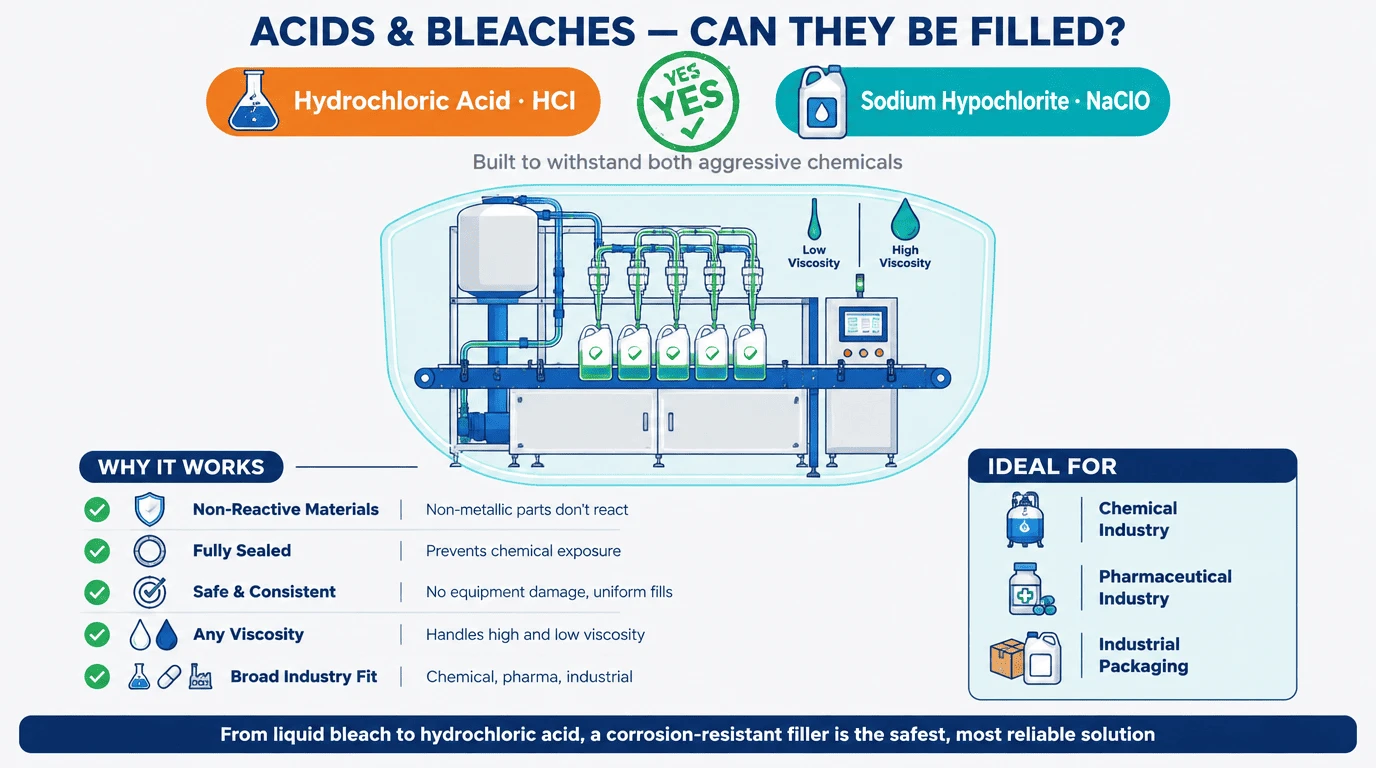
Yes, a corrosion-resistant filling machine is designed to withstand the effects of hydrochloric acid and sodium hypochlorite.
It is built using non-metallic materials that do not react with corrosive substances
It is fully sealed to prevent chemical exposure
It ensures safe and consistent filling without damaging the equipment
It supports both high and low viscosity liquids
It is ideal for chemical, pharmaceutical, and industrial packaging industries
Whether you're filling liquid bleach or hydrochloric acid, a corrosion-resistant filler is the best solution for your needs.
5. What Are the Key Features That Make a Corrosion-Resistant Filling Machine Effective?
To ensure that corrosion-resistant filling machines work well in the chemical industry, they are equipped with several essential features:
| Feature | Description |
|---|---|
| Non-Corrosive Materials | Built with PP, HDPE, or Teflon materials for acid resistance |
| Sealed System Design | Prevents chemical leakage, ensuring safety and product integrity |
| High Chemical Resistance | Adapted for volatile, acidic, and alkaline substances |
| Easy Cleaning & Maintenance | Designed for hygienic and long-term use in corrosive environments |
| Robust Construction | Durable and able to withstand extreme conditions |
| Precision Filling Capacity | Offers high accuracy (up to ±1% or less) for reliable product output |
| Adjustable Nozzles & Pumps | Can be configured for different container types and liquid properties |
These features ensure that the machine is both durable and efficient in handling corrosive liquids.
6. How Do Corrosion-Resistant Filling Machines Differ from Traditional Ones?
Here's a breakdown of the key differences between corrosion-resistant filling machines and traditional ones:
| Feature | Corrosion-Resistant Filling Machine | Traditional Filling Machine |
|---|---|---|
| Material | Uses HDPE, PP, Teflon, or other non-corrosive materials | Often built from stainless steel or metal |
| Chemical Resistance | Offers exceptional resistance to acids and alkalis | Limited resistance, requiring special coatings or modifications |
| Sealing System | Fully sealed and leak-proof design | May have limited sealing options |
| Maintenance | Easier to clean and maintain | Requires more frequent maintenance |
| Precision | High accuracy with error control up to ±1% | Lower precision, with higher error rates |
| Safety | Designed for safe handling of hazardous substances | Limited protection against corrosive exposure |
These differences highlight why corrosion-resistant machines are preferred in chemical and cleaning industries.
7. Applications of Corrosion-Resistant Filling Machines in the Chemical Industry

Corrosion-resistant filling machines are widely used in:
Acid and Base Production (e.g., hydrochloric acid, sodium hydroxide)
Disinfectant and Cleaning Agent Manufacturing (e.g., sodium hypochlorite, bleach)
Pharmaceutical Industry for liquid reagents and solvents
Food Industry for acid-based liquid products like citric acid or vinegar
Industrial Chemical Processing (such as plastic solvents and industrial cleaners)
Waste and Sludge Treatment with high chemical and environmental demands
Each application benefits from the safety, accuracy, and durability of corrosion-resistant filling machines.
8. What Makes Guangzhou RITO's Corrosion-Resistant Filling Machine Stand Out?
Guangzhou RITO Packaging Machinery is a leading manufacturer of corrosion-resistant filling equipment, offering high-quality, durable, and precise solutions tailored to various industries.
🧠 Why RITO:
High chemical resistance using HDPE and PP materials
Long service life due to resilient construction
Optimized for corrosive environments with sealed and anti-leak technology
High accuracy in filling with error rate below ±1%
Diverse applications fit bottles, drums, and other containers
Global presence in over 40 countries and regions
Lifelong after-sales support & free software upgrades
These comprehensive features ensure that Guangzhou RITO's corrosion-resistant filling machine is reliable, safe, and efficient for your chemical production needs.
9. How to Choose a Corrosion-Resistant Filling Machine for Your Needs?
Selecting the right corrosion-resistant filling machine requires careful consideration. Here are some key factors to look for:
| Selection Criteria | Details |
|---|---|
| Material Selection | Use HDPE or PP for strongest acid and corrosive resistance |
| Filling Accuracy | Look for machines with ±1% error rate or better |
| Machine Type | Choose between semi-automatic or fully automatic based on production needs |
| Sealing and Environmental Protection | Ensure a leak-proof and sealed design for safe operation |
| Adaptability | The machine should support different viscosities and chemical properties |
| After-sales Support | Opt for brands with lifetime maintenance and software updates |
By focusing on these selection guidelines, you can ensure maximum performance and safety in your corrosive liquid packaging.
10. Why RITO Is the Leading Choice for Corrosion-Resistant Filling Solutions

Guangzhou RITO Packaging Machinery has established itself as a leading manufacturer in the corrosion-resistant filling machine industry due to the following strengths:
20+ Years of R&D Experience
National High-Tech Enterprise Status with 3,000 sqm R&D Facility
Patented Technology and Proven Industrial Performance
High-Quality Products with Top-Grade Materials
Custom Solutions that match your specific needs
Extensive Global Support in over 40+ countries and regions
Professional Engineering Team and World-Class Customer Service
With Guangzhou RITO, you're not just getting a filling machine-you're investing in a long-term, stable, and high-performance system for your chemical applications.
📌 Conclusion: Corrosion-Resistant Filling Machines Are Not Just an Option
When working with corrosive substances like hydrochloric acid and sodium hypochlorite, the choice of filling machine is critical. A corrosion-resistant filling machine offers:
Longevity even in harsh environments
High accuracy with minimal error
Safe operation with leak-proof and sealed system designs
Easy maintenance and cleanability
Flexibility to fit different container types and production volumes
These advantages make corrosion-resistant filling machines the best choice for the chemical and cleaning industries.