🧪 What Are the Advantages of the Anti-Corrosion 4-Wheel Capping Machine?
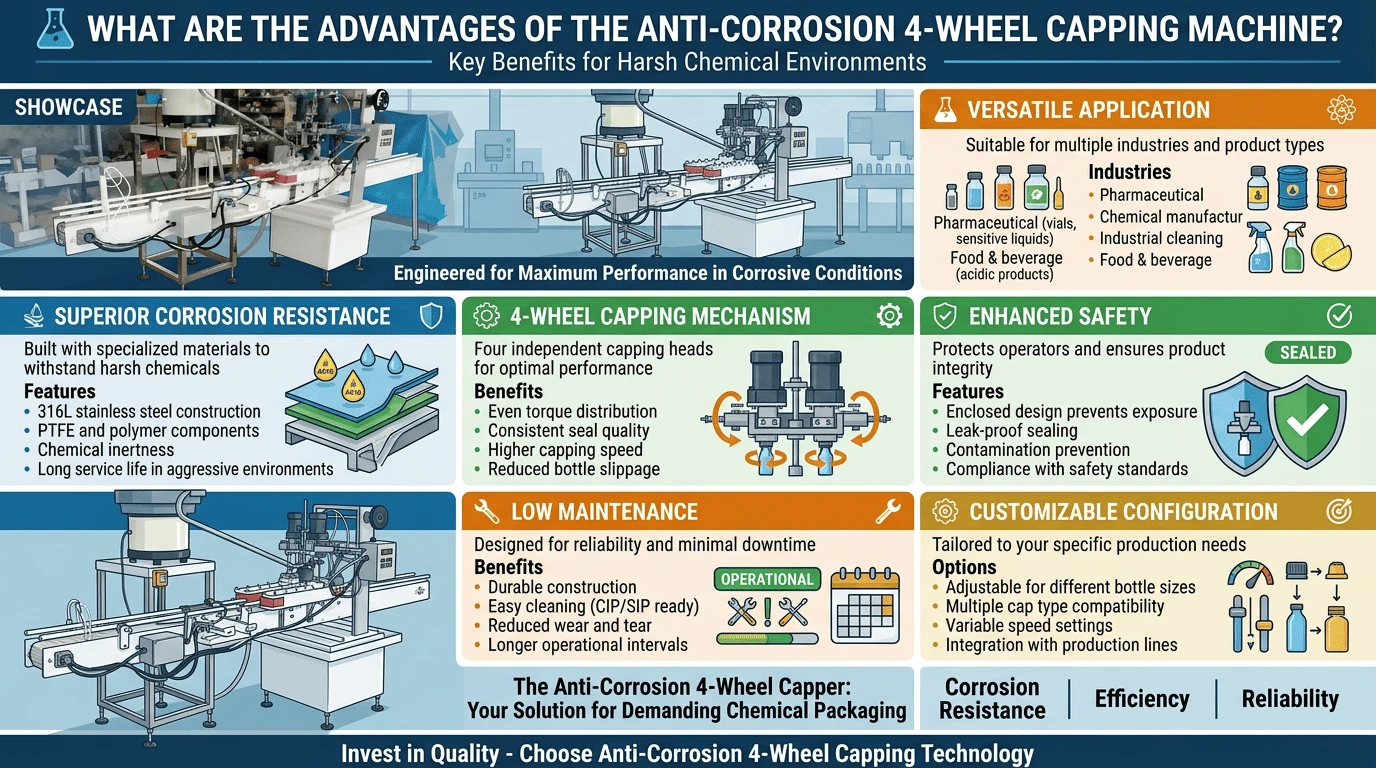
In the pesticide and chemical industry, handling corrosive liquids and materials requires specialized packaging equipment that ensures safety, precision, and durability.
A 4-wheel capping machine, especially when anti-corrosion features are included, is a high-performance solution that effectively secure bottle caps while withstanding harsh chemical environments.
In this article, we will explore the key advantages of anti-corrosion 4-wheel capping machines, and how Guangzhou RITO Packaging Machine Co., Ltd. delivers top-tier, industrial-ready capping solutions.
📚 Table of Contents
What is an Anti-Corrosion 4-Wheel Capping Machine?
What Are the Key Advantages of Using an Anti-Corrosion 4-Wheel Capping System?
Why Is Corrosion Resistance Important in Capping Machines for the Pesticide Industry?
How Does the 4-Wheel Design Improve Cap Sealing and Container Protection?
What Makes the 4-Wheel Capping System Suitable for High-Speed Applications?
How Does Controlled Torque Play a Role in Anti-Corrosion Capping Equipment?
What Industries Benefit Most From the Anti-Corrosion 4-Wheel Capping Machine?
How Does the 4-Wheel Capping System Reduce Maintenance and Downtime?
What Are the Safety Features of an Anti-Corrosion 4-Wheel Capping Machine?
How Can the Anti-Corrosion 4-Wheel Capping Machine Improve Packaging Efficiency?
Can the 4-Wheel Capping System Handle Various Cap Types and Container Sizes?
What Is the Difference Between 4-Wheel and Other Types of Capping Machines?
How Does an Anti-Corrosion 4-Wheel Capping Machine Affect Product Quality?
How Can I Choose the Right 4-Wheel Capping Machine for My Pesticide Production Line?
✅ 1. What is an Anti-Corrosion 4-Wheel Capping Machine?
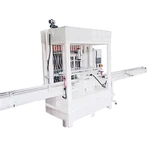
An anti-corrosion 4-wheel capping machine is a specialized type of cap-securing equipment designed to handle corrosive liquids and chemicals commonly found in the pesticide industry.
These machines are built with corrosion-resistant materials like 316 stainless steel and PTFE, making them ideal for long-term use in high-risk chemical environments.
The 4-wheel system ensures that caps are placed evenly and firmly, resulting in a tight, leak-proof seal on pesticide bottles, chemical drums, and other corrosive containers.
✅ 2. What Are the Key Advantages of Using an Anti-Corrosion 4-Wheel Capping System?
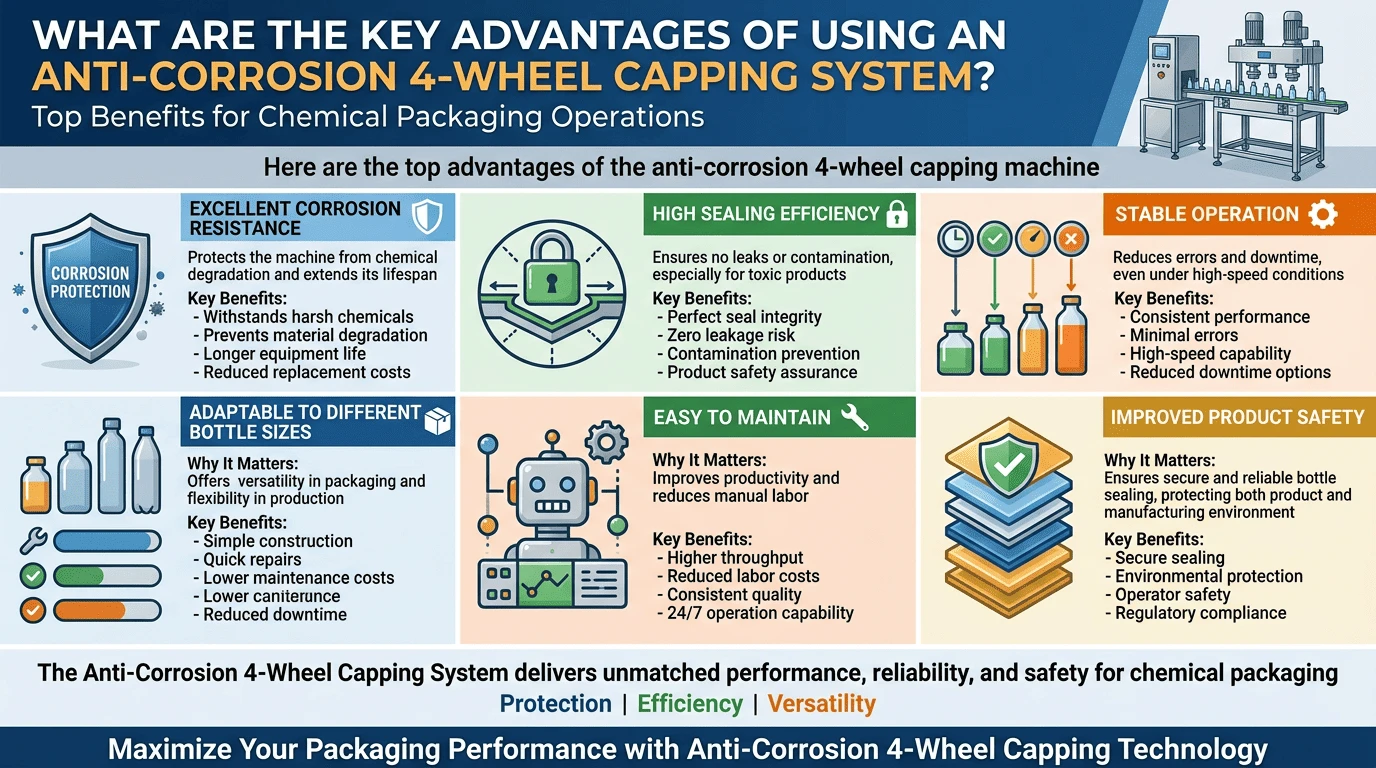
Here are the top advantages of the anti-corrosion 4-wheel capping machine:
| Advantage | Why It Matters |
|---|---|
| Excellent Corrosion Resistance | Protects the machine from chemical degradation and extends its lifespan |
| High Sealing Efficiency | Ensures no leaks or contamination, especially for toxic products |
| Stable Operation | Reduces errors and downtime, even under high-speed conditions |
| Adaptable to Different Bottle Sizes | Offers versatility in packaging and flexibility in production |
| Easy to Maintain | Simple design reduces repair time and operational cost |
| Automated Operations | Improves productivity and reduces manual labor |
| Improved Product Safety | Ensures secure and reliable bottle sealing, protecting both product and manufacturing environment |
These advantages make the 4-wheel anti-corrosion capping machine a top choice for pesticide and chemical manufacturers who need a durable, efficient, and safe capping solution.
✅ 3. Why Is Corrosion Resistance Important in Capping Machines for the Pesticide Industry?
In the pesticide industry, corrosion resistance is not optional-it's a must-have feature for any capping equipment.
Corrosive materials like herbicides, insecticides, and chemical additives can damage standard capping machines over time.
An anti-corrosion 4-wheel capping machine is made of durable, chemical-resistant materials, which reduce maintenance, improve longevity, and ensure consistent operation even in harsh chemical environments.
This increased durability helps reduce downtime, improve safety, and increase long-term ROI in the chemical packaging industry.
✅ 4. How Does the 4-Wheel Design Improve Cap Sealing and Container Protection?
The 4-wheel capping system is engineered for precision and stability.
Compared to other capping technologies, the 4-wheel cradle design offers:
Even Pressure Distribution: Every cap is pressed uniformly by four pressure wheels, ensuring a secure and consistent seal
Improved Product Safety: Delivers a tamper-evident and leak-proof bottle cap
Reduced Risk of Cross-Threading: The four-wheel approach ensures precise alignment and accurate application
Versatility in Cap Types: Handles standard, triple, screw-on, and other types of closures
High Efficiency: Operates in high-speed packaging lines, reducing waste and production delays
These features make it ideal for the pesticide industry, where product integrity and safety are paramount.
✅ 5. What Makes the 4-Wheel Capping System Suitable for High-Speed Applications?
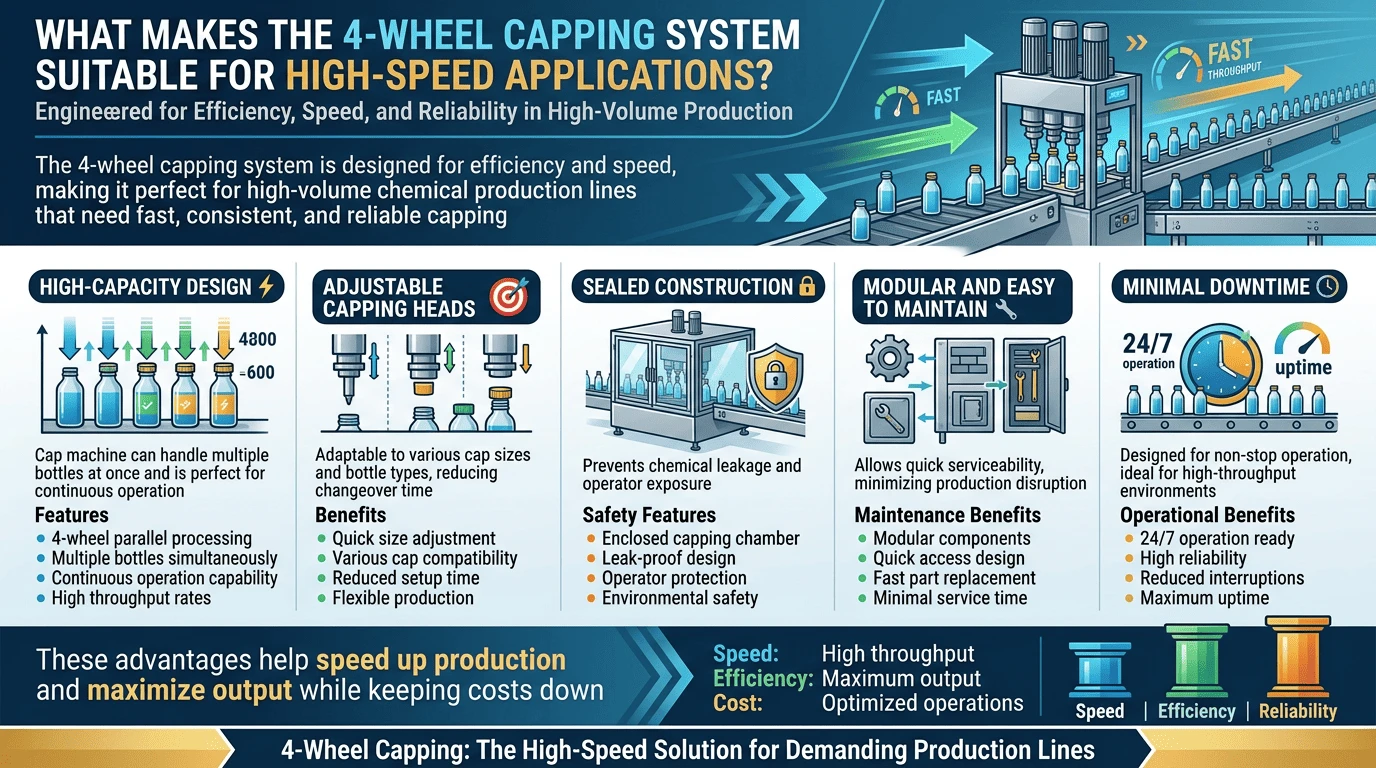
The 4-wheel capping system is designed for efficiency and speed, making it perfect for high-volume chemical production lines that need fast, consistent, and reliable capping.
✅ Key Reasons for High-Speed Suitability:
High-Capacity Design:Cap machine can handle multiple bottles at once and is perfect for continuous operation
Adjustable Capping Heads:Adaptable to various cap sizes and bottle types, reducing changeover time
Sealed Construction:Prevents chemical leakage and operator exposure
Modular and Easy to Maintain:Allows quick serviceability, minimizing production disruption
Minimal Downtime:Designed for non-stop operation, ideal for high-throughput environments
These advantages help speed up production and maximize output while keeping costs down.
✅ 6. How Does Controlled Torque Play a Role in Anti-Corrosion Capping Equipment?
Just like in filling systems, controlled torque is vital in capping machines to ensure consistent and safe sealing.
✅ Why We Use Torque Control in Anti-Corrosion Capping Machines:
Prevents over-tightening:Avoids cap deformation or bottle damage
Avoids under-tightening:Reduces the risk of leaks and contamination
Adaptable for different caps:Both soft and rigid caps can be sealed with precision
Adaptable for different bottle types:Works with glass, plastic, and chemical-resistant materials
This controlled torque system ensures sealing integrity and reduces the risk of product defects in the pesticide and chemical industry.
✅ 7. What Industries Benefit Most From the Anti-Corrosion 4-Wheel Capping Machine?
✅ Industries That Benefit from RITO's 4-Wheel Capping Machines:
| Industry | Why It Fits |
|---|---|
| Pesticides and Herbicides | Handles harsh, corrosive liquids and closures |
| Pharmaceuticals | Ensures FDA-compliant sealing and cleanroom-friendly performance |
| Chemical Processing | Designed for acidic, toxic, and abrasive substances |
| Food and Beverage | Provides clean, safe, and durable capping solutions |
| Cosmetics and Personal Care | Offers high precision and aesthetic control |
| Industrial Lubricants and Oils | Built for heavy-duty environments and high-volume operations |
These industries are ideal users of anti-corrosion 4-wheel capping machines, especially for products with high chemical exposure.
✅ 8. How Does the 4-Wheel Capping System Reduce Maintenance and Downtime?
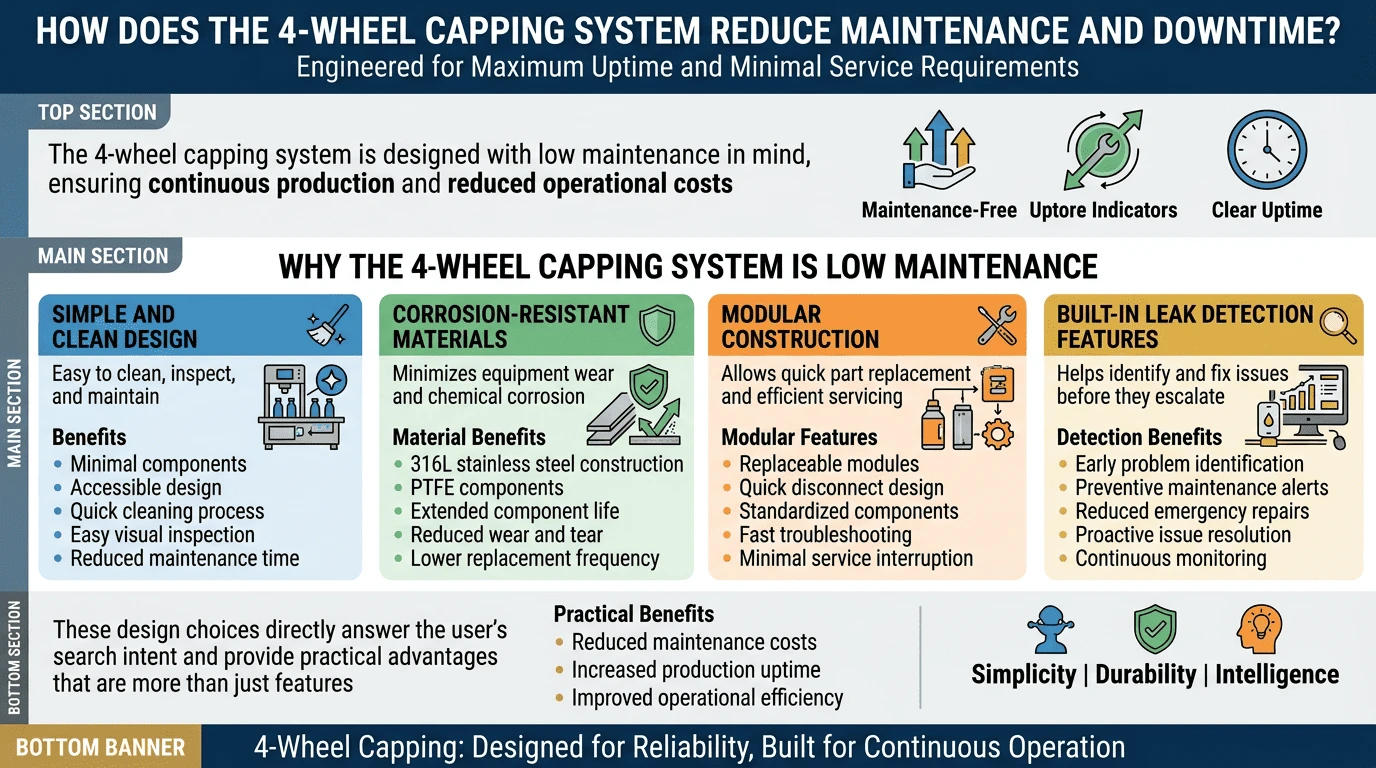
✅ Why the 4-Wheel Capping System is Low Maintenance:
Simple and Clean Design:Easy to clean, inspect, and maintain
Corrosion-Resistant Materials:Minimizes equipment wear and chemical corrosion
Modular Construction:Allows quick part replacement and efficient servicing
Built-in Leak Detection Features:Helps identify and fix issues before they escalate
These design choices directly answer the user's search intent and provide practical advantages that more than just features.
✅ 9. What Are the Safety Features of an Anti-Corrosion 4-Wheel Capping Machine?
Safety is a top priority when working with toxic and corrosive chemicals, and the 4-wheel capping machine is engineered to protect operators and product integrity.
✅ Key Safety Features:
Enclosed Design:Limits operator exposure and contains hazardous materials
Leak-Proof Seals:Ensures no chemical spills or contamination
Anti-Static and Anti-Explosion Components:Suitable for high-risk environments
Robust Structural Design:Built to withstand harsh chemical exposure and high-speed operations
Integrated Monitoring System:Detects malfunctions and safety concerns in real time
These safety-centered features make the 4-wheel capping machine a must-have in chemical industries like pesticides and acid-based solutions.
✅ 10. How Can the Anti-Corrosion 4-Wheel Capping Machine Improve Packaging Efficiency?
✅ Why Efficiency Matters in Capping Machines:
High-speed operation:Can cap up to 3000 bottles per hour, depending on the model
Automated Setup:Easier changeover between bottle sizes and cap types
Less Downtime:Designed for reliable, continuous use
Integration Capable:Can be connected to filling lines for fully automated packaging
Reduced Labor Costs:Minimizes manual intervention and bottlenecks
These efficiency improvements make 4-wheel capping machines more than just a machine - they are a key part of the production line.
✅ 11. Can the 4-Wheel Capping System Handle Various Cap Types and Container Sizes?
Yes! The anti-corrosion 4-wheel capping system is highly adaptable:
Cap Types:Supports standard, triple, screw, and magnetic closures
Container Sizes:Works with small bottles, large drums, and custom-shaped containers
Flexible Integration:Can be adjusted for wide range of production line needs
Quick Setup and Adjustments:Designed for different bottle neck dimensions and cap diameters
This versatility makes it ideal for the pesticide industry, where different cap types and bottle designs are encountered in various operations.
✅ 12. What Is the Difference Between 4-Wheel and Other Capping Machines?

| Capping Method | Pros | Cons |
|---|---|---|
| 4-Wheel Capping | High precision, leak-proof seal, adaptable to multiple bottle sizes | Slightly higher initial cost |
| Single-Head Capping | Simple design, suitable for small-scale operations | Lower throughput, less flexibility |
| Rotary Capping | Compact, high-speed | Requires more maintenance |
| Manual Capping | Low cost, suitable for small-volume or trial production | Less efficient, higher risk of human error |
The 4-wheel capping machine offers better scalability, higher efficiency, and greater reliability, making it the most suitable choice for pesticide and chemical filling lines.
✅ 13. How Does an Anti-Corrosion 4-Wheel Capping Machine Affect Product Quality?
The quality of your final product is directly linked to the accurate and secure capping process.
✅ Impact on Product Quality:
No Cross-Threaded Closures:Improved cap alignment and sealing pattern prevents leaks and contamination
Tight, Secure Seals:Ensures product integrity and safety, especially in pesticide-filled bottles
Less Product Loss:Reduces spillage and waste, resulting in better yield and cost control
Consistent Quality Across Lines:Ensures uniform performance whether you're filling small bottles or large containers
Thus, an anti-corrosion 4-wheel capping machine improves product reliability and customer satisfaction in chemical-based packaging lines.
✅ 14. How Can I Choose the Right 4-Wheel Capping Machine for My Pesticide Production Line?
Choosing the right capping machine depends on several factors, including:
| Consideration | Why It Matters |
|---|---|
| Production Volume | Determines whether semi or fully automatic is better |
| Bottle Size and Shape | Influences machine design and compatibility |
| Cap Type | Affects sealing method and torque requirements |
| Chemical Exposure Level | Influences material selection and corrosion resistance |
| Budget and ROI | Helps you decide between new vs. used or refurbished models |
| Automation Requirements | Supports fully integrated production lines |
By considering these key factors, you can select the ideal capping machine for your pesticide packaging needs.